The Taste of Faro: A Journey Through Traditional Gastronomy
Faro is an invitation to the table. Its gastronomy, deeply connected to the Ria Formosa and the Algarve's inland region, is a narrative of authentic flavors. From steaming cataplanas to the secrets of local tascas, this is a guide to eating and drinking like a local.
Faro’s Soul is at the Table
To talk about Faro is to talk about the Ria Formosa. The city doesn’t turn its back on its coastal lagoon; it breathes to its rhythm, and nowhere is this more evident than in its cuisine. Faro's gastronomy isn't just a collection of recipes; it's the liquid and solid expression of a landscape, a constant dialogue between the saltwater that yields exceptional seafood and the Algarve's barrocal hinterland that provides earthy, characterful produce. To eat in Faro is to participate in this conversation, to understand the city from its most flavorful and genuine core.
Forget the standardized tourist menus that plague other parts of the Algarve. The true Farense culinary experience demands curiosity and a willingness to stray from the beaten path. It means stepping into tascas where the menu is recited by the owner and the house wine is served in unlabelled carafes. It means understanding that a single, freshly shucked oyster tells the story of an entire ecosystem. It's an immersion that begins long before you sit down, perhaps on a boat trip through the Ria Formosa from Faro, where you can see the oyster beds that will later supply your meal, grasping the provenance of what you are about to eat.
The Pillars of Farense Cuisine: Sea and Land
Faro's gastronomic identity rests on two unwavering pillars: the products of the estuary and the sea, and the rustic flavors of the interior. The magic happens in the fusion or the individual celebration of these elements.
The Cataplana: The Shared Icon
The ritual of the cataplana is central to Algarvian gastronomic culture, and in Faro, it takes on an almost ceremonial importance. This copper, clam-shaped cooking vessel of Arab origin is not just a pan; it's a mini steam oven that seals in the juices and aromas of its ingredients, melding them in a way no other method can. Ordering a Cataplana de Marisco (seafood cataplana) is an act of sharing and anticipation. The moment it arrives at the table, steaming, and is opened to release a fragrant cloud of sea, cilantro, and garlic, is an experience in itself.
What’s inside? A generous mix of clams, cockles, shrimp, perhaps some chunks of firm white fish, and sometimes lobster or spider crab. The base is a rich sofrito of onion, tomato, and peppers, all swimming in a sauce that begs for bread, lots of it, to be properly savored. Where to eat it? Look for restaurants in the Doca (marina) area or in the old town, where the tradition is kept alive. It's not a cheap dish; budget around €50 to €80 for two people, but the experience justifies every cent.
Treasures of the Ria: Razor Clams and Oysters
Let's move beyond the obvious. The lingueirão, or razor clam, is a long, delicate bivalve whose harvest is an art form. In Faro, Arroz de Lingueirão (razor clam rice) is a cult dish. Unlike the more common seafood rice, this one has a more subtle yet intensely marine flavor. The rice, 'malandrinho' style (wet and soupy but with the grain intact), is impregnated with the unmistakable taste of the razor clams, which are chopped and often sautéed with garlic and cilantro before joining the rice. It’s a dish that defines a place. Order it in one of the more authentic tascas, perhaps one of those that constitute the real hidden gems of Faro, away from the crowds. A generous portion for one will be around €15 to €20.
The oysters from the Ria Formosa are another chapter entirely. Served simply on ice with a wedge of lemon, they are the purest expression of their terroir. They are plump, with a perfect balance between salinity and an almost sweet finish. The best time to try them is from September to April. Forget sauces and contrivances. The beauty here lies in simplicity. A dozen fresh oysters at a kiosk by the marina or at the Municipal Market is an accessible luxury, costing between €12 and €18.
Where to Eat: An Itinerary by Experience
Instead of a list of names, let's think about the types of experiences Faro offers.
- The Lunchtime Tasca: This is where the locals eat. The menu is the 'prato do dia' (dish of the day), usually featuring a grilled fish option (sardines, horse mackerel, sea bream) and a meat dish. The fish is impeccably fresh, served with boiled potatoes and a simple salad. The atmosphere is unpretentious, sometimes loud, and the bill rarely exceeds €12 per person, including a drink. Look for them in the backstreets of the Baixa (downtown).
- The Marisqueira for Celebration: The scene is different here. Tanks of live lobsters and crabs, beds of ice displaying the catch of the day. This is where you come for a special occasion. Service is more formal. Besides the cataplana, think about naturally cooked seafood (coastal shrimp, goose barnacles), clams in the 'Bulhão Pato' style (garlic and cilantro), or a large fish baked whole, like a red porgy or sea bass. The budget is higher, easily surpassing €60 per person, but the quality of the product is supreme.
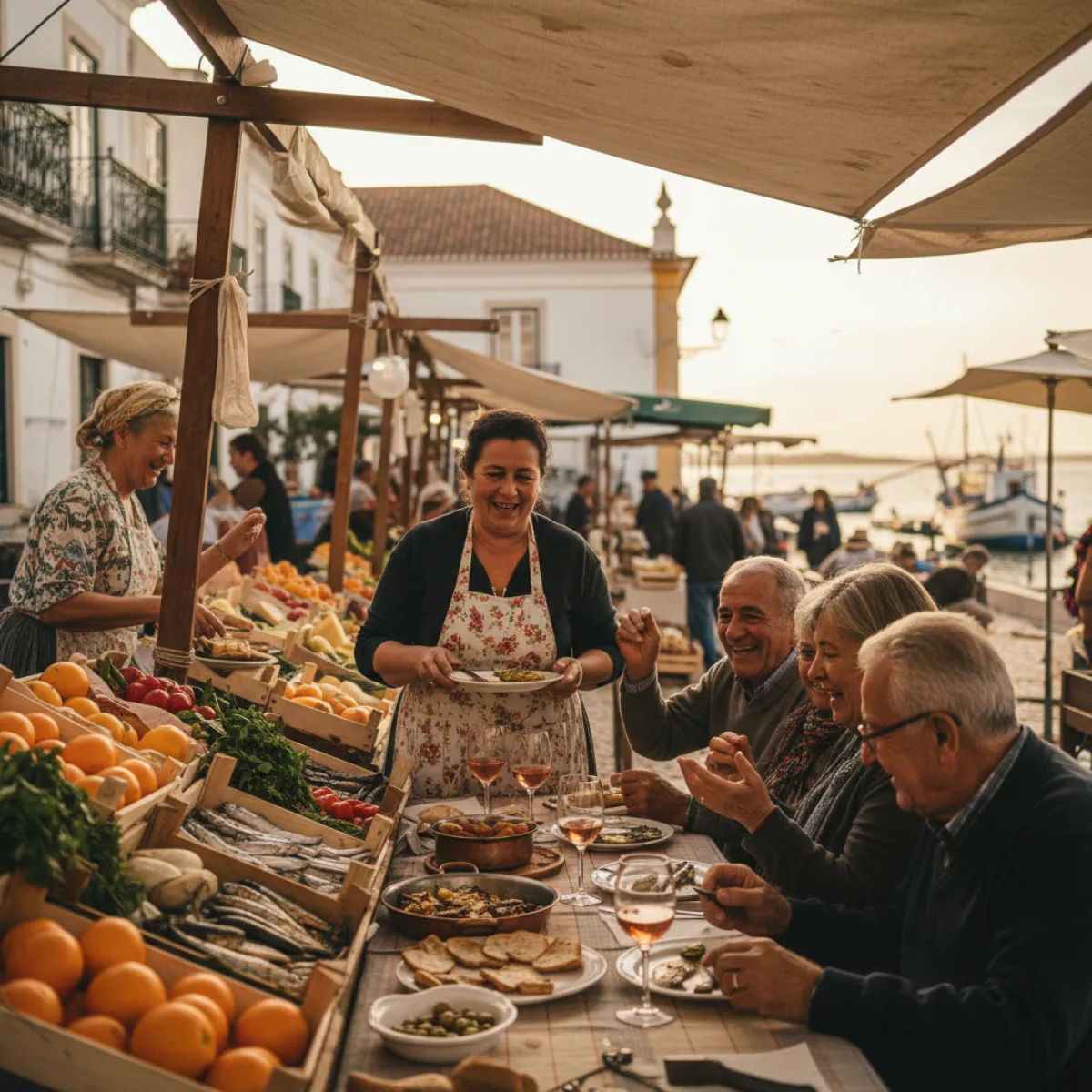
- The Market and its Kiosks: For a more direct approach, Faro's Mercado Municipal is a mandatory stop. In the morning, watch the hustle and bustle of the fishmongers. At lunchtime, several small restaurants and kiosks inside and outside the market serve incredibly fresh petiscos (small plates), from the aforementioned oysters to fried fish sandwiches or portions of boiled shrimp. It's an excellent way to sample various things without the commitment of a full meal.
Beyond the Main Course: Sweets and Markets
No gastronomic journey is complete without dessert. The Algarve's conventual and Moorish heritage is manifest in sweets where fig, almond, and eggs reign supreme. Look for Dom Rodrigo, a small, intense confection of egg threads and almond, or the Morgado de Figo, a rich fig and almond cake. They are intense sweets that reflect the region's history. The best pastelarias are found in the city center.
Visiting the Municipal Market isn't just about eating; it's about learning. It's about seeing the varieties of fish, talking to the growers of oranges and figs, and feeling the city's pulse. It's a lesson in seasonality and the foundation of all local cooking. This is a crucial step for anyone who truly wants to deepen their understanding of the local culture in Faro and the experiences of the authentic Algarve, as food is, perhaps, its strongest pillar.
A Practical Guide to Eating in Faro
What to Order:
- Starter: Fresh oysters, Octopus Salad (Salada de Polvo), Clams in the Algarvian style (Conquilhas à Algarvia).
- Fish: Razor Clam Rice (Arroz de Lingueirão), Seafood Cataplana, or fresh fish of the day grilled over charcoal.
- Meat: While the focus is the sea, look for Wild Boar (Javali) or a Chickpea Stew (Cozido de Grão) for an experience of the barrocal.
- Sweet: Dom Rodrigo, Morgado de Figo, or Carob Tart (Tarte de Alfarroba).
When to Go:
Faro is a year-round destination, but spring and autumn offer milder temperatures and fewer crowds. Seafood is excellent throughout the year, but the months without an 'R' (May to August) are traditionally viewed with more caution for oysters, though modern aquaculture ensures safety. Sardines are at their peak in the summer, especially in June.
Budget:
- Tasca (lunch): €10 - €15 per person.
- Traditional Restaurant (dinner): €25 - €40 per person.
- Marisqueira (full meal): €60 - €100+ per person.
In short, Faro's gastronomy is an invitation to slow down. It’s about sitting without rush, sharing a cataplana, getting your fingers dirty with shellfish, and absorbing a way of life that revolves around the generosity of the sea and the land. It is the most delicious way to get to know the true soul of the Algarve's capital.