The Salt-Stained Souvenir: A Connoisseur’s Guide to Sesimbra’s Local Crafts
Discover the soul of Sesimbra through its authentic crafts, from the iconic Farinha Torrada to naval miniatures and contemporary ceramics. A guide for the traveler who values maritime heritage over mass consumption.
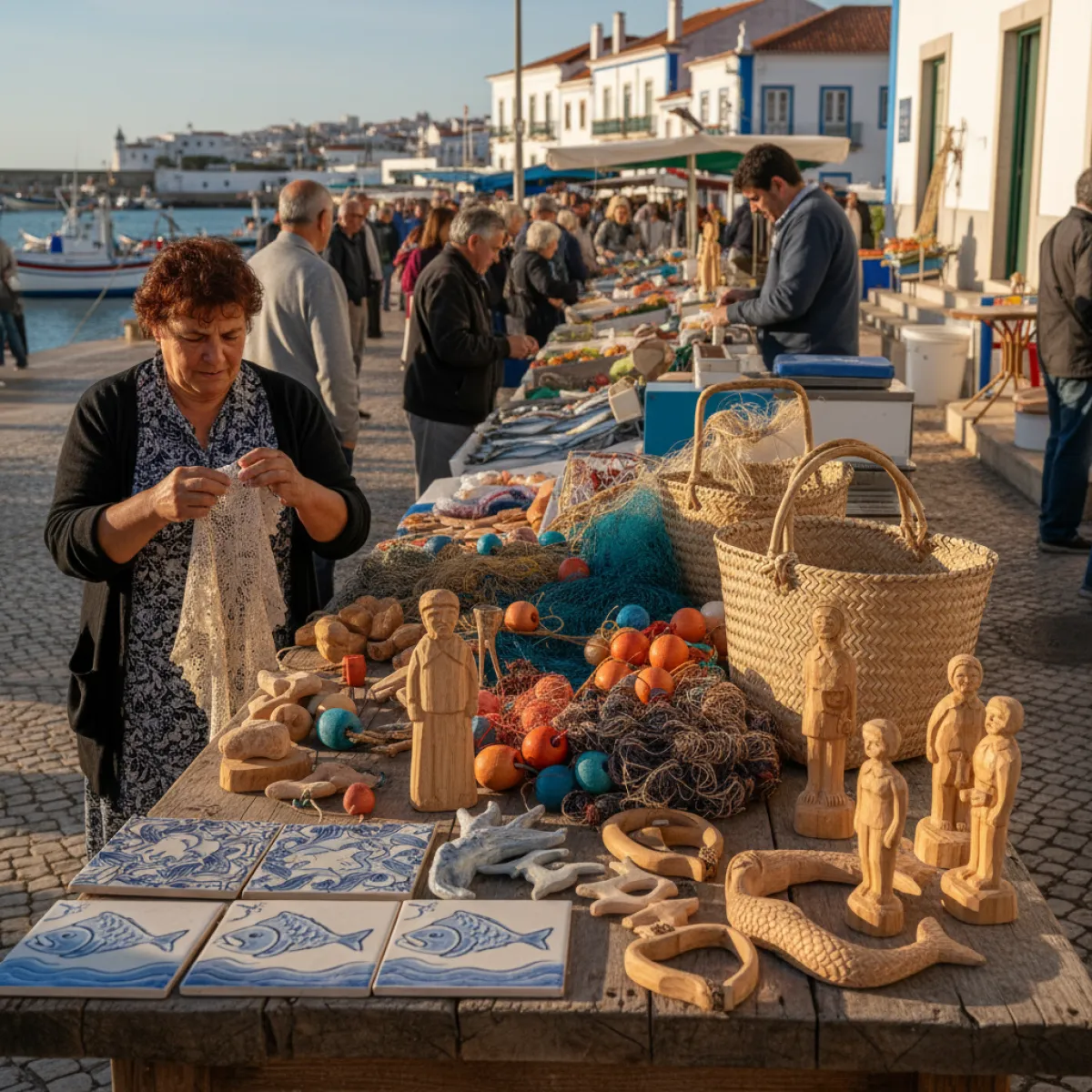
The Tactile Essence of a Fishing Village
Sesimbra does not surrender its secrets to the casual observer. To understand the soul of this town, wedged between the Arrábida mountains and the Atlantic, one must look at the hands of its people. Craftsmanship here isn't a byproduct of tourism; it is a direct extension of maritime survival and identity. Unlike the polished offerings described in Local Culture in Lisbon: Traditions, Neighborhoods and the City's Soul, where urban sophistication often sanitizes the raw edges of tradition, Sesimbra’s objects retain the scent of salt and the roughness of the net.
For the traveler seeking authenticity, the first step is to move toward the waterfront, away from the convenience stores hawking mass-produced plastic. The true luxury of Sesimbra lies in the deliberate imperfection of a ceramic piece fired in a local kiln or a miniature 'Aiola', the town’s signature fishing boat, carved from wood by retired mariners who use the chisel to remain connected to the sea while on dry land.
The Legacy of Farinha Torrada
If there is one object that embodies Sesimbra’s pragmatism, it is Farinha Torrada. It is not merely a sweet; it is an edible historical artifact. Originally developed as a high-energy bar for fishermen spending long days at sea, Farinha Torrada consists of flour, brown sugar, chocolate, lemon, and cinnamon. Its dense, durable consistency allowed it to be stored for weeks without spoiling in the humid sea air.
When purchasing a square of Farinha Torrada, ideally from Pastelaria Bam-Bam or directly from the Municipal Market, you are not just buying a souvenir; you are participating in a family tradition passed down through generations. It is a heavy product, with a texture that demands patience. The cost is negligible compared to its cultural weight, around €1.50 per slice, providing a stark contrast to the more ephemeral pastries found in the Sintra Neighborhood Guide: Discover Every Corner of the Enchanted Town, where the delicate queijadinha defines the culinary landscape.
The Renaissance of Coastal Ceramics
Ceramics in Sesimbra have undergone an aesthetic revival in recent years. Moving away from standard azulejo clichés, the region’s new artisans are exploring glazes that mimic the transition from Arrábida’s forest greens to the deep blues of Cabo Espichel. Walking along Rua da República, you will find small studios where clay is worked with inclusions of beach sand, giving the pieces an organic texture that cannot be replicated in a factory.
These pieces are not inexpensive, nor should they be. A hand-thrown serving bowl can range from €45 to €80, depending on the complexity of the glaze. The investment is justified by its exclusivity: each piece carries the temperature of the day it was molded. This type of acquisition requires a discerning eye, much like the one needed when navigating the Best Day Trips from Cascais: Unmissable Destinations, where personal curation dictates the quality of the journey.
Nets, Knots, and the Art of Utility
Often overlooked by those seeking conventional keepsakes, Sesimbra’s rope and net work is a study in geometric beauty. At the fishing harbor, you can still find artisans transforming retired fishing nets into robust shopping bags or decorative elements using the 'bowline' knot with mathematical precision. This is circular economy in its most ancestral form.
Buying one of these bags supports a class of workers whose primary profession has been squeezed by industrial fishing quotas. These are objects built to last a lifetime, gaining character with exposure to the sun and salt air. Expect to pay around €25 for a handmade net bag, a fair price for its durability and the story woven into its mesh.
Logistics and Buyer Etiquette
Traditional commerce in Sesimbra follows its own rhythm. The most authentic shops close for lunch between 1:00 PM and 3:00 PM, and the Municipal Market is most active on mornings from Tuesday to Saturday. Always carry cash; while credit cards are increasingly common, smaller workshops run by senior artisans often only accept cash, and offering it is seen as a sign of respect for the simplicity of their business.
When it comes to pricing, do not haggle aggressively. Local craft is not a bazaar. The requested price usually reflects the cost of materials and hours of manual labor. A budget of €150 will allow you to acquire a thoughtful selection of ceramics, edible traditions, and a piece of maritime woodwork, ensuring you take home a genuine fragment of the Portuguese coast.
Traveler’s Summary
- What to buy: Farinha Torrada, Aiola miniatures, textured ceramics, and repurposed fishing net bags.
- Where to go: Mercado Municipal de Sesimbra and the small studios along Rua da República.
- Budget: €20 for food items; €50-€100 for art pieces or durable utility goods.
- When to go: Weekday mornings to avoid the weekend crowds from Lisbon.
