The Franciscan Silence: A Spiritual Hike to the Convento da Arrábida
Discover the austere beauty of the Arrábida mountains through a spiritual hike to its 16th-century convent. A deep dive into Franciscan silence and architecture that merges with the mountain.
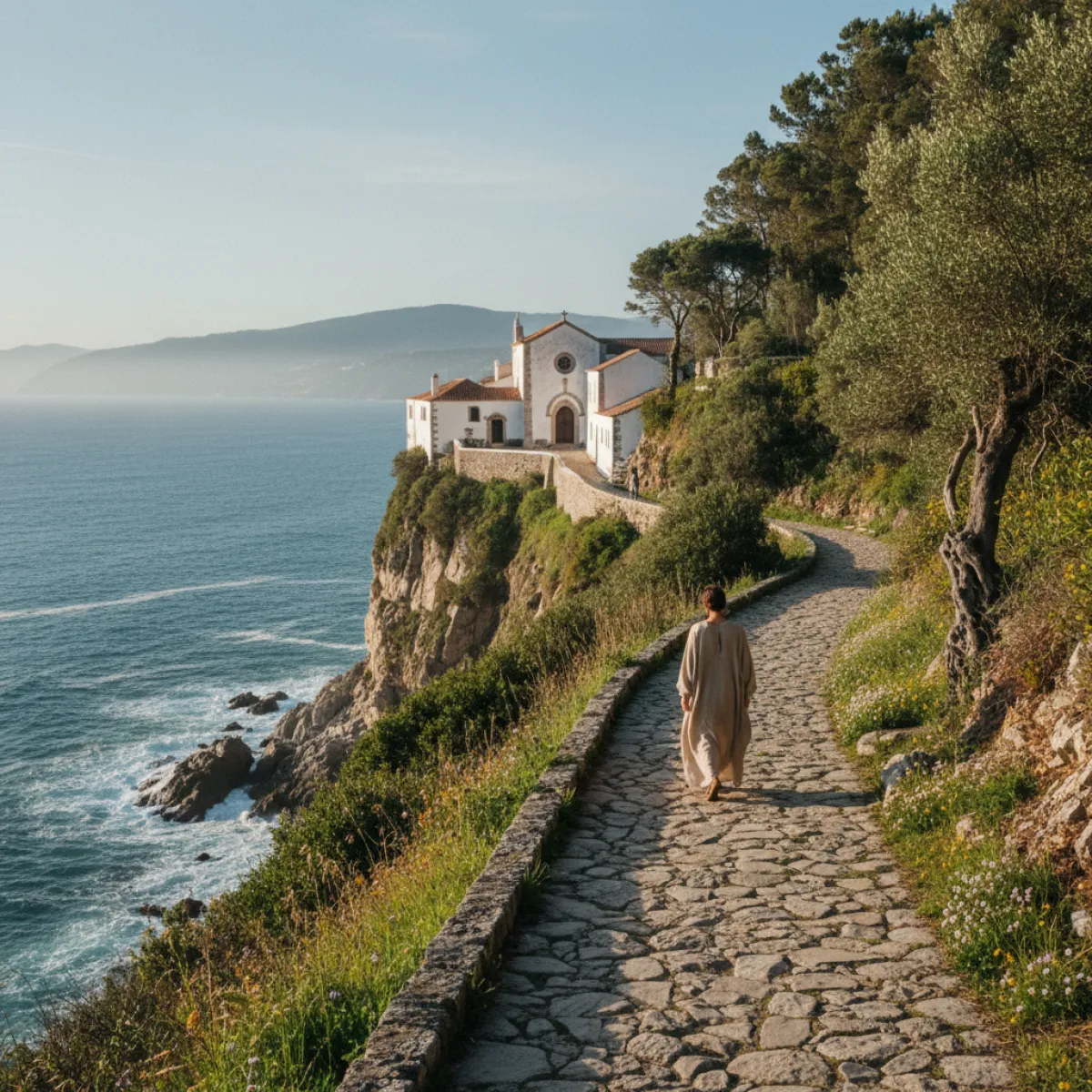
The Geometry of Silence in Arrábida
There is a particular quality to the light that falls upon the Serra da Arrábida, a clarity that seems to filter out the noise of the modern world long before you reach its limestone slopes. Located roughly forty minutes south of Lisbon, this mountain massif rises as a Mediterranean anomaly on the Atlantic coast, sheltering an ecosystem that has survived since the last ice age. Here, the deep green of the kermes oak and the mastic tree merges with the cobalt blue of the ocean, creating a natural amphitheater where silence is not merely the absence of sound, but a palpable, deliberate presence.
For those seeking to understand the region's soul, the hike to the Convento da Arrábida is not just physical exercise; it is an exercise in stripping away the superfluous. Unlike the Baroque exuberance found when exploring [Local Culture in Lisbon: Traditions, Neighborhoods and the City's Soul](/en/guides/local-culture-in-lisbon-traditions-neighborhoods-and-the-citys-soul), where history is told through azulejos and Pombaline facades, Arrábida imposes an aesthetic of renunciation. The convent, founded in the 16th century by Franciscan Friars of the Province of Arrábida, was designed to vanish into the mountain, a lesson in architecture that privileges human scale and organic integration into the landscape.
The Hike: Between Limestone and Sea
The journey ideally begins at the foot of the mountains, near Portinho da Arrábida. The trail leading to the convent snakes through dense vegetation, where the scent of rockrose and rosemary saturates the air. This is not a technical hike, but the incline demands a measured pace, which invites observation. It is common to spot the Bonelli's eagle soaring over the ridges or find traces of wild boar. The geology here is sovereign: the white limestone, worn down by millennia, provides a firm but rugged base beneath your boots.
As altitude increases, the perspective over the Troia Peninsula and the Sado Estuary grows vast. This is a landscape of absolute contrasts. While the [Sintra Neighborhood Guide: Discover Every Corner of the Enchanted Town](/en/guides/sintra-neighborhood-guide-discover-every-corner-of-the-enchanted-town) reveals a town shrouded in romantic mists and fairytale palaces, Arrábida presents itself naked and exposed to the sun. Here, beauty is not ornamented; it is structural. The ascent culminates at a plateau where the small cells of the Old Convent (Convento Velho), carved directly into the rock, reveal themselves. These are tiny spaces where friars retreated into absolute isolation, a practice of asceticism that seems almost incomprehensible in our age of hyper-connectivity.
The Convent: Architecture of Smallness
The conventual complex is divided between the Old Convent on the upper slope and the New Convent (Convento Novo) situated slightly below. The New Convent, though more extensive, maintains Franciscan sobriety. The whitewashed walls, shaded inner courtyards, and small chapels decorated with *embrechados* (mosaics of shells and local stones) reflect a profound reverence for the environment. There is no gold or rare marble; there is only the truth of the mountain's materials.
When visiting the interior, which requires prior booking through the Fundação Oriente, the visitor is confronted with the scale of the cells. These are compartments where a man can barely lie down, reminding us that for these friars, freedom was not found in physical space but in the vastness of the interior life. The refectory, with its stone tables, and the small, austere church convey a sense of permanence. This is a place where time does not pass; it accumulates.
Practicalities and Logistics
For those planning this incursion, preparation is essential. Arrábida can be merciless under the midday sun. The best time for the hike is between March and May, when wild orchids bloom, or in October, when temperatures cool but the sea still retains the warmth of summer. In peak summer, traffic restrictions and high fire risks can make the experience frustrating.
- What to bring: Footwear with good traction, at least 1.5 liters of water (there are no potable springs on the trail), and binoculars for birdwatching.
- Transport: The most effective way to arrive is by private transport. Parking at Portinho is difficult; arriving before 9:00 AM is recommended. Alternatively, a taxi or transfer from Setúbal is a sensible choice.
- Budget: Entry to the convent has a nominal fee for maintenance, but the hike itself is free. Set aside about €40 per person for a high-quality lunch in Setúbal or Portinho.
Post-Hike Rewards: Where to Eat
After descending the mountain, the reward lies in the flavors of the sea. In Portinho da Arrábida, the restaurant O Farol offers fresh grilled fish with an unbeatable view of the bay. Order the monkfish rice (*arroz de tamboril*) or sardines if they are in season. If you prefer something more urban, return to Setúbal for the mandatory *choco frito* (fried cuttlefish). Leo do Choco Frito is a local institution where consistency is the rule.
This excursion to Arrábida is frequently featured among the [Best Day Trips from Cascais: Unmissable Destinations](/en/guides/best-day-trips-from-cascais-unmissable-destinations), offering a wild counterpoint to the nautical sophistication of the Estoril coast. While Cascais is defined by its maritime cosmopolitanism, Arrábida is defined by its telluric spirituality. It is a necessary transition for anyone wishing to understand the diversity of Portugal beyond tourist clichés.
Conclusion: The Legacy of Silence
Leaving Arrábida is always a slow process. The mind takes time to readjust to the noise of traffic and the rhythm of cities. What the Convento da Arrábida teaches us is not that we should all become ascetics, but that silence is a scarce and precious resource. In these mountains, where the friars found their refuge, we find a mirror of our own need for pause. It is a hike that ends not at the top of a mountain, but in a state of mind that is clearer and more focused.
