The Almond Blossom Circuit: A Journey Through Portugal’s Pre-Spring Landscape
Discover the secrets of Portugal's almond blossoms, from the Algarvian Barrocal to the terraced slopes of the Upper Douro. An editorial guide to finding the best pre-spring spectacles, featuring essential stops in Tavira and Vila Nova de Foz Côa.
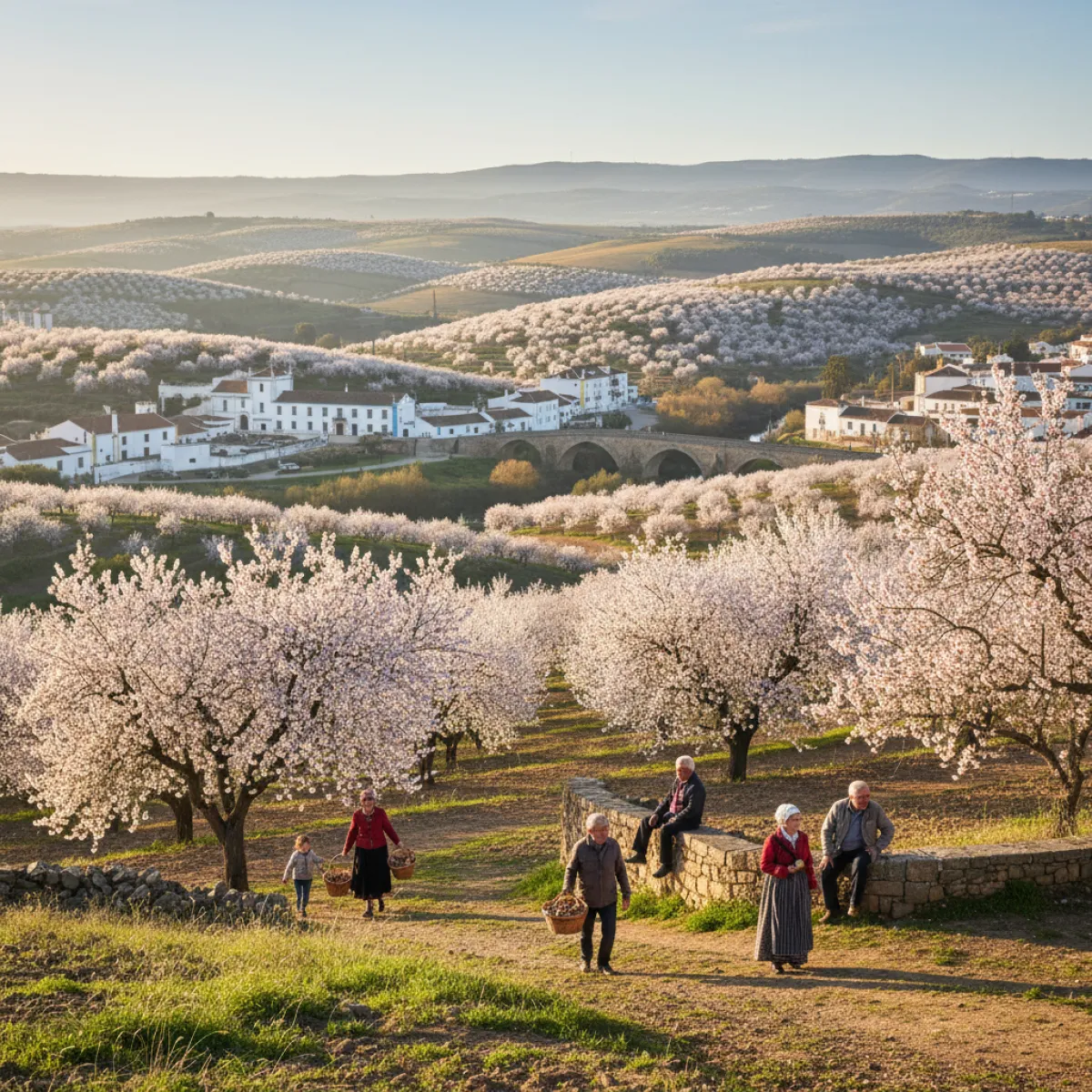
The Ephemeral Drift of the Barrocal
There is a specific window, usually between late January and mid-March, when southern Portugal sheds its winter lethargy and dons a white coat that many mistake for snow. This is not a meteorological event, but the awakening of the almond trees. To the distant observer, the slopes of the Barrocal, that transition zone between the sandy coastline and the rugged mountains, appear draped in a delicate mist. It is a visual experience that demands patience and a keen eye for shifts in wind and temperature, as the almond blossom is a thing of absolute fragility.
In Tavira, this phenomenon takes on cinematic qualities. The morning light, famous for its extraordinary clarity, passes through translucent petals, casting intricate shadows on the 'terra rossa' soil. This is not merely about gazing at a landscape; it is an immersion into the Algarve’s agricultural identity. While the coastal towns prepare for the summer rush, the interior lives its moment of silent glory. It is in these forays into the countryside that one realizes the Algarve is far more than its shoreline. To grasp this depth, one must delve into the local culture in Faro and the traditions of the authentic Algarve, where harvest rituals and almond-based gastronomy still dictate the pace of life.
The Tavira Axis: Wine and Blossoms
Tavira serves as the perfect base for this exploration. The town, with its 'tesoura' roofs and the Roman bridge spanning the Gilão, offers a discreet sophistication that invites slow travel. However, the true treasures lie a few kilometers inland. Here, almond cultivation intersects with the revival of ancient traditions, most notably viticulture. At Al-Lagar, one witnesses a remarkable effort to return the Algarve to its rightful place on the quality wine map. The revival of Tavira’s viticulture at Al-Lagar is the ideal companion to a day spent among the orchards, allowing visitors to taste the minerality of the very earth that nourishes the blossoms they’ve spent the day admiring.
Logistically, a journey to see the blossoms requires planning. Hiring a vehicle with solid suspension is recommended for navigating the secondary roads connecting Tavira to villages like Santa Catarina da Fonte do Bispo. In these pockets, time feels suspended. The scent of woodsmoke mingles with the subtle, almost imperceptible fragrance of the flowers. In local taverns, your order should be specific: a glass of medronho firewater to warm the soul and, of course, a 'doce fino', those small marzipan sculptures that elevate the almond to the status of sacred art.
From the Barrocal to the Algarvian Soul
Heading west, the scenery shifts but the almond tree remains a constant. Albufeira, often reduced to its tourist-heavy reputation, hides a rural interior that is a bastion of cultural resistance. Steering away from 'The Strip', the traveler finds hillsides where almond trees share space with figs and carobs. It is this balance that sustains the local culture in Albufeira and the true Algarvian soul. Here, winter folk festivals often coincide with the bloom, offering a genuine glimpse into the lives of the people who have tended these orchards for generations.
For those preferring the western Algarve, the Barlavento offers its own spectacles. Lagos, with its sharper Atlantic light, has fields in areas like Bensafrim where the blossoms benefit from the ocean’s moisture. Consulting a Lagos neighborhood guide can help you navigate between the frenzy of the historic center and the calm of the agricultural outskirts where the white of the petals still dominates the February horizon.
The Northern Route: The Douro in Shades of Pink
While the Algarve is the first to wake, the Douro offers a more dramatic interpretation of this phenomenon. In Vila Nova de Foz Côa, the almond blossoms are a major social and geographical event. Unlike the gentle plains of the south, here the trees balance on schist terraces, competing for attention with vines that are still in their winter slumber. The Douro bloom usually occurs two weeks after the Algarve, providing an opportunity for those who wish to repeat the experience in a completely different setting.
The rugged slopes of the Upper Douro, where the Côa River meets the Douro, are painted in tones ranging from pure white to pale pink, depending on the almond variety. It is a territory of violent thermal contrasts, brilliant sunny days followed by biting frost. This struggle for survival is reflected in the intense flavor of local products. When visiting the Douro during this season, skip the tourist cruises; opt for the Douro Railway, particularly the stretch between Tua and Pocinho, where the proximity to the trees is almost tactile.
Practical Guide and Editorial Considerations
For a successful trip, consider the following:
- Timing: Monitor weather forecasts closely. A harsh winter can delay the bloom, while early heat can make it vanish in days.
- Clothing: Mornings in the Algarve interior and the Douro are cold. Layering is essential.
- Budget: This is the low season. It is the perfect time to stay in premium rural tourism estates that would be prohibitively expensive in summer. Expect to pay between €120 and €180 per night for a high-end stay.
- Gastronomy: Seek out the goat cheeses from the Tavira region and rockrose honey. They are the perfect accompaniments for any contemplative stop.
The almond blossom is not just a visual event; it is a reminder of the resilience of the Portuguese landscape. In a world moving at breakneck speed, these weeks of white and pink force us to slow down, to respect the cycle of the seasons, and to value what is, by its very nature, fleeting. Whether you choose the Algarve interior or the banks of the Douro, the reward is the same: a renewed connection to the land and the story it insists on telling every year.
