The Aljezur Table: An Atlantic Itinerary of Salt and Soil
Explore Aljezur through a gastronomic itinerary focusing on the protected sweet potato heritage and the wild goose barnacles of the Atlantic cliffs. A guide for those seeking the authentic Algarve, far from the conventional tourist paths.
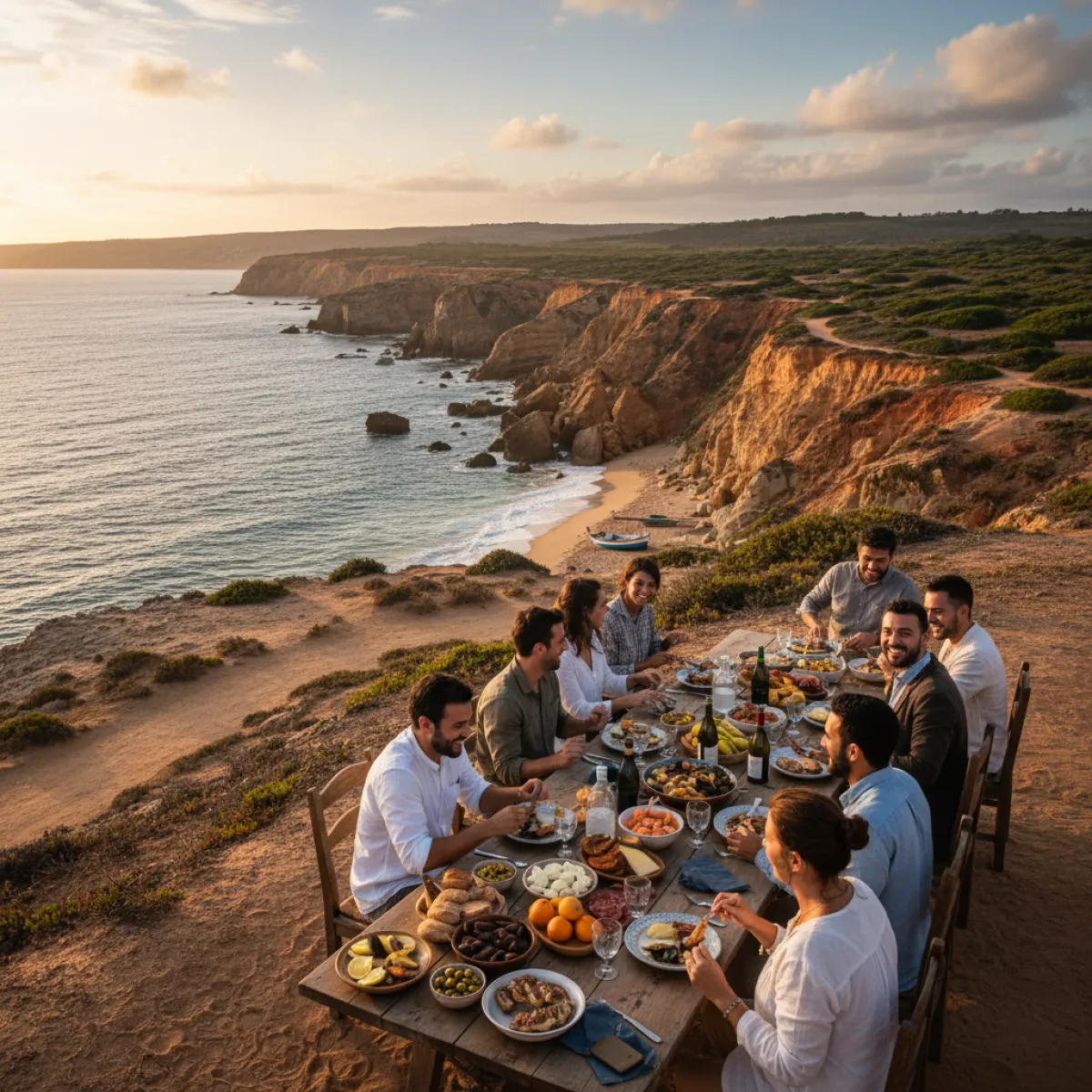
The Geometry of Taste on the Wild Coast
There is a specific moment when the Algarve stops being a sequence of manicured resorts and golf courses and transforms into something more primordial. It happens when the N120 highway begins to snake northwards, and the air turns suddenly cooler, thick with a salty humidity that locals call 'maresia'. Aljezur does not reveal itself immediately; it demands a slow descent into the valley, where the Moorish castle keeps watch over whitewashed houses that seem to cling to the hillside by sheer instinct for survival. Here, gastronomy is not a gimmick for tourists, but a continuous dialogue with a relentless ocean and a land that, though arid on the surface, hides subterranean treasures.
To understand Aljezur, one must begin at the market. The building, while functional, is the epicenter of a subsistence culture that has evolved into high cuisine without losing its humility. On the stalls, the Aljezur sweet potato (Lyra variety) is the undisputed star. It is not just a tuber; it is a protected geographical indication that defines the region’s identity. The experience of immersing oneself in this world is captured with precision in The Sweet Potato Heritage: A Gastronomic Journey through Aljezur's Rural Markets, where one learns that the sweetness of this product stems from the sandy soil and the valley's unique microclimate.
The Ritual of Percebes and the Deep Sea
If the earth offers sweetness, the sea offers salt and danger. The 'percebes' (goose barnacles) of the Costa Vicentina are, arguably, the most honest seafood one can consume in Portugal. Harvested by divers who risk their lives on the rocks lashed by the Atlantic, these crustaceans carry the concentrated flavor of the ocean. At Ponton, or the more rustic O Paulo, perched on the Arrifana cliffside, the order should be specific: barnacles boiled only in seawater, served while still warm. The ritual of eating them, snapping the leathery 'foot' to reveal the tender, iodized flesh, is a lesson in patience.
For those wishing to go beyond the plate and understand the source of this food, the activity of Coastal Foraging and Wilderness Survival: A Raw Journey into Aljezur’s Wild Coast provides a raw perspective on how the coast has shaped the local diet. It is a humbling exercise to walk among the rocks and realize that food, before it is a luxury, is a resource that nature yields sparingly.
Wines of Sand and Wind
While the Alentejo and the central Algarve dominate the viticultural narrative, the Aljezur area is starting to produce wines that reflect the Atlantic terroir. These are wines with vibrant, almost electric acidity, which cut through the fat of a grilled sea bream or the density of a bean and sweet potato stew. Look for labels from Quinta do Barranco Longo or small-batch producers further south, which reach Aljezur with a sophistication often lacking in the mass productions of the central coast.
Comparing this to the offerings found in the Lagos Neighborhood Guide: Discover Every Corner of This Algarve Gem, it becomes clear that Aljezur is the refuge for those fleeing nautical cosmopolitanism. While Lagos celebrates fusion and the cocktail bar, Aljezur celebrates the fireplace, rye bread, and young red wine drunk from thick glass tumblers.
Practical Information for the Discerning Traveler
- When to go: October and November are ideal. The summer surf crowds have departed, and the sweet potato harvest is at its peak.
- What to order: Beyond barnacles and sweet potatoes, do not ignore 'Sargo' (sea bream) or 'Dourada' (gilt-head bream). Have them grilled, simply with sea salt and a drizzle of local olive oil.
- Budget: Plan to spend between €40 to €70 per person for a high-quality lunch or dinner, including wine.
- Logistics: A car is essential. The best taverns and producers are scattered across valleys that public transport does not reach.
Unlike the Local Culture in Faro: Traditions and Experiences of the Authentic Algarve, which is deeply urban and tied to the Ria Formosa, Aljezur is a frontier culture. It is the point where the Algarve merges with the Alentejo, creating a hybrid identity that is, paradoxically, the most authentic of all Algarvian experiences. Here, time is not measured by clocks, but by the tides and the tilt of the sun over the castle ruins.
