Tavira's Real Food: Where Locals Actually Eat
In Tavira, the fish arrives at the market each morning, cataplana takes half an hour to prepare, and the best restaurant is the one full of Portuguese at noon. An unfiltered guide to where and how locals eat in the Eastern Algarve.
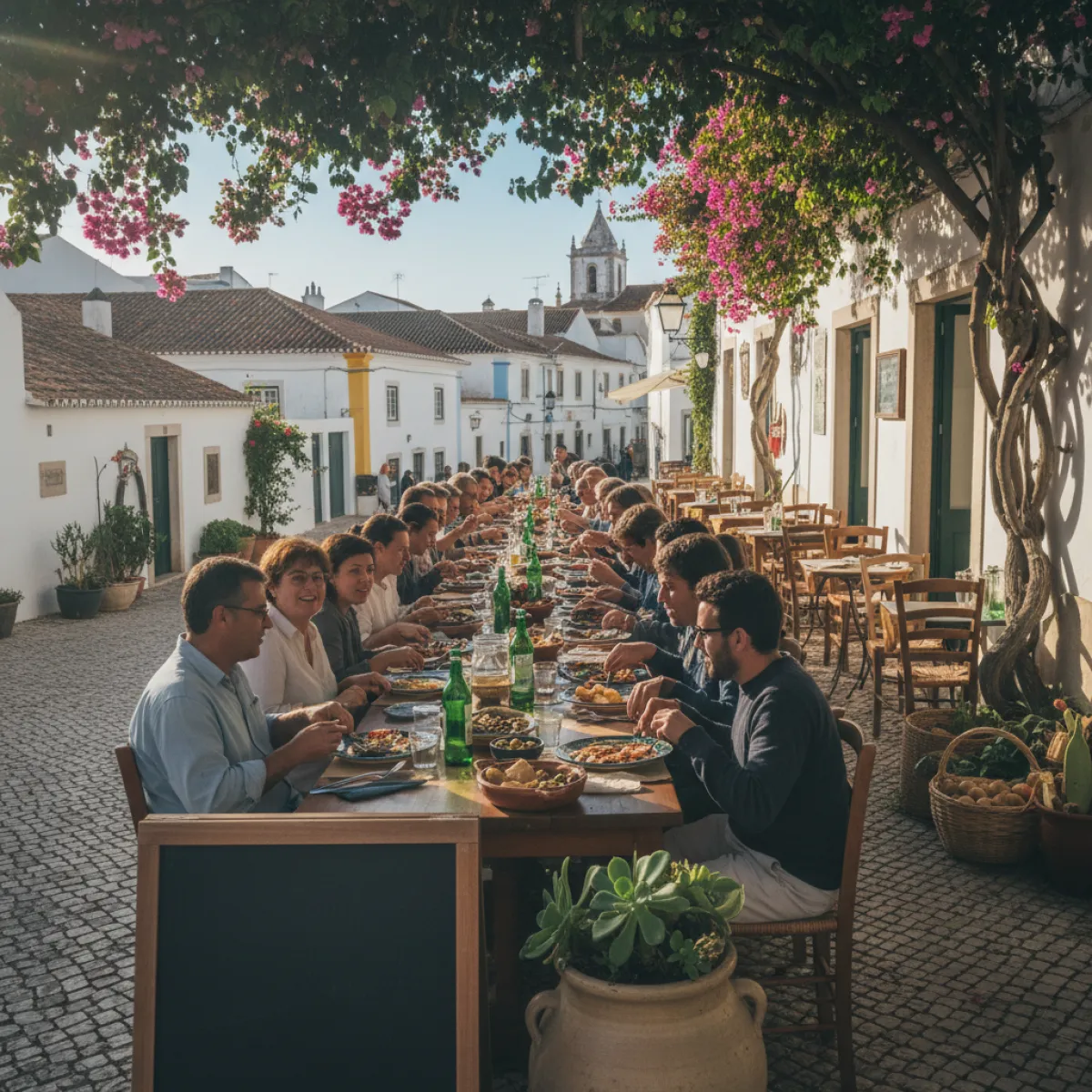
Let me be blunt: if you're in Tavira and you've sat down at the first restaurant on Praça da República with laminated menu photos out front, you've already lost. The food isn't necessarily bad, it's just irrelevant. It's food for people who are hungry and not particularly curious. And Tavira deserves better than that.
This town in the Eastern Algarve has something that Albufeira and Lagos lost decades ago: an honest relationship with what it eats. Here, fish still arrives at the market in the morning, old men still argue about which restaurant makes the best cataplana, and there are places where the owner sits at your table to explain what polvo à lagareiro is, not because TripAdvisor told him to, but because he's proud of what he does.
The Municipal Market: Start Here
Don't go to the market as a tourist who photographs sardines. Go as someone who wants to understand the city. Tavira's Mercado Municipal, on the bank of the Gilão river, is where restaurants buy in the morning and where retirees shop on Saturday. The fish section is honest and unvarnished: percebes (goose barnacles), cuttlefish, sole, sea bream. If you don't know the difference between cuttlefish and squid, ask, the vendors explain with patience and a certain pride.
The outdoor section has fruit and vegetable stalls from the Sotavento. Carob, figs, Algarve oranges, nothing that needs an organic label to be good, because it already is. Best time is between 8am and 10am on Saturday. After that, the best produce is gone.
Where to Lunch Like a Local
The secret to lunch in Tavira isn't a specific restaurant, it's a habit. Locals eat early (12:30pm, not 2pm) and choose by the daily special. At the right places, a daily set menu with soup, main, drink and coffee runs between €8 and €12. If you're paying €18 for a lunch set, you're in the wrong place.
Look for restaurants on the streets behind the market and around Rua da Liberdade. I won't make up names of places I don't know in detail, check locally what's open, because Tavira has the irritating habit of changing hours seasonally without notice.
What to look for on the menu: arroz de lingueirão (razor clam rice), conquilhas à algarvia (wedge clams with olive oil, garlic and coriander, if there's no coriander, walk out), and whatever grilled fish arrived that morning. Always ask "what's fresh today" instead of reading the menu.
Grilled Fish and the Art of Not Overcomplicating Things
The Eastern Algarve has a food philosophy that's the opposite of fine dining: don't complicate things. A grilled sea bass with boiled potatoes and salad is, when the fish is good, one of the best meals you'll have in Portugal. It doesn't need balsamic reduction or foam of anything.
In Tavira, grilled fish is almost ritualistic. The best places have the grill at the door, you can see and smell what's being made. The charcoal should be holm oak or cork oak. If you see an electric grill, keep walking. The fish is seasoned with coarse salt and olive oil, and nothing else. Perfection lies in simplicity, but that simplicity demands impeccable ingredients.
A grilled sea bream or sea bass for two typically costs between €25 and €40, depending on weight. Always ask the price per kilo before ordering, this isn't distrust, it's local custom.
Cataplana: The Dish That Defines the Algarve
If there's one dish you must eat in Tavira, it's cataplana. Not the tourist version with frozen prawns and cream, but the real thing: cataplana de amêijoas (clams), or monkfish with clams, or octopus. It's cooked in a sealed copper pot, steaming in its own juices, and when they open it at your table the smell is extraordinary.
Cataplana is always for two people, costs between €25 and €35 at most local restaurants, and should be accompanied with bread to mop up the broth. Some people order rice, purists say it's unnecessary. I agree with the purists.
One tip: cataplana takes 20 to 30 minutes to prepare. If it arrives in five minutes, it was made in advance and is probably mediocre. The wait is part of the ritual, order some clams or snails as a starter and enjoy the moment.
Algarvian Sweets: Figs, Almonds and Dom Rodrigo
Algarve pastry is different from the rest of Portugal. While the North lives on eggs and convent sugar, the Algarve works with almond and fig, Arab heritage that defines the region's flavour.
In Tavira, look for Dom Rodrigos: egg and almond sweets wrapped in colourful silver foil. They're excessively sweet, I'll admit, but they're authentic and part of the city's identity. There are also morgados (almond and fig cakes) and almond tarts. Buy them at traditional pastry shops, not souvenir stores.
If you want to understand the Algarve's broader food traditions and how they connect to local culture, it's worth reading about Faro's traditions and authentic experiences, which share many roots with Tavira.
Wine: The Surprise You Weren't Expecting
I'll say it upfront: the Algarve isn't the Douro or the Alentejo. But Algarvian wines have improved remarkably in recent years, and Tavira is at the centre of this quiet revolution. If you're curious, the wine experience at Al-Lagar is an excellent way to see how viticulture is being reborn in the region.
At restaurants, order a local Algarve wine. The fresh whites work very well with grilled fish. It's not the best wine in Portugal, but it's honest, has character, and supports local producers. If the waiter automatically suggests a Douro, insist on Algarve. You'll be surprised.
Dinner: Tavira's Other Face
At dinner, Tavira transforms. The streets along the river catch beautiful light, the terraces quiet down, and restaurants serve at a different pace. This is the right time for a more elaborate dish, arroz de marisco (seafood rice), polvo à lagareiro (octopus with olive oil and potatoes), or cataplana if you didn't have it at lunch.
The area around Rua José Pires Padinha, along the river, has several restaurants with outdoor seating. Some are good, others survive on location. The rule is simple: if the terrace is full of Portuguese people, sit down. If you only see foreigners, think twice.
For those looking for a more complete experience and wanting to stay in the area, Fazenda Nova Country House combines accommodation with a strong connection to the territory, the kind of place where breakfast is already a gastronomic experience.
Petiscos: The Tradition That Predates Tapas
Before Spain popularised tapas worldwide, Portugal already had petiscos. In Tavira, petisco culture is alive and well: caracóis (snails, summer only), conquilhas, presunto with figs, octopus salad, cod fritters.
The proper way to eat petiscos is sharing. Sit down, order three or four for the table, a bottle of cold white wine, and let the conversation flow. This is how locals eat dinner when they don't want a heavy meal, especially in summer, when the heat makes cataplana too intense.
What to Skip
I'll be honest about what's not worth your time in Tavira:
- Restaurants with laminated menu photos in the window, almost always a sign of generic tourist food
- Any place advertising "typical Portuguese food" on a sign out front, if it needs to say it's typical, it probably isn't
- Sangria at €8 a jug in restaurants, make it at home with cheap wine and fruit instead
- Francesinha in the Algarve, it's a Porto dish, it doesn't belong here and it's rarely done well
Beyond Tavira: The Algarve That Also Eats Well
If this trip has whetted your appetite for the authentic Algarve, know that each town has its own personality at the table. In Albufeira, traditions survive despite the tourism, and in Lagos it's worth exploring neighbourhood by neighbourhood to find the best spots.
But Tavira has one advantage: it hasn't been swallowed by mass tourism yet. It's possible to sit down in a restaurant at 1pm on a Tuesday and be the only foreigner at the table. That changes the dynamic completely, the waiter talks to you like any other customer, the chef doesn't simplify the menu, and the price is fair.
Eat in Tavira the way locals eat: with time, with curiosity, and with the certainty that the best dish is almost always the simplest one.