Sagres in April: A Wildflower Guide Worth the Drive
For a few weeks in April, the cliffs between Sagres and Cape St. Vincent are blanketed in wildflowers, including endemic species found nowhere else on earth. A practical guide to the best trails, what blooms when, and why April is the month to visit.
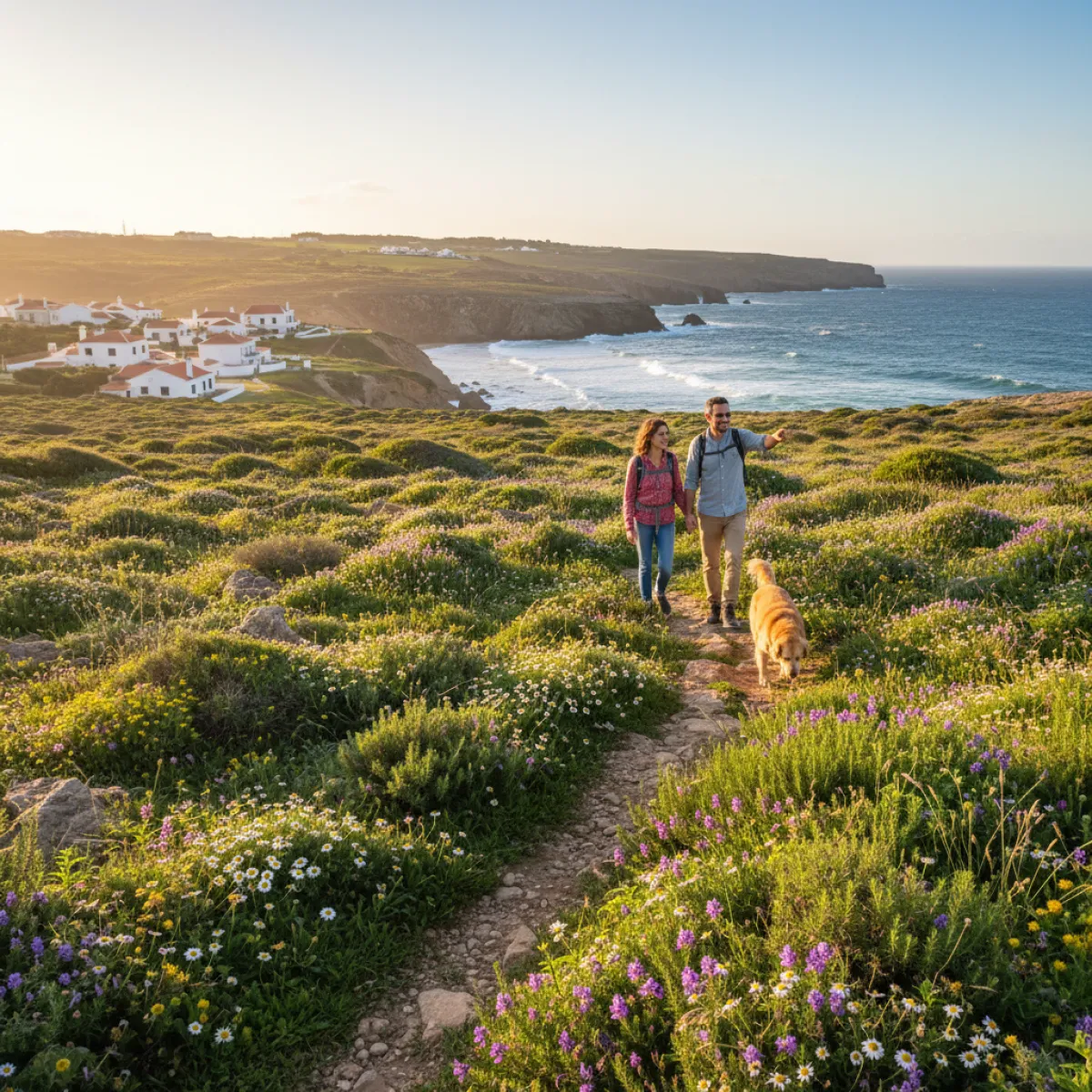
Most people think of Sagres as a summer destination, big waves, dramatic sunsets at the fortress, maybe a surfing lesson. But show up in April and you'll find something entirely different: the clifftop paths between Sagres and Cape St. Vincent carpeted in wildflowers, the beaches empty, the prices low, and the light so clean it almost hurts.
April is, without question, the best month to visit this corner of Portugal. And the wildflowers are the reason nobody talks about but everybody should.
Why Sagres Has Europe's Best-Kept Clifftop Wildflowers
The Costa Vicentina Natural Park, the protected stretch of coastline that runs from Sagres north to Aljezur and beyond, is one of Europe's most biodiverse botanical zones. Over 750 plant species have been catalogued here, many of them endemic, meaning they exist nowhere else on earth. The reason is geological: the poor, limestone-and-schist soil was never worth farming, so the wild flora was never plowed under. Add the Atlantic microclimate, wet winters, mild springs, constant wind, and you get a botanical hotspot hiding in plain sight.
The zone between Sagres and Vila do Bispo has the highest concentration. Walk any coastal trail in April and you'll see flowers right up to the cliff edges, in densities that look almost cultivated but aren't.
The Best Trails for Wildflowers
Fishermen's Trail: Sagres to Cape St. Vincent
This is the one you don't skip. It's roughly 6 km along the coast from Sagres to the Cape, and in April it's extraordinary. Rock roses and wild rosemary dominate the first stretch, their white and purple flowers blanketing the scrubland. As you get closer to the Cape, the endemics appear: Cistus palhinhae, which grows only in this part of the world, has huge white flowers that look like crumpled tissue paper. Biscutella vicentina is another local specialty, small, yellow, easy to miss if you don't know to look.
Start early. By 8am you'll have good light for photos and the trail to yourself. Bring water and sunscreen even on overcast days, there is zero shade on the entire route. The wind can be fierce, so a light windbreaker is non-negotiable.
Mareta Beach to the Fortress
Don't have time for a proper hike? The 20-minute walk from Praia da Mareta to the Fortress of Sagres gives you a solid preview. The path edges are thick with wildflowers in April, and inside the fortress grounds you'll find sea thrift, those pink pom-pom flowers, growing against the stone walls. Fortress entry is around €3 (check locally for current pricing). Worth it for the views alone, it's one of the few spots where you can see the coast in every direction.
Jardim de Sagres
It might seem odd to recommend a garden when the whole point is wild flowers, but Jardim de Sagres works as a living field guide. Many of the species you'll encounter on the trails are planted and labeled here, which is genuinely useful if you want to know what you're looking at. It's also a pleasant spot to rest after a morning on the cliffs, shade, benches, and that feeling of being in a curated space without it feeling fake.
What Blooms When
April is peak season, but not everything flowers at once. A rough guide:
- Early April: Rock roses (Cistus ladanifer) and wild rosemary. These are the first to hit full bloom, covering dry ground in white and lilac.
- Mid-April: The peak. Cistus palhinhae, sea thrift, wild thyme, sea lavender. This is when the coastal trails look their absolute best.
- Late April / early May: Cliff flowers start fading, but the inland fields, between Vila do Bispo and Aljezur, fill up with poppies and chamomile daisies.
One important caveat: flowering depends heavily on winter rainfall. A dry winter can push everything back two or three weeks. Before booking a trip specifically for the flowers, check hiking groups or local forums for current conditions.
Practical Details
Getting There
Sagres is about an hour from Lagos and ninety minutes from Faro. Public transport to this area is unreliable, you need a car. The road from Lagos via the N125 and EN268 is scenic but winding. If you have time, Lagos is worth a stop on the way; our Lagos neighborhood guide will help you figure out where to spend an hour or two.
Where to Stay
April is still shoulder season in Sagres. Expect decent rooms from €50-60 per night. The town itself is small and architecturally unremarkable, functional rather than charming, but the location makes up for it. Vila do Bispo, 10 minutes by car, is cheaper and puts you closer to the inland trails.
Where to Eat
Sagres isn't a food destination, but the fish is fresh and honestly prepared. Head to the restaurants near the port, this is a fishing town and you can taste it. Grilled fish with boiled potatoes and salad is the standard meal, and it's exactly what you want after a morning of walking. Budget €12-18 per person for a full meal with house wine.
Skip the restaurants near the main roundabout, they're the most touristy and the least interesting. Walk 200 meters toward the port and the quality improves noticeably.
Beyond the Flowers: What Else to Do in April
If you're staying more than a day, and you should, April in Sagres offers more than botany:
- Birdwatching: April is migration season. Cape St. Vincent is one of Europe's top spots for watching raptors. Bring binoculars.
- Surfing: The water's still cold (16-17°C), but April conditions are good, especially at Praia do Tonel. Several surf schools operate in town.
- Sunset at the Cape: Yes, it's a cliché. But some things are clichés for a reason. The late April light hitting the cliff flowers at sunset is the real thing.
Exploring the Wider Algarve
Sagres works well as a base for two or three days, but if you're extending your trip, the Algarve in April is excellent across the board. The region has cultural depth that goes well beyond beaches, for a sense of what Faro offers outside peak season, our piece on local culture and traditions in Faro is a good starting point. And if you pass through Albufeira, a place I'd normally write off as a tourist trap, you might be surprised: outside of August, the local traditions in Albufeira are still alive and worth a stop.
But the main point is this: the April wildflowers in Sagres are one of those things that don't make it into conventional guidebooks, last only a few weeks, and completely transform the experience of visiting a place most people associate with summer. If you can choose when to go to Sagres, choose April. You won't regret it.