Sagres for Slow Travelers: Where to Stay Beyond the Cape
Four neighborhoods, seven days, and the nerve to do nothing: how to skip the lighthouse loop and settle into Sagres as if you lived there. Where to sleep, where to take lunch seriously, and why October is the month that finally explains this fishing village at the end of the world.
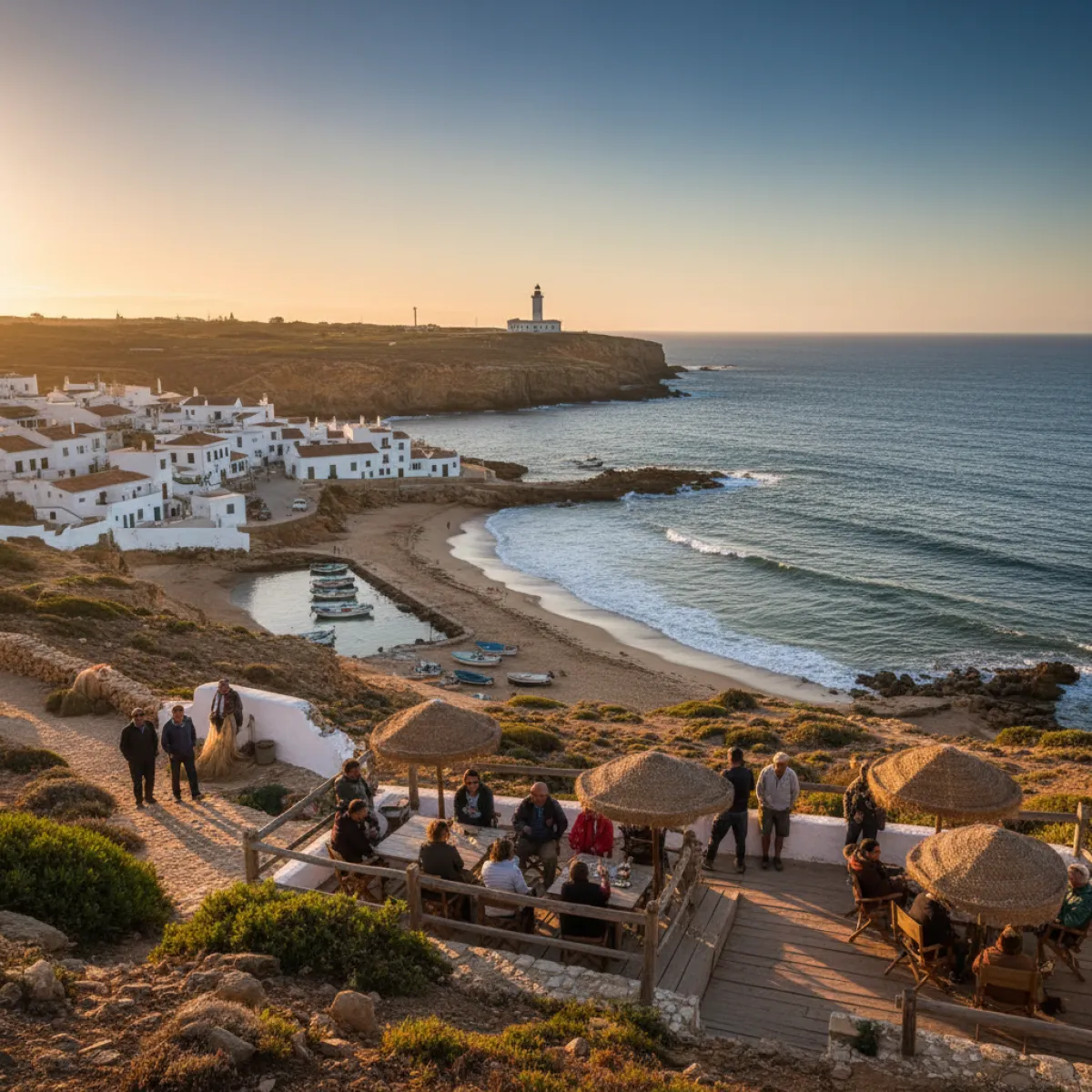
Most visitors do Sagres in three hours. They park near the fortress, snap a photo of the Cape Saint Vincent lighthouse, buy a fridge magnet, eat a steak sandwich with an Atlantic view, and drive back to Lagos before dinner. It is a perfectly legitimate way to visit the southwesternmost point of continental Europe. It is also a way to understand absolutely nothing about the place.
Sagres cannot be done in a day. Sagres is done in four days, or seven, or ideally a full week in October, when the German surfers have packed up, the wind drops enough to eat lunch in a t-shirt, and the old town starts to look again like what it has always been: a fishing village at the end of the world, with one supermarket, three decent cafés, and a butcher who closes at two in the afternoon.
This guide is for people who want to stay. For those who accept that the best thing to do in Sagres is often nothing at all, and the second best thing is to do it slowly.
Where to sleep: the four possible Sagres
Sagres splits into four neighborhoods, and the choice of accommodation completely defines the trip. Get this wrong and you will spend your whole holiday driving to places.
The Vila (Sagres center)
The administrative heart. It has the SPAR supermarket, the pharmacy, the ATM, the town hall, and most of the restaurants that stay open out of season. If you are coming without a car, stay here. Average price for a one-bedroom apartment in low season: 60 to 80 euros a night. In August, multiply by three and even then good luck finding anything.
The good part: you can walk everywhere. The Jardim de Sagres is five minutes away, this is where locals take their kids in the late afternoon, and it has benches with actual shade, a rare thing on this peninsula. The bad part: at night, the village goes quiet. If you want nightlife outside the summer months, this is not your zone.
Baleeira (the fishing port)
The working harbor. This is where the real Sagres still happens: boats unloading fish at dawn, the smell of diesel and salt, restaurants where the evening sea bass is literally the sea bass that came in that morning. Staying in Baleeira means waking up to seagulls and having the best fresh-fish value-for-money in the Algarve 200 metres from your door.
It is also the launching point for most maritime activities, from dolphin watching to boat trips. If you want to combine sea and rest, choose this area.
Martinhal and surroundings
The smart side. Family resorts, modern villas, pine woods, and one beach genuinely sheltered from the wind (practically the only one). If you travel with small kids, the premium is worth it. Prices start around 180 euros a night for a basic villa and climb fast. In return, this is the only zone where you can put a three-year-old on the sand without them being lifted by the first northerly gust.
Tonel and Beliche (around the fortress)
For purists and surfers. Scattered stone houses, constant wind, ridiculous views. Praia do Tonel is right there. There are no restaurants within comfortable walking distance, so you absolutely need a car. This is the prettiest Sagres and the harshest. If your idea of holiday is reading an entire book staring at the ocean, this is the spot.
The right rhythm: how to spend a week
In Sagres, time is measured in tides. Seriously. Fishermen do it, surfers do it, and anyone who stays more than three days ends up doing it too. Long lunches are a local institution, and trying to compress them into forty minutes is considered rude.
Mornings: coffee and sea
Start the day in the Vila, at one of the cafés near the main square. A galão and a piece of toast cost less than three euros and give you access to the conversation of the day, which usually involves wind, local politics, and the price of fish. Then go in the water. Mornings in Sagres are almost always calmer than afternoons; the northerly wind only really kicks in around eleven.
For surfers, Tonel works with northerly wind and Beliche with southerly. Mareta is the beginner-lesson beach: sheltered, with small waves. If you just want to swim, head to Martinhal early, before the crowd shows up.
Lunches: the local religion
Forget dinner as the main meal. In Sagres, lunch is the serious one. Terraces fill up from twelve thirty onwards and nobody is in a hurry.
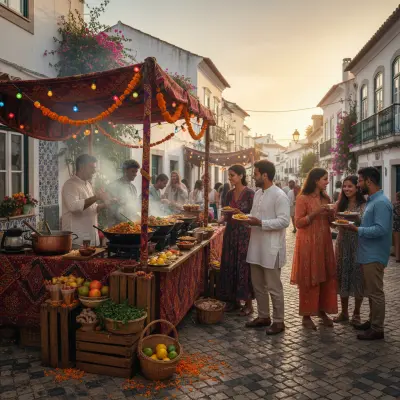
To break the grilled-fish routine (which is excellent, but after four days starts tasting the same), take an Indian detour at HoliDiwali Street Food. Proper street food, fresh spices, naan made on the spot, and a chai that justifies the trip on its own. Plates run 8 to 12 euros and portions are generous.
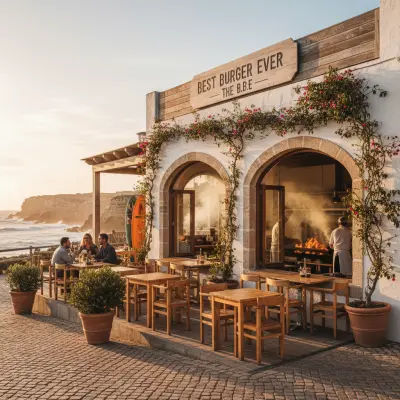
For burgers, Best Burger Ever - The B.B.E has a pretentious name, but it earns it. Portuguese beef, bun toasted on the grill, fries that look like potatoes rather than frozen sticks. The place to go after a serious surf morning, when you have actual hunger.
Three Little Birds is the brunch spot for the people who moved here and stayed. Smoothie bowls, eggs benedict, specialty coffee. Not traditional Sagres, but honest in what it does, and some days you just want a colourful breakfast.
Afternoons: stay or explore
This is the real slow-traveler choice. You can stay on the beach until sundown, or you can spend an afternoon on one of the two activities that genuinely repay the time.
The first is the Jeep Safari off-roading the wild coast, which takes you on tracks no rental car can handle, out to Carrapateira, Praia da Bordeira, and viewpoints that do not appear on Google Maps. It is the fastest way to grasp the scale of this coastline.
The second, and slower, is the Walking Sagres megaliths and fortress tour with a local guide. Three hours on foot with someone who can tell a Neolithic menhir from a random rock, and who will explain why Prince Henry the Navigator probably never had a navigation school here at all (a long-running historical myth, fun to hear properly debunked).
Sunset: the ritual
No debate here. Sunset is watched from Cape Saint Vincent. Everyone knows it, everyone goes. The trick is arriving 45 minutes early, leaning against a low wall, and watching the tour buses dump tourists who take the photo in three minutes and pile back in. Once they leave, fifteen minutes before the sun drops, the place empties again. That is the moment.
Bring a sweater. Even in August. Especially in August.
Day trips from Sagres: one day, one car, some rules
Anyone who stays a week ends up leaving at least once. The three obvious day trips are Lagos, Silves, and Faro, and each one makes sense for different reasons.
Lagos (35 minutes by car)
The closest proper town, and it has what Sagres does not: real neighborhoods, cobbled streets, decent nightlife, and gastronomic variety. Worth a full afternoon, with a coffee somewhere on Rua 25 de Abril and dinner at a backstreet restaurant. Our Lagos neighborhood guide separates the touristy from the real and saves you time.
Silves (1 hour)
The Algarve before the Algarve. A Moorish castle, a cathedral with history, and a town that grew inland rather than toward the sea. Excellent for a day with older kids, especially if they like knight stories and climbing towers. We strongly recommend the honest Silves family guide, which says clearly what is worth doing and what you can skip.
Faro (1h20)
The longest drive, which is why it only justifies an overnight. But the authentic Faro, far from the cruise crowds and the airport, has things Sagres will never have: neighborhood cooking, year-round cultural life, and an urban identity built up over real history. To understand the other Algarve, read our piece on local culture in Faro before going.
Things nobody tells you
A few practical truths, picked up over long evenings listening to visitors complain on the wrong terrace.
- The wind. The Sagres nortada is almost a climate phenomenon. In July and August, it can blow at 40 km/h for weeks at a stretch. Do not choose accommodation without a sheltered patio if you are coming in this period.
- Groceries. The SPAR closes early in winter (around 8pm). If you arrive late, stop in Lagos before driving up, or eat out.
- Fuel. There is one petrol station in the Vila, and it closes at night. In Sagres, you do not drive on a near-empty tank.
- Parking. In the Vila center, in August, forget it. Park near the garden or in Baleeira and walk.
- Wi-Fi and remote work. Mobile coverage is reasonable in the Vila and patchy further out. If you plan to work from here, ask the host.
- Winter. Sagres in January is magnificent and almost everything is open, contrary to rumour. But pack rain gear. Seriously.
What you take home
It is not the lighthouse magnet. It is the realisation that the Algarve is not just pool bars and beach clubs. Sagres reminds you that this coast, before it became a summer destination, was a frontier of stone and wind, and it still is if you give it time. People who stay a week leave with a slower heart rate and the strange impression of having travelled further than the kilometres suggest.
That is the definition of slow travel, and Sagres is, perhaps, the best place in Portugal to practice it.