Porto on a Budget: The Insider’s Guide to the North
Skip the €25 tourist menus in Ribeira; the real Porto is found in a €3 bifana on Rua do Bonjardim and a free sunset over the Douro. Master the city's steep hills without emptying your wallet, from panoramic park benches to the best standing-room-only counters.
The Myth of the Expensive City vs. the Reality of the Counter
There was a time, not so long ago, when Porto was Europe’s best-kept secret, a place of granite echoes and romantic decay where five euros could buy you a feast and an afternoon of storytelling. Today, the city wears a different coat. The queues for the Lello Bookstore wrap around the block, and the price of a coffee in Ribeira can cause a localized economic crisis in your wallet. But don’t be fooled by the high-gloss tourism. Porto remains a city of grit and resistance, and for those who know where to look, luxury isn’t found in a tasting menu, but in the spicy, dripping grease of a bifana eaten standing up while a vintage tram rattles the windowpanes next to you.
Doing Porto on a budget requires a shift in perspective. Forget the tourist menus featuring faded photos of codfish. The golden rule is simple: if you see a paper tablecloth on a Formica table and a calendar from 1998 on the wall, you’ve arrived. Porto is a vertical city, meaning your biggest expense will be in calories, not cash. Prepare your legs, ignore the five-euro funicular, and learn to navigate the map through its taverns.
The Art of the Ascent: Exploring the Historic Centre
The best way to decode the organized chaos of the medieval backstreets is a Porto Historic Centre Walking Tour with Living Tours. It’s the smartest initial investment you can make. As you climb and descend the Escadas do Guindais, you’ll realize that the city’s story isn’t locked inside pay-walled monuments, but in the way laundry hanging from the balconies of the Sé cathedral seems to defy gravity. A local guide will explain why the inhabitants are called "tripeiros" (spoiler: it involves cows’ stomachs and wartime sacrifice) and, more importantly, they’ll point out the corners where a bica (espresso) still costs less than a euro.
After the tour, put your knowledge to use at São Bento Station. It’s free, it’s public, and its twenty thousand azulejos (tiles) narrate the history of Portugal with more precision than any museum. The trick to avoiding the throngs of selfie-sticks? Go at 8 AM or after 10 PM. The echo of footsteps in the grand hall, under the dim yellow light, gives you a sense of the city’s scale that you simply won't get during peak hours.
Tactical Gastronomy: Francesinhas and Bifanas
Let’s talk about real food. The Francesinha is the undisputed queen of Porto, but it’s a calorie and financial trap if you end up at the wrong table. Avoid the places charging eighteen euros for a sandwich drowned in industrial sauce. In Porto, authenticity is measured by the quality of the steak and the secret recipe of the sauce, which should hit that precise balance between spicy and seafood-infused. Look for cafes in the Bonfim or Cedofeita neighborhoods. If the napkin doesn’t turn transparent from the fat, the dish lacks character. An honest Francesinha, served with fries and a "fino" (draught beer), shouldn't set you back more than twelve to fourteen euros.
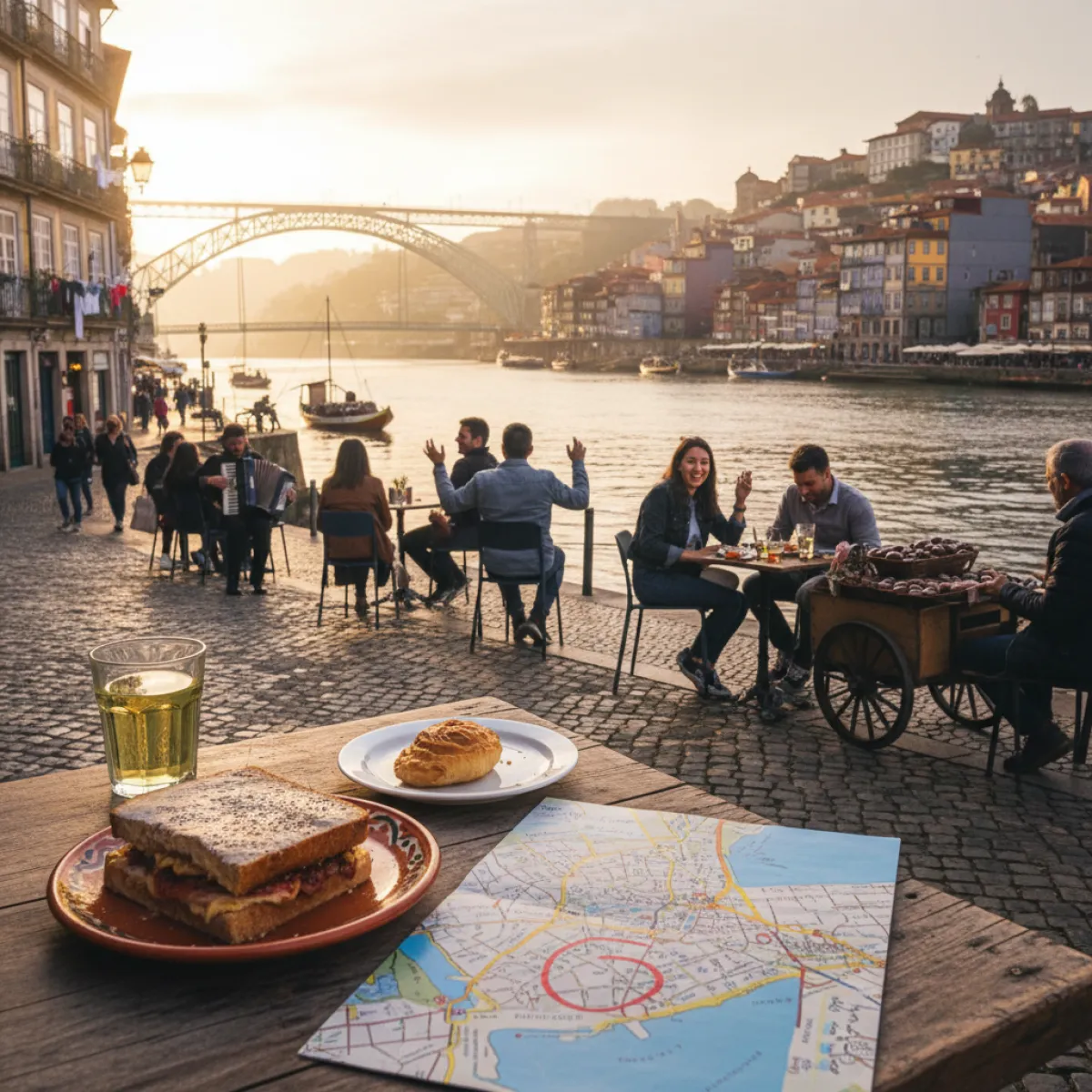
If the budget is truly tight, the bifana is your best friend. But be warned: a Porto bifana is not the dry, grilled pork version you find in Lisbon. Here, the meat is thinly sliced and simmered in a cauldron of spicy, garlic-heavy broth. Conga, on Rua do Bonjardim, is the temple of this snack. For about three euros, you get a bread roll soaked in nectar that is, essentially, a culinary hug. Eat it at the counter. Watch the military efficiency of the kitchen. It’s poetry in motion, devoid of unnecessary adjectives.
Million-Dollar Views for Zero Euros
Ribeira is beautiful, but crossing the Luiz I Bridge to the Gaia side is where the magic happens. Don’t waste money on private viewpoints or hotel rooftops. The Jardim do Morro, located right at the exit of the bridge’s upper deck, is the most spectacular free amphitheater in the country. Buy a beer from a nearby grocery store, sit on the grass, and watch the sun dip behind the Foz as Porto’s lights flicker on one by one. It’s a cliché for a reason: it works every single time.
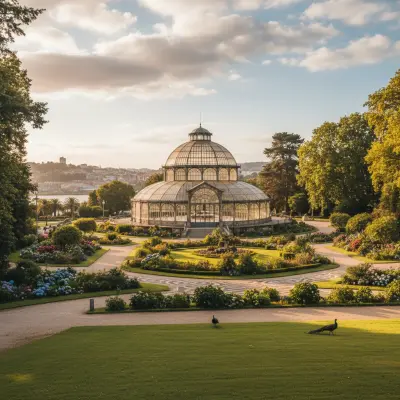
For a more aristocratic and less crowded experience, head over to the Jardins do Palácio de Cristal. Ignore the modern dome that looks like a UFO; focus on the paths winding through camellias and the peacocks that strut around as if they own the deeds to the land. The gardens offer balconies suspended over the Douro that make five-star hotel terraces feel claustrophobic. It’s the perfect spot to read or simply watch the Rabelo boats navigate the river below, all without spending a cent.
Urban Logistics and Survival
Porto’s public transport is efficient, but the "Andante" card’s zone system can baffle even a nuclear physicist. If you’re staying central, use your feet. If you need to head to Boavista or the beaches of Matosinhos, the Metro is your best bet. The historic tram is picturesque but at six euros a ride, it’s a tourist luxury. The 500 bus, which follows the riverbank to the Foz, costs a fraction of the price and offers the same cinematic views from the top deck.
When it comes to culture, Casa da Música and Serralves are worth the trek, but check for free entry days or lobby concerts. Often, the best culture in Porto happens in the galleries of Rua Miguel Bombarda during their simultaneous openings, expect art, interesting people, and frequently, a free glass of wine for anyone who shows up with a bit of curiosity.
Strategic Escapes: Beyond the City Limits
If you have an extra day, Porto is the ultimate base for exploring the north without the need for a rental car. The suburban trains from São Bento are the cheapest way to travel. Before you decide on a destination, check our guide to the Best Day Trips from Porto. You can hit the beach in Vila do Conde or head further into the heart of the Minho region.
For those looking for historical weight, A Guide to Guimarães: The City Where Portugal Learned to Be Itself takes you to a city center that feels frozen in the 12th century, yet pulsates with modern wine bars. Alternatively, the train can take you to Braga, where religious tradition and university life coexist in a fascinating, quiet radicalism. Both cities are just over an hour away, and the train ticket costs less than a mediocre cocktail in downtown Porto.
Conclusion: The Value of the Priceless
Porto rewards the curious and the persistent. The true essence of the city isn’t found in souvenir shops selling mass-produced trinkets, but in the smell of grilled sardines floating through Miragaia in the summer, or the dark shine of wet granite under winter rain. Doing Porto on a budget isn't about deprivation; it’s a filter that removes the superfluous and leaves you with what is real. At the end of the day, with tired legs and a stomach satisfied by a three-euro bifana, you’ll realize that the best parts of the city, its light, its people, and its river, never had a price tag to begin with.