Ponte de Lima After Dark: Wine and Petiscos Done Right
In Ponte de Lima, the best hour to eat is after sundown: when the cellars open, the loureiro flows, and petiscos emerge from the old-town kitchens. This itinerary takes you from a first glass on the riverfront to a last digestif by the water.
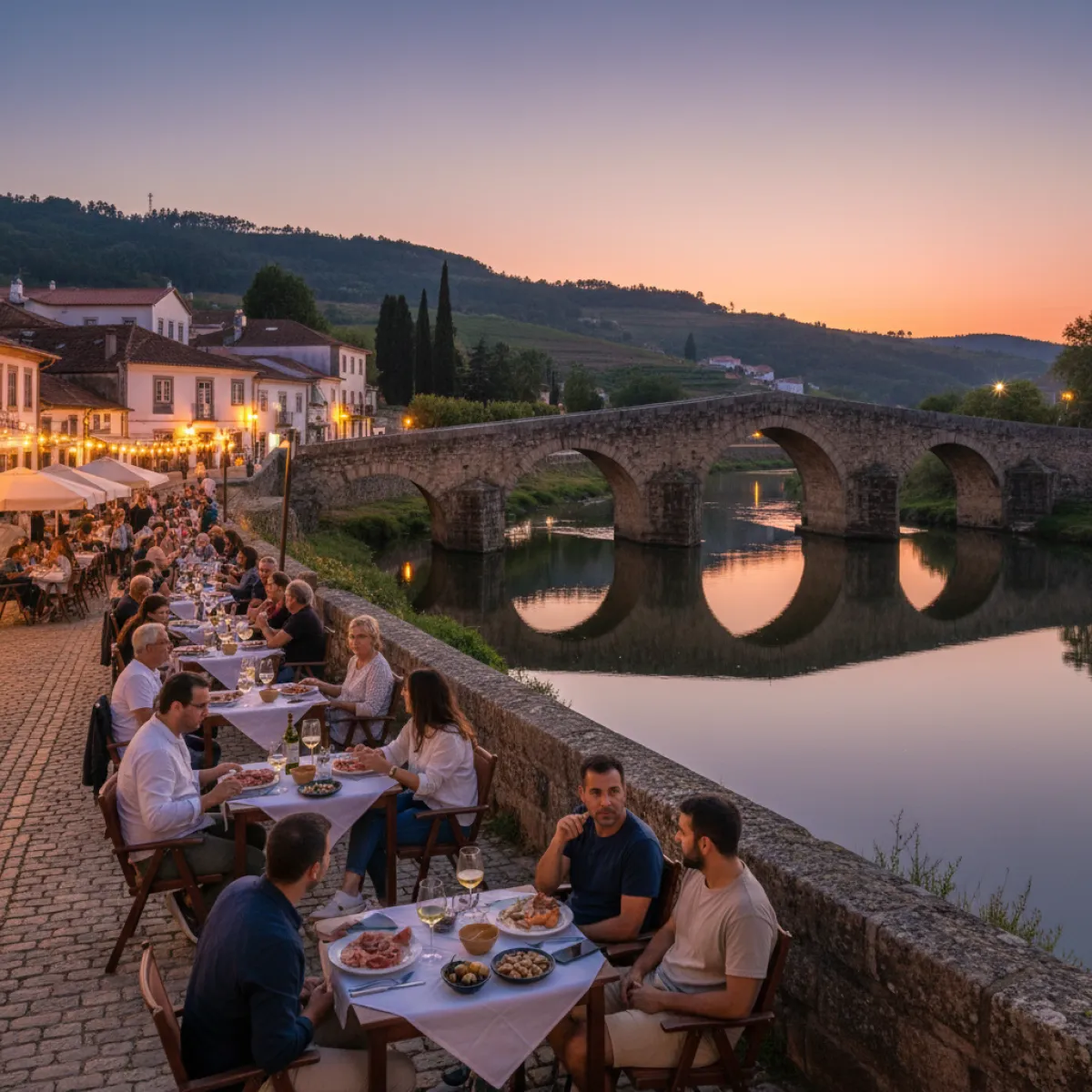
Most visitors get Ponte de Lima wrong. They show up mid-morning, walk across the medieval bridge, eat a forgettable lunch on the riverfront, and leave by three. They miss the best part. Because Ponte de Lima, Portugal's oldest town, chartered in 1125, shifts gears in the late afternoon. The light turns golden on the Lima River, the wine cellars open, and the kitchens start turning out petiscos. That's when you want to be here.
This is an evening itinerary for people who take food and wine seriously but don't need a Michelin star to enjoy themselves. It starts around 6pm and ends when you've had enough. Bring comfortable shoes, an empty stomach, and a genuine willingness to drink well.
First: Understanding Vinho Verde
Let's clear something up. Vinho verde is not that sweet, fizzy white wine that got exported to supermarket shelves worldwide. That's a caricature. The Minho region produces dry, complex whites from loureiro and alvarinho grapes that hold their own against anything in Europe, plus vinhão reds so dark they stain the glass purple.
Ponte de Lima sits in the heart of the Lima sub-region, where loureiro is king. A good loureiro has notes of acacia and citrus, a razor-sharp acidity, and a dry finish that demands food. It's not sipping wine, it's eating wine, talking wine, sharing wine. Which is exactly what we're about to do.
6:00 PM, The Riverfront and Your First Glass
Start on the Avenida dos Plátanos, the tree-lined promenade along the river. By this hour, the benches fill with locals. The walk is short but essential, it gives you context. On your left, the medieval bridge with its uneven arches. On your right, the compact town with its bell towers cutting into the sky.
Find a terrace near the river for your first glass. Order a loureiro from the region, don't accept the house wine without asking where it's from. If they just say "it's vinho verde" with no further detail, move on. You want a producer, a grape, some knowledge of what's in your glass. Ponte de Lima has dozens of estates producing excellent loureiro. A glass should cost two to three euros at most.
What to snack on here
If the terrace has a kitchen, order pica-pau (cubed seared beef) or some Padrón peppers. Nothing elaborate, just enough to wake up the appetite. If there's no food, don't force it. Save your hunger.
7:00 PM, O Lagar: Where the Night Gets Serious
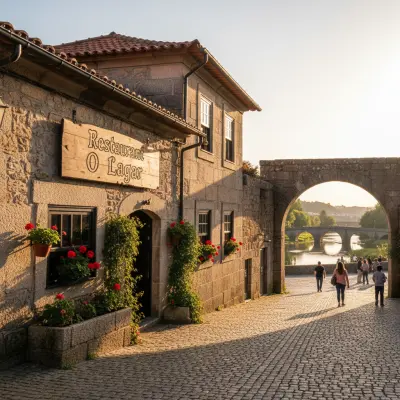
Now we're talking. Restaurante O Lagar is the kind of place locals go without needing a recommendation, and that tells you everything. The kitchen works with regional produce and zero pretension. No fine dining, no deconstructed anything, no foam. Just Minho food done properly.
The strategy here is to order petiscos to share rather than individual main courses. If it's available, arroz de sarrabulho is non-negotiable, a rice dish made with pork blood, spiced and dense, that's essentially a gastronomic manifesto of the Minho. Ask for rojões too, if they have them. And a board of regional cheeses and charcuterie, which pair absurdly well with a vinhão red.
Talk to the staff. Ask what's local, what arrived fresh. In restaurants of this calibre, the printed menu is a suggestion, the best dishes are usually in the head of whoever's working the floor.
To drink, order a full bottle of loureiro. Not a half portion, not a glass, a bottle. Vinho verde is meant to be drunk cold, in good company, and a bottle in Ponte de Lima rarely exceeds ten euros at a restaurant. This is the Minho, not the Algarve.
8:30 PM, Walk and Digest
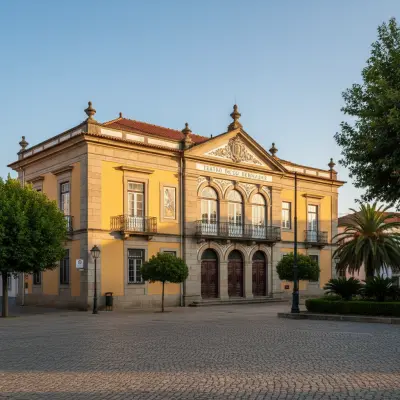
Leave the restaurant and walk. Ponte de Lima is small enough to cross on foot in twenty minutes, but big enough to surprise you. Head uphill towards the historic centre, past the main church and the remnants of the medieval walls. If the evening is pleasant, swing by Teatro Diogo Bernardes, not necessarily to catch a performance (though check the programme, it's worth it), but to admire the building. It's a 19th-century theatre, elegant without being pompous, and it tells you something about the cultural weight this small town has always carried.
This walk isn't filler, it's essential. You need room for round two.
9:30 PM, Beco das Selas: Round Two
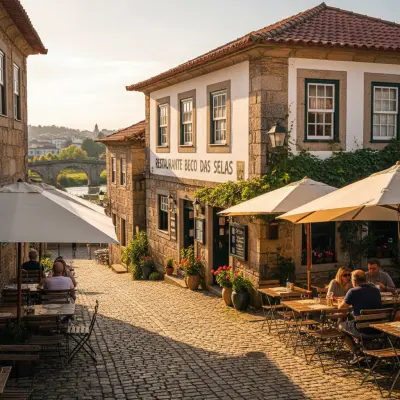
Restaurante Beco das Selas sits in the historic centre and is another address that needs no advertising. The name evokes narrow lanes and old stone, and it delivers exactly that.
Switch registers here. If you drank white at O Lagar, go red now. Vinhão from the Lima is an experience that surprises anyone accustomed to Douro or Alentejo reds. It's lighter in alcohol but intense in colour and flavour, with dark fruit and an honest rusticity.
To eat, order bacalhau, any Minho preparation of salt cod tends to be solid. Or if you prefer meat, ask about cabrito. Roast kid from a wood-fired oven is one of the Minho's great specialities, and when done well, it makes you wonder why you ever ate anything else.
Eat slowly. This isn't dinner, it's the continuation of a night that started right.
11:00 PM, The Nightcap
After two serious food stops, your body wants one of two things: a digestif or a bed. For the former, find a bar serving aged aguardente from the region. Barrel-aged vinho verde spirit is one of Portugal's most underrated drinks, complex, smooth, with a finish that warms without burning. Ask locally for producers.
If the night's going well and the group is lively, Ponte de Lima has a quiet but present nightlife, especially on weekends. But honestly? After an evening like this, the best ending is back at the river. Sit on a bench by the promenade, look at the illuminated bridge, and appreciate the quiet. No background music, no phone. Just the Lima flowing and the vinho verde doing its work.
Practical Tips
- When to go: May through October, when evenings are warm enough for outdoor dining. In June, the Feira do Cavalo and Vaca das Cordas bring a different energy to town, check dates locally.
- Getting there: Ponte de Lima is about 35 minutes from Viana do Castelo and an hour from Braga. There's no train, car or bus are your options. If you're drinking (and you will be), designate a driver or stay in town.
- Budget: A night of petiscos and wine across two restaurants, digestif included, runs 30 to 50 euros per person. This isn't Lisbon, the Minho is still generous.
- Where to stay: If you want something special to cap the evening, the Minho has options that go beyond standard accommodation. The private escape at Carmo's Boutique Hotel turns a stay into something different. For the morning after, if your body needs recovery, a wellness session at Axis Wellness is a civilised antidote to the previous night's excesses.
Beyond Ponte de Lima
If you're staying more than one night in the region, and you should, Barcelos is less than half an hour away and merits a full day. There are proper cafés to start your morning and a cultural offering that punches above its weight for a town its size. The Minho rewards those who stay longer, who leave the motorway and follow the signs to the quintas. Every bend has a producer, every village has a tavern, and in almost every one they pour a loureiro that costs less than a coffee in Milan.
Ponte de Lima after dark isn't about sophistication. It's about produce, tradition, and a relationship with wine that's as natural here as breathing. Come hungry, leave with stories, and come back when you can. The bridge will be waiting.