Pico Island in August: Volcano, Wine and Whales
At 4am at the Casa da Montanha you collect a GPS tracker and start climbing Pico's 2,351 metres to catch sunrise above the clouds. Then come whites grown inside black stone corrals, sperm whales off Lajes, and the island's biggest festival in the last week of August.
There is a version of August in Portugal that involves queueing forty minutes for a parking spot near a beach. And then there is Pico. Two hours and change by plane from Lisbon, this Azorean island offers the opposite deal: a 2,351 metre volcano rising straight out of the Atlantic, vineyards planted inside black stone corrals that UNESCO put on the World Heritage list, and sperm whales that live offshore all year round. August is not just a workable month here, it is arguably the best one: the sea is at its calmest, the mountain opens in decent weather more often than not, and the town of Lajes do Pico throws the island's biggest party in the last week of the month.
Getting there, and why the ferry wins
You have two routes. Fly direct from Lisbon to Pico's airport near Madalena, or fly to Horta on the neighbouring island of Faial and take the Atlânticoline ferry across the channel, a crossing of roughly half an hour. Do the ferry at least one way. Watching the mountain grow in front of the boat, its base in the sea and its summit usually poking above a collar of cloud, is the correct way to meet this island. Book flights and a rental car weeks ahead for August, because both sell out. The car is non-negotiable: Pico is 42 kilometres long, buses are rare, and the three towns, Madalena, São Roque and Lajes, sit in different corners of the island.
The mountain: Portugal's highest point, earned the hard way
Climbing Pico is not a stroll, it is an undertaking. Everything starts at the Casa da Montanha, the mountain house at around 1,200 metres, where registration is mandatory: you get a GPS tracker, a safety briefing and pay an access fee (check the current price when you book). Numbers on the mountain are capped, and in August the slots go fast, so reserve online several days ahead. The ascent takes three to four hours over loose lava and bare rock, with no shade and no water sources on the trail. Carry more water than you think you need and a proper jacket: even in high summer, the temperature at the top drops sharply when the wind picks up.
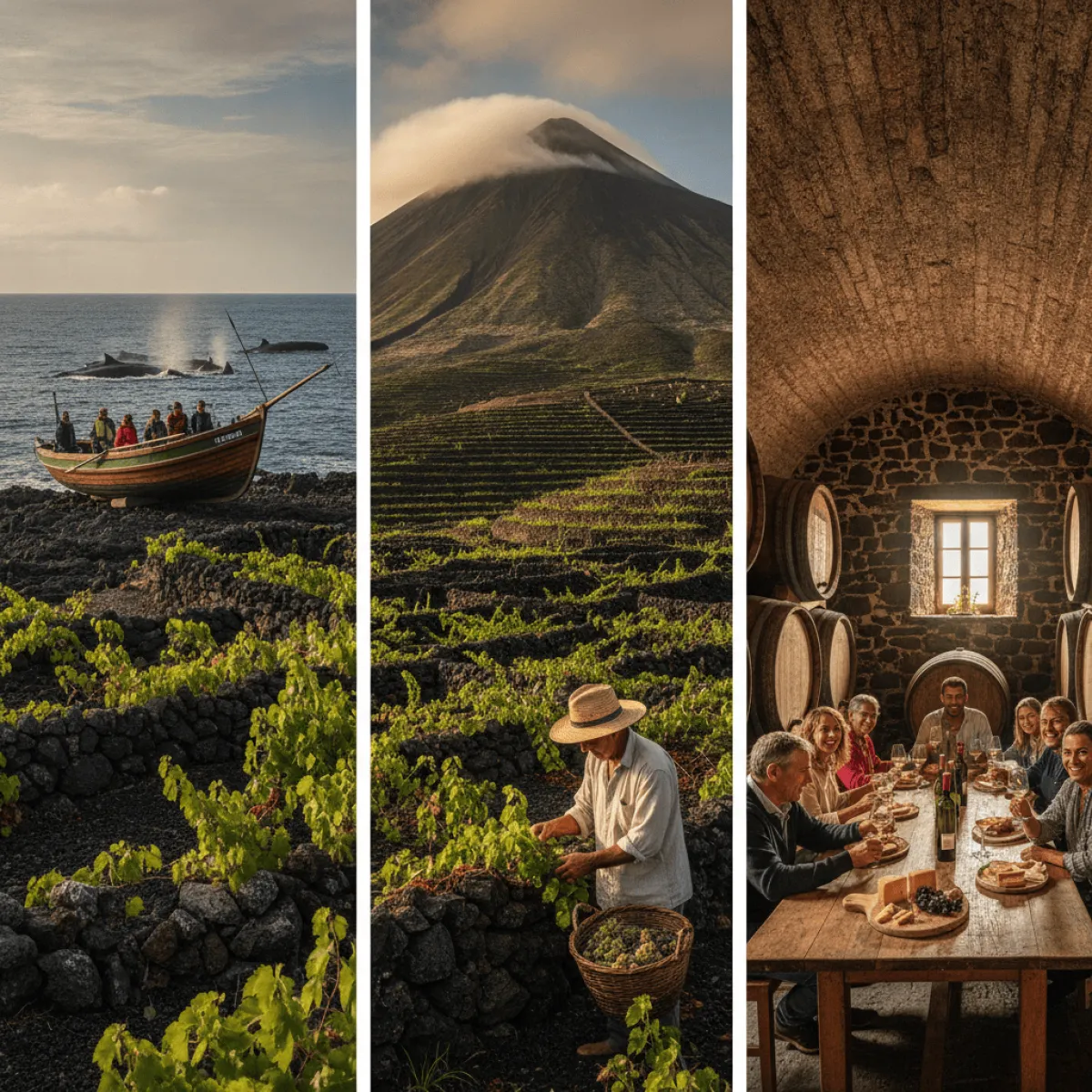
The move that separates tourists from converts is the night climb. Leave the Casa da Montanha around 4am with a headlamp, scramble up the Piquinho, the final cone where you use your hands for the last seventy metres, and watch the sun rise while the mountain casts a perfect triangular shadow across the sea towards Faial. Near the summit, fumaroles breathe warm air through the rock. It is one of the few places in Portugal where you can physically feel that you are standing on a dormant volcano.
Wine grown in stone
Come down from the mountain and go see why UNESCO classified Pico's vineyard landscape as World Heritage in 2004. At Criação Velha, just south of Madalena, vines grow inside thousands of currais: small corrals of hand-stacked basalt that shield the plants from wind and salt spray and release the day's heat back at night. Walk the trail through the corrals in the late afternoon, when the black stone is still warm, out to the red windmill of Criação Velha, and you will understand why generations of islanders spent their lives breaking rock for a few bunches of grapes.
Then drink the result. The local varieties, Arinto dos Açores, Verdelho and Terrantez do Pico, produce saline, volcanic whites unlike anything from the mainland. The island cooperative in Madalena makes Frei Gigante, the honest white you will find on every local table. For the ambitious end of the spectrum, Azores Wine Company near Bandeiras has turned Pico wine into a serious export story and runs tastings by appointment; in August, do not show up without booking. At Lajido de Santa Luzia, an interpretation centre set among old stone wineries explains the whole vineyard culture for anyone who wants context before the glass.
Lajes do Pico: whales, and the festival to plan around
The south coast belongs to the whales. Until the 1980s, Lajes do Pico was a whaling town whose men hunted sperm whales from open wooden boats. When the hunt ended, the town did the one sensible thing: it converted its vigias, the lookouts who spent their days scanning the horizon with binoculars, into spotters for whale watching. Espaço Talassa, operating out of Lajes since 1989, pioneered the trade and remains the reference: trips of about three hours, guided by people who talk about cetaceans with scientific rigour rather than folklore. In August your odds of sperm whales are strong and dolphins are close to guaranteed. Book ahead and confirm prices directly, but budget somewhere in the tens of euros per person.
Before or after the boat, visit the Museu dos Baleeiros, housed in the old boathouses by the harbour. It tells the whaling story without cheap romance: the harpoons, the boats, the photographs of men who did this out of necessity, not adventure. And if you can time your trip for the last week of August, you will catch the Semana dos Baleeiros, the island's biggest festival: whaleboat regattas, a procession in honour of Nossa Senhora de Lourdes, patron of the whalers, concerts, and an entire town out in the street. It is the only week of the year when Lajes feels crowded, and it is worth it.
The rest of the island, in lava and cheese
Save half a day for Gruta das Torres near Criação Velha, Portugal's longest lava tube at over five kilometres, of which a section is visited on a guided tour with helmet and lantern. At one point the guide asks everyone to switch off their lights, and you get total darkness and total silence, an experience worth the ticket on its own. On the north coast, the Cachorro natural pools near Bandeiras are Pico's answer to the beach: no sand, just black rock, iron ladders and transparent water. End the day the local way: queijo do Pico, a pungent, buttery cheese, with bread and a glass of island white on a terrace facing the Faial channel.
Plan B: if August keeps you on the mainland
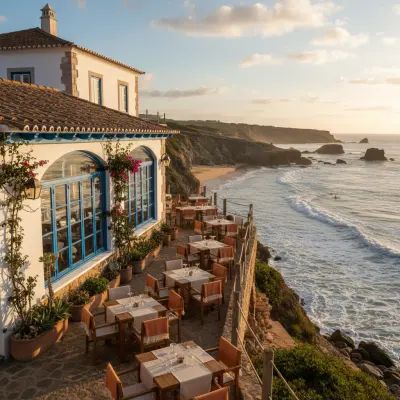
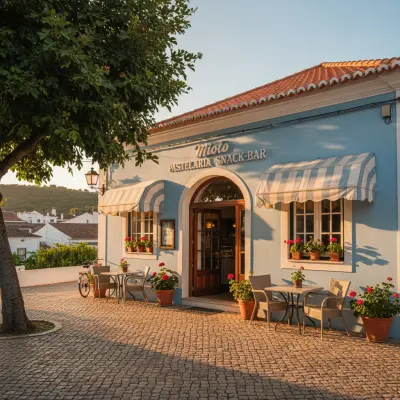
Honesty time: some years, August flights to the Azores sell out or hit prices that ruin the whole idea. If that happens, the mainland alternative with the same wild Atlantic character is not the flag-lined resort coast, it is Aljezur on the Costa Vicentina. Praia da Arrifana, a horseshoe of sand wedged between cliffs, faces the same rough Atlantic that surrounds Pico, with the advantage that you can drive there. For a pre-beach coffee, the local stop is Mioto Pastelaria Snack-Bar, unpretentious and full of regulars.
Aljezur even has its own equivalent of Pico's vineyard culture: the sweet potato, a crop with near-sacred status in the municipality. The Sweet Potato Heritage experience tours the area's rural markets and explains why this humble tuber defines the local table. For the rawest version of the coast, there is a coastal foraging and wilderness survival experience that teaches you to read the landscape instead of just photographing it. For sleeping, the village runs on small guesthouses with character: Muxima Aljezur Guesthouse and A Lareira Guesthouse work well as a base in the centre, while Releash Aljezur suits anyone travelling with a surfboard on the roof.
The verdict
Pico in August demands planning: flights early, car early, mountain slot reserved, whale boat reserved. In exchange it delivers a week no resort can imitate: sunrise at 2,351 metres, a volcanic white drunk next to the stone that grew it, and a sperm whale raising its fluke two miles off the coast. It is the best Portuguese August most people have never had. And if the Azorean Atlantic does not fit this year's budget, the Aljezur version is waiting three hours south of Lisbon, no boarding queue required.