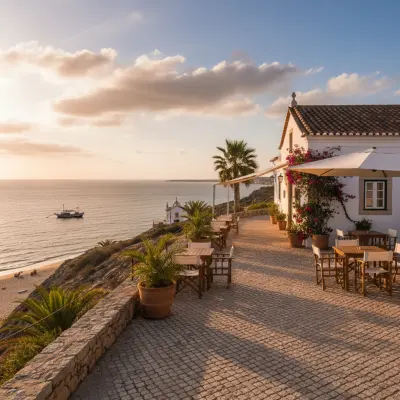
Empty Beaches Near Vila Real de Santo António in April
In April, the beaches between Cacela Velha and the Guadiana estuary are virtually empty, kilometres of white sand with no sunloungers, no music, no crowds. Vila Real de Santo António is the perfect base for exploring the eastern Algarve before everyone else arrives.
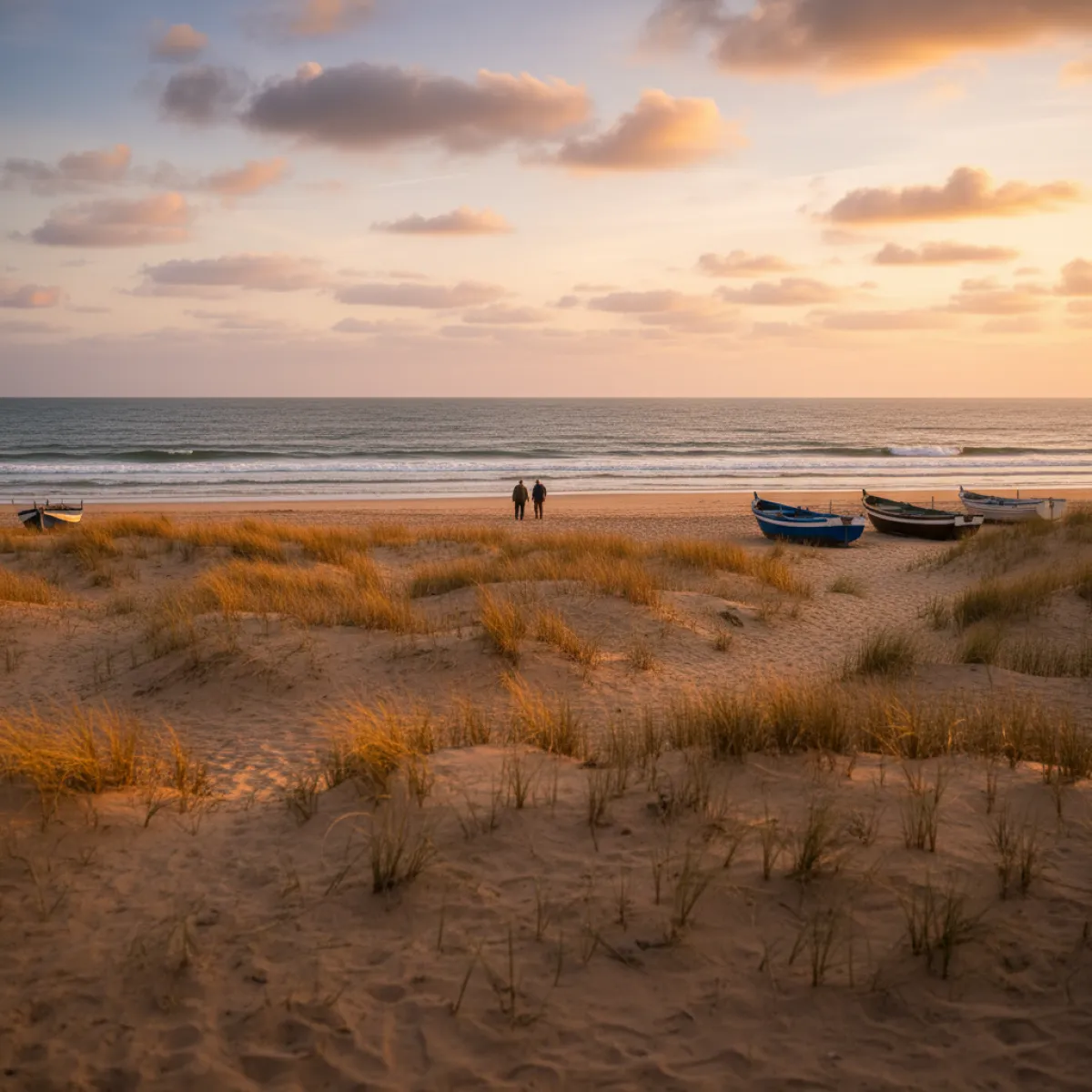
There's a window of time in the eastern Algarve that most visitors miss entirely. April. Those weeks between Easter and the official start of summer, when temperatures hover around 20-22°C, the water is bracing but manageable, and the beaches between Cacela Velha and the mouth of the Guadiana River are virtually empty. I'm not being dramatic. We're talking about kilometres of sand where, on a Tuesday morning, you can walk for thirty minutes without seeing another person.
Vila Real de Santo António is the ideal base for this. A Pombaline-era town, streets laid out in a grid, a symmetrical central square, everything planned to the centimetre in the 18th century, that most tourists use only as a crossing point to Spain on the ferry. Their loss. The town has its own quiet appeal, particularly in the late afternoon when the low sun hits the façade of the parish church and fishermen return to the quay with the day's catch.
Cacela Velha Beach: The Algarve's Worst-Kept Secret
Let's start with the obvious choice, which still manages to surprise anyone who hasn't been. The beach that stretches below the village of Cacela Velha is, for my money, the most beautiful in the Algarve. Not for the golden cliffs you see elsewhere, but for the sheer scale: a barrier island of white sand separated from the mainland by the Ria Formosa, with the village perched on the bluff above, a handful of whitewashed houses, a 16th-century church, and a fort that's seen better days.
Access in April depends on the tide. At low tide, you can wade across the lagoon (ankle-deep, knee-deep at most). At high tide, local boatmen run the crossing for around €2-3, check locally, as schedules shift with the season. The Miradouro de Cacela Velha is your first required stop: from up there, you can see the full sweep of the beach, the lagoon in shades of turquoise and green, and on clear days, the Spanish coast beyond. In April, this view belongs to you and perhaps two or three early-morning photographers. Perhaps not even that.
Once on the beach, walk east. The sand is firm near the waterline, perfect for covering distance. The barrier stretches for kilometres, and in April there are no beach bars, no sunloungers, no music. Just the wind, the gulls, and the sound of the surf. Bring water and sun cream, April sun in the Algarve is deceptive, and the reflection off white sand doubles the exposure.
Manta Rota and Monte Gordo: The Difference Between April and August
Manta Rota in August is organised chaos: beach towels at one per square metre, children screaming, inflatable-ball vendors everywhere. Manta Rota in April is a different reality. The beach, wide, flat, seemingly endless, is empty. The few open cafés serve coffee and buttered toast at local prices. No queues. No stress. You can park right by the beach without feeding a meter.
The same applies, on a smaller scale, to Monte Gordo. This beach has the advantage of proximity to Vila Real de Santo António (about 4 km), a decent promenade for walking, and marginally warmer water than the rest of the Algarve, the south/east orientation and shallow waters help. In April, the sea temperature sits around 16-17°C. Not tropical, but with air at 22°C and direct sun, a quick dip is entirely feasible. The hardy swim without complaint.
My recommendation: use Monte Gordo as your convenience beach for days when you don't want adventure. There are year-round restaurants, a pharmacy and a supermarket within walking distance. For the days when you want to feel like you've found something, head to Cacela Velha or explore the Ria Formosa beaches.
Beyond the Sand: What to Do When the Tide Comes In
April in the eastern Algarve isn't just about beaches. In fact, the best days are the ones where you mix coast and interior, sea and river, sand and history.
In the late afternoon, few things beat a sunset boat tour in Vila Real de Santo António. The Guadiana at dusk, with the light turning the banks gold and the Spanish border drifting slowly past, is one of those moments that justifies having come to the Algarve's easternmost corner. In April, the light is particularly good, softer than summer, with that amber tone that lingers longer.
After the boat, drive over to Castro Marim (ten minutes by car) and try a craft beer at Senescal Brewery. It's a small operation, locally produced, and the beer is honest. Not the best craft beer I've ever had, but it's fresh, it's made right there, and after a day of beach and sun, it tastes exactly as it should. Castro Marim deserves more than a beer stop, incidentally: the medieval castle has views over the salt marshes, and the Fort of São Sebastião, across the way, is one of the Algarve's least-visited fortifications.
The Interior Nobody Visits
If you have a car, and to explore this area properly, you really need one, set aside a day for the interior. Alcoutim, to the north, is a riverside village on the Guadiana that operates at an entirely different pace. In April, the fields are green (unthinkable in August), wildflowers line the roadsides, and the road that climbs along the river is a pleasure to drive. Alcoutim has a castle, a river beach, and a couple of restaurants serving wild boar and migas. Have lunch there. It's another trip within the trip.
Where to Eat (Without Tourist Traps)
Vila Real de Santo António isn't a gastronomic destination of note, let's be honest. But you can get good fresh fish at reasonable prices, which in the Algarve is no longer a given.
The municipal market is your best guide. Fresh fish and shellfish in the morning, and several restaurants nearby that work with whatever came off the boats that day. Look for the grilled catch of the day (sea bream, sea bass, sole) and avoid elaborate dishes, simplicity is the virtue here. A grilled fish meal with salad and house wine, for two, runs between €25-40 depending on the fish.
In Cacela Velha, dining options are limited but pleasant. There are one or two restaurants in the village with terraces and views over the lagoon. In April, some may be closed during the week, check locally before making plans. The razor clam rice, if available, is the dish to order.
For broader context on the region's food and traditions, our guide to local culture in Faro frames Algarvian cuisine within its cultural roots. And if your trip extends to the western Algarve, the Lagos neighbourhood guide has concrete recommendations area by area.
Logistics: Getting There and Where to Stay
Vila Real de Santo António is 50 minutes from Faro airport via the A22/Via do Infante. Without tolls on the EN125, count on 1h15-1h30 depending on traffic. By train, the Algarve line connects Faro to Vila Real de Santo António with stops in Tavira and other stations, the journey takes about 1h15 and a ticket costs less than €5. The train is a decent option, but to explore the beaches and the interior, you'll need a car.
Accommodation in April is significantly cheaper than in peak season. One-bedroom apartments in central Vila Real start from around €40-50/night. Monte Gordo has more hotel options, with 3-star properties running roughly €50-70/night in April. If you prefer something with more character, Cacela Velha has a handful of rural guesthouses and local tourism properties, book ahead, as supply is limited.
Why April and Not Another Month
March is still unpredictable, you might get glorious days or a week of rain. May starts to warm up and the first tourists appear. April is the sweet spot: comfortable temperatures, rain unlikely (though not impossible), and extraordinary light for photography. The days are long enough to enjoy the beach from morning to late afternoon, and the evenings are already warm enough for terrace dining without a jacket.
The eastern Algarve in general, and Vila Real de Santo António in particular, doesn't have the obvious appeal of Benagil's cliffs or Albufeira's nightlife. And that's precisely the point. People looking for empty beaches in April don't want Instagram spots or pool parties. They want space, quiet, and the feeling of having arrived somewhere before everyone else. To understand the contrast with the more familiar Algarve, our piece on Albufeira's local culture shows what's on the other side of the coin.
This corner of the country delivers that. It's not a secret, it's right there on the map, in plain sight. Most people simply don't bother coming here in April. All the better for those who do.