Elevated Óbidos: A Guide to the Best Rampart Views and Terrace Bars
Discover Óbidos from a different angle by exploring its ancient ramparts and hidden terraces where Ginjinha meets history. A curated guide to the best vantage points and culinary stops in the UNESCO Literary Village.
The Verticality of a Walled Village
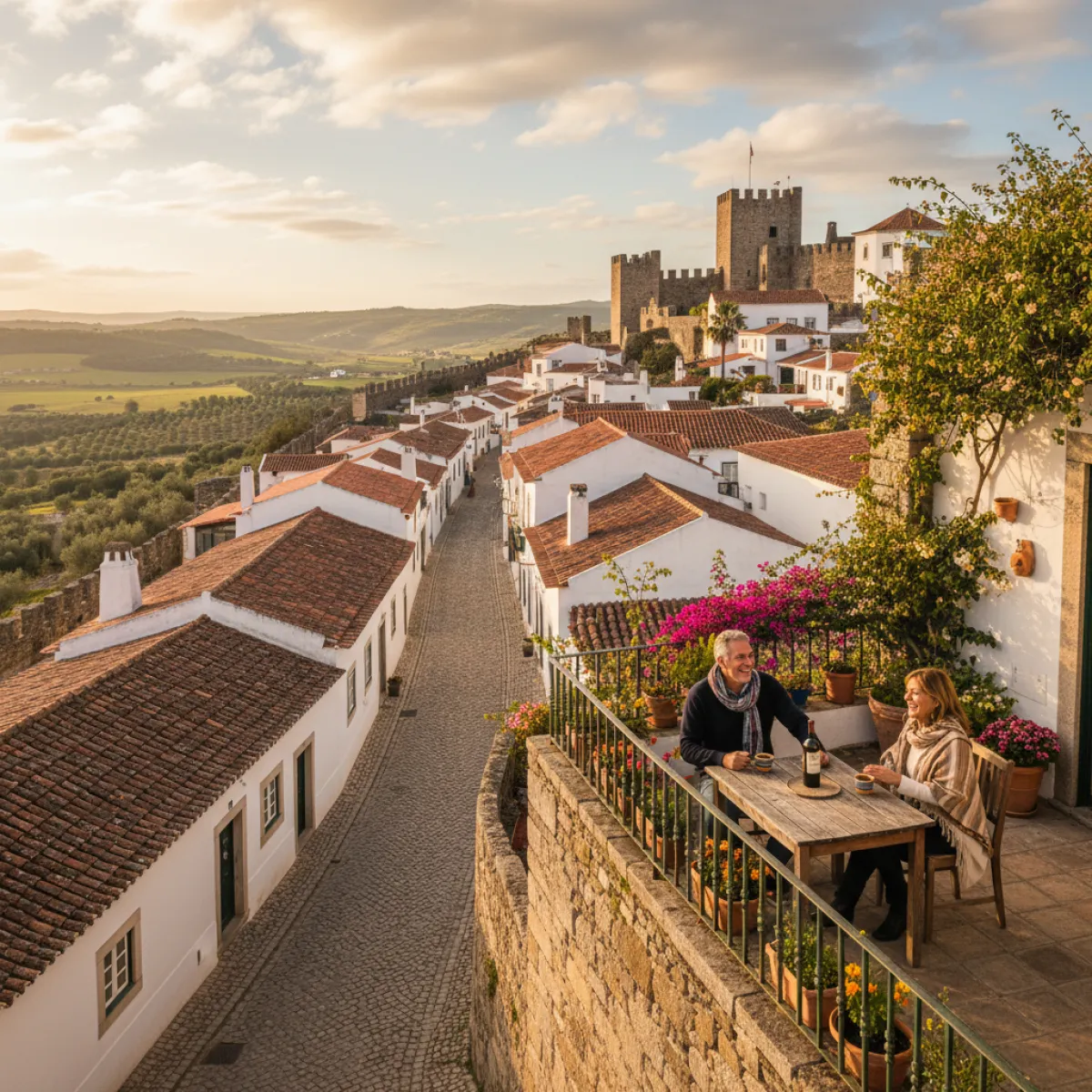
Óbidos does not reveal itself to the casual observer at eye level. To arrive at its base is to be confronted by a massive limestone curtain, a fortification that appears as a single, impenetrable block. Yet, the true character of this Oeste region stronghold is found in its verticality. Unlike modern destinations where rooftops are curated spaces of glass and chrome, in Óbidos, the "high ground" is a medieval birthright. Here, the best terraces are the ramparts themselves, and the most exclusive views are earned by climbing the irregular stone steps that lead to the battlements.
Walking the ramparts (Muralhas) is the purest lookout experience in the village. This 1.5-kilometer circuit encircles the historic core, providing a 360-degree panorama that oscillates between the white-washed houses punctuated by strokes of blue and yellow, and the vast agricultural plains of the Oeste. From this height, one grasps the organic density of Óbidos, a town plan that feels more like a living organism than a grid. If you are arriving from the capital, our guide to local culture in Lisbon highlights how neighborhoods like Alfama share this labyrinthine logic, though Óbidos operates on a much tighter, more fortified scale.
Terrace Institutions and the Ginjinha Ritual
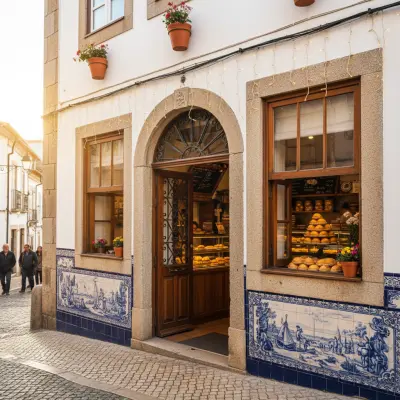
Descending from the strategic heights of the wall to the street level, the quest for a vantage point continues in more leisurely forms. One essential stop near the village entrance is Casa Portuguesa do Pastel de Bacalhau. While it is a familiar brand across Portugal, its location right by the Porta da Vila offers a unique perspective on the main gate and its stunning 18th-century tilework. It is an ideal spot to watch the ebb and flow of visitors while sampling the unorthodox but popular pairing of a codfish cake filled with Serra da Estrela cheese and a glass of Port wine.
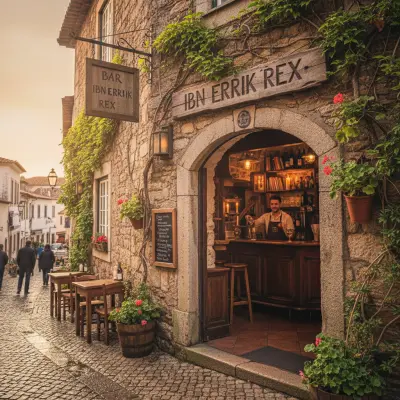
Further along the Rua Direita, the village's commercial spine, Bar Ibn Errik Rex stands as a sanctuary for those who appreciate liquid history. This is not a rooftop bar in the contemporary sense, but its small courtyard and dense interior, cluttered with dust-covered bottles and paintings spanning decades of local social life, offer a gravitas that no modern establishment can emulate. This is where the ritual of Ginjinha de Óbidos should be taken seriously. Avoid the mass-produced chocolate cups found on every corner; at Ibn Errik Rex, the cherry liqueur is served in glass, allowing you to appreciate the clarity of the spirit and the quality of the fruit. A tasting here is modestly priced, around 2 euros a glass, but the cultural value is immense.
For those seeking the comfort of wood-fired bread with a view of the side streets, Capinha d'Óbidos is the destination. This traditional bakery maintains the use of ancient ovens and offers a discreet terrace where the aroma of wheat and burning wood mingles with the fresh breeze blowing in from the Óbidos Lagoon. It is the perfect spot for a late breakfast away from the main thoroughfare, where a "pão com chouriço" and a coffee will rarely cost more than 5 euros.
Contemporary Perspectives: Art and Literature
The identity of Óbidos has shifted significantly in the last decade since its designation as a UNESCO City of Literature. This transformation isn't just found in churches turned into bookstores; it’s also etched into the walls themselves. To understand this modern layer, we recommend the journey through the UNESCO Literary Village. This experience guides you to less obvious vantage points where the contrast between century-old stone and large-scale murals by the artist Violant creates a fresh dialogue about the village's resilience.
This duality between the ancient and the avant-garde makes Óbidos a complex destination. While our best day trips from Cascais often focus on coastal glamour, Óbidos offers something more grounded and defensive. The views here are not of palaces shrouded in mist, as one might find in our Sintra neighborhood guidebut of a community that has survived within stone walls for nearly a millennium.
The Liquid Horizon: Beyond the Walls
The best views of Óbidos aren't strictly contained within the fortifications. Looking south from the castle, you see the rolling hills that fuel the region’s viticultural heritage. The Oeste is a land of characterful wines, shaped by the Atlantic's proximity and the microclimate of the Montejunto range. For those wishing to expand their horizon, a heritage wine journey at Quinta do Sanguinhal is essential. Located just a short drive away, this estate offers a historic perspective on the production of brandies and wines that have supplied Óbidos for centuries. Watching the sun set over the Sanguinhal vineyards, with the silhouette of the village in the distance, is perhaps the most rewarding view in the region.
Practical Advice for the Discerning Traveler
- Footwear: The cobblestones of Óbidos are unforgiving. To walk the ramparts or explore the steep alleys, leave the leather-soled shoes at home. Robust boots or sneakers with excellent grip are non-negotiable.
- Timing: The ramparts have no handrails or artificial lighting. The ideal time to ascend is one hour before sunset. The golden hour light hitting the clay roof tiles creates a color palette reminiscent of a Flemish masterpiece.
- Crowds: The village experiences heavy day-trip traffic. To enjoy the best views in peace, stay overnight. After 6:00 PM, the village returns to its medieval silence, and you can have the walls almost entirely to yourself.
- Budgeting: Óbidos remains surprisingly affordable if you avoid the blatant tourist menus. A dinner at a high-quality local tavern will range from 25 to 35 euros per person, including regional wine.
In summary, the beauty of Óbidos lies in its ability to force us to look upward and outward. Whether from the top of a Moorish wall, the courtyard of a historic institution like Bar Ibn Errik Rex, or through the windows of a repurposed bookstore, the village offers a lesson in perspective. It is a destination that rewards physical effort with visual clarity, where the history of Portugal unfolds before your eyes, framed by walls that have withstood time and now serve as a balcony to the world.