Bragança Road Trip: Choose the Interior Over the Coast
Forget the August-packed Costa Vicentina. A road trip from Bragança swaps sand for granite, crowds for silence and coastal prices for under-fifteen-euro menus. Citadel at dawn, kayaking the Sabor, and a night that does not end at nine.
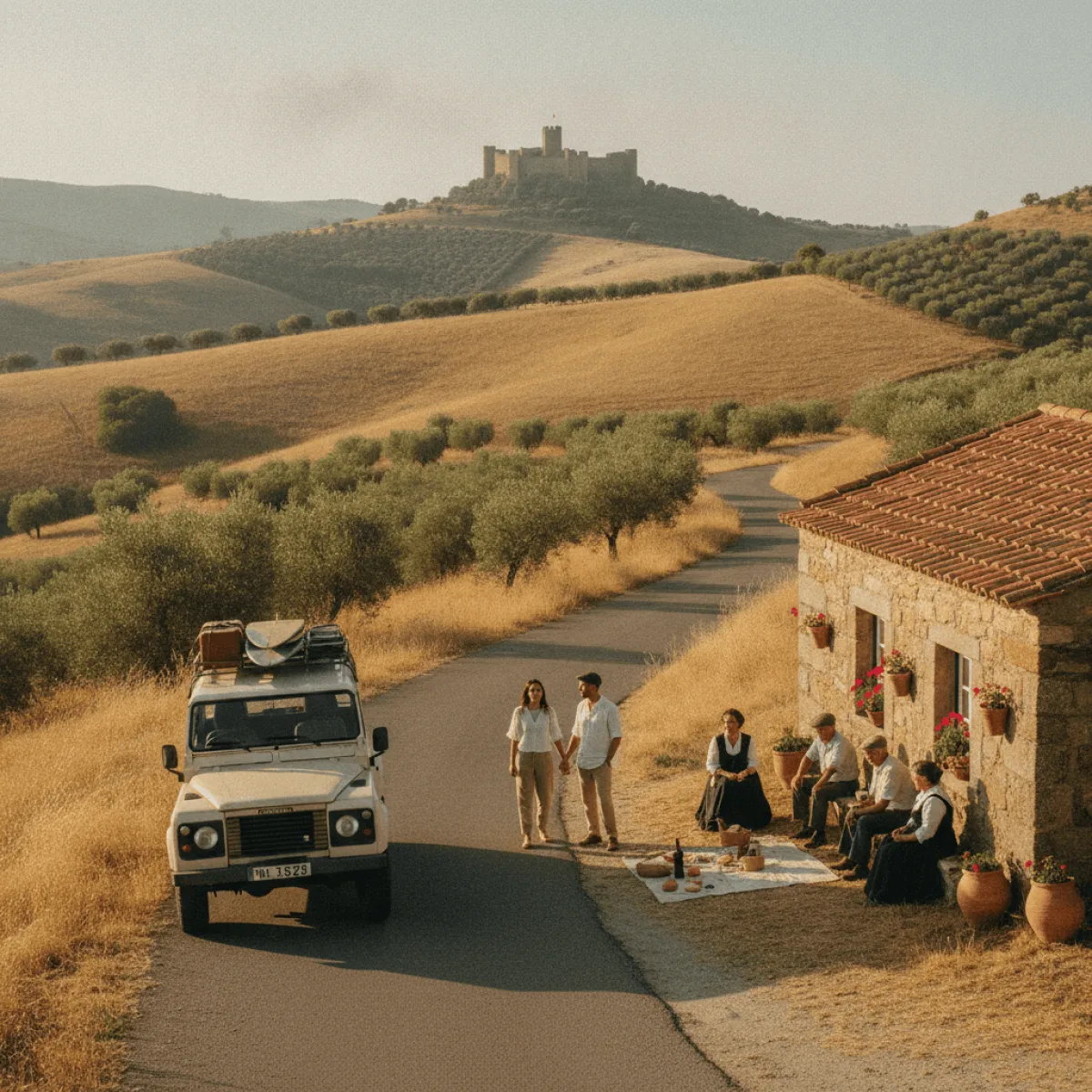
Let me say what no June travel feature will tell you: skip the Costa Vicentina. Not because it is bad, but because in July and August you will share every metre of sand with half of Lisbon and a third of Bavaria. Meanwhile, on the other side of the country, there is a corner where you can drive for twenty minutes without passing another car, where the thermometer reads sixteen degrees at nine in the morning, and where an alheira still means something. That corner is Bragança and the plateau around it. This is the road trip you should actually be doing.
Why trade the sea for granite
The logic is simple. The coast is horizontal and predictable: road, dunes, more road. Trás-os-Montes is vertical and stubborn. You climb the sierra, drop to the river, climb again. The landscape changes every time you crest a hill. And unlike the Algarve, nobody has doubled the prices for high season, because high season here barely exists.
Bragança is the natural starting point. It sits about two hours from Porto on the A4, a near empty motorway that cuts through the Padrela range and the Tua valley. Sort out the car early: there is no useful train, and buses are scarce. The car is not a convenience here, it is the price of admission.
Day one: the citadel before the heat
Start early. At seven in the morning on Rua da Cidadela, the only sound is a baker sliding trays into the oven, and not much else. Bragança's medieval citadel is one of the few in Portugal where people still live inside the walls: laundry strung between stone houses, cats sunning themselves on the steps, and the castle keeping watch from the top.
Climb the keep, which houses the Military Museum, before ten. The ticket costs a few euros (confirm the price on site) and, more importantly, at first light you get the ramparts to yourself. Down below, do not leave without seeing the Domus Municipalis, that Romanesque civic building with a pentagonal floor plan unlike anything else on the Peninsula. It is small, it looks like a granary, and it is one of the country's rarest pieces of architecture. Five minutes. Worth it.
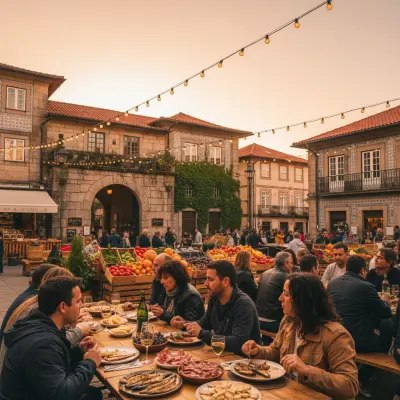
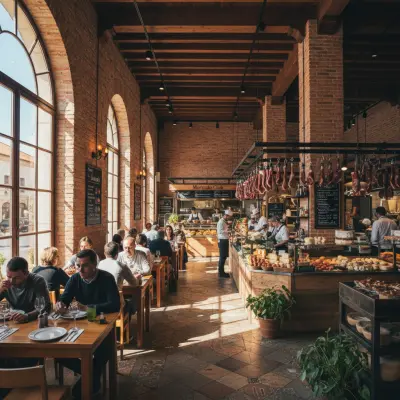
At lunch the rule is one word: alheira. Bragança fights Mirandela over who invented this smoked sausage and, honestly, the grilled versions here, served with a fried egg on top and smashed potatoes, justify the whole drive. Do not order it deep fried in places aimed at the rushed tourist. Look for the simple casas de pasto with paper tablecloths and a menu of the day under fifteen euros. That is where the good stuff lives.
Montesinho: the slow afternoon it deserves
North of Bragança opens the Montesinho Natural Park, sixty thousand-odd hectares of oak woodland, wolves you will never see, and villages of schist and granite where time runs slow. Rio de Onor, split in two by the Spanish border, is the obligatory postcard, but I would send you to Montesinho village itself and to Gimonde, quieter and far less photographed.
If you want to switch off the mental engine and not just the car, there are people who run a yoga experience in the heart of Montesinho that uses exactly that silence without having to explain it with adjectives. It is the kind of programme that works best in the morning, before the sun really hits the plateau.
Bring water, bring a hat, and bring proper shoes. The Montesinho trails are not demanding, but the ground is loose stone and the June sun is deceptive: it feels cool and dehydrates you anyway. Stock up in Bragança before you climb, because cafés open in mid-afternoon up there are a risky bet.
The Sabor river and the water nobody expects
The picture people have of Trás-os-Montes is dry, dusty, oven-hot. Half true. The dammed Sabor river has created surprising stretches of water where you can spend a whole morning paddling without crossing a single speedboat. If one activity demolishes the prejudice that there is no water up here, it is a kayak expedition on the Sabor lakes. Same water temperature as the coast, minus the crowd and minus the gold-priced parking.
Practical tip: do it in the early morning or late afternoon. The midday wind on the plateau gets up suddenly and turns a mirror-flat surface into a small test of patience. And protect your camera: the light here is fierce and beautiful, but the water splashes.
Pushing on to Mogadouro and the southern plateau
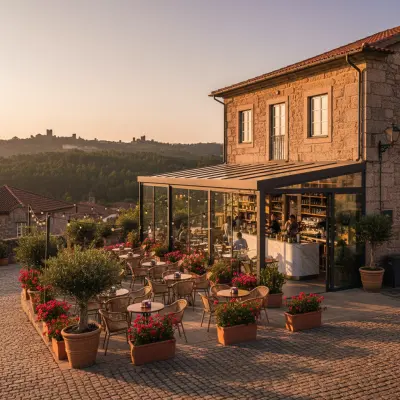
If you have more than two days, point south to Mogadouro. It is one of those municipalities everyone crosses on the way to Miranda do Douro and almost nobody stops to see, which is precisely the argument in its favour. In June, with the long days, it is worth following our route through the Mogadouro viewpoints at sunset, because it is at the last hour of the day, when the light goes low and raking, that the plateau stops looking monotonous and starts to make sense.
Along the way there is always a hill fort, a lost chapel, a village with more storks than residents. Do not force the itinerary. The charm of Trás-os-Montes is precisely being able to peel off the main road and discover that the detour was better than the destination.
The western flank: Montalegre and the Barroso
If you want to close a grand loop rather than drive out and back, cut west towards Montalegre, in the Barroso, a region classified by the FAO as a World Agricultural Heritage Site. It is a different geography, wetter, greener, with serious cured meats and a Trás-os-Montes cozido that fills a table for six. Read our guide to Montalegre beyond the Barroso, between castle, castro and mountain kitchen first, as it organises what to see without drowning you in stops.
In summer the landscape is generous, but if you ever come back off-season, take a look at our photography itinerary for Montalegre in winter: the same plateau under frost and fog is another planet, and any photographer knows the best light is not in August.
And at night? Bragança does not turn in early
There is a notion that the interior goes to bed at nine. False, especially in a city with a university. Bragança has its Polytechnic Institute, and where there are students there is life after midnight. The nightlife is not Lisbon and does not pretend to be, but there are places that hold on until dawn.
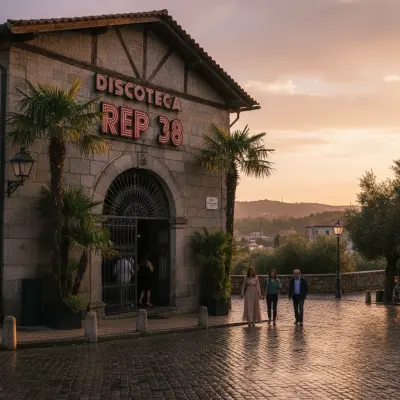
For a proper night out, Mercado Club is the name that comes up when you ask a local where people actually dance; there is even a second venue tied to the brand, also called Mercado Club, for the busier nights. If you want something more relaxed, Moda Café works well as a first stop before the night peaks, and Discoteca Rep 38 completes the triangle for anyone wanting to stretch into the small hours. Check opening days and times locally, because during exam season and outside the academic calendar everything shifts.
Logistics without the romance
- Getting there: by car on the A4 from Porto, about two hours. Without your own car, the trip loses half its point.
- When to go: June is the sweet spot. Long days, heat still bearable, zero crowds. July and August get seriously hot on the plateau.
- What it costs: menu of the day between ten and fifteen euros, museums a few euros, lodging well below coastal prices. Book the kayak and yoga experiences ahead, because the groups are small.
- What to pack: layers (the temperature swing is big), serious sunscreen, closed shoes for the trails and a full tank before you climb to Montesinho.
In the end, the question is not whether Trás-os-Montes replaces the Costa Vicentina. It does not, they are different planets. The question is whether you are willing to trade the photo everyone already has for one almost nobody takes. If the answer is yes, start in Bragança, climb to Montesinho and let the road decide the rest.