Aljezur's Grilled Sardines: The Vicentine Summer Ritual
Forget the Portimão queues. The Algarve's best sardines are eaten in Aljezur, with bread catching the dripping fat, chilled red wine in the ice bucket and mountain wind clearing the smoke. An honest guide on when to come, where to eat and what to order.
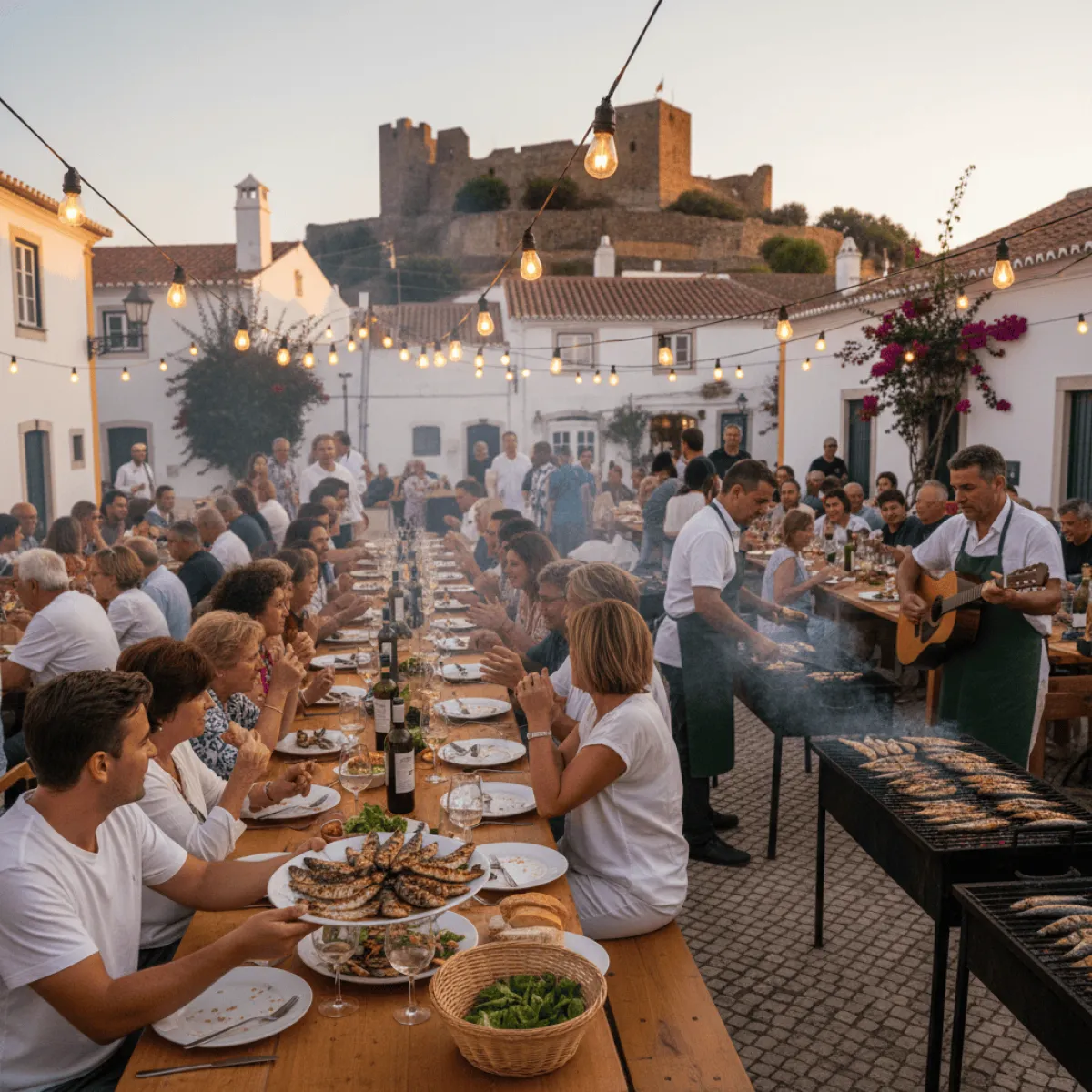
There's a smell that defines June in Aljezur, and it's neither the sea nor the rockrose. It's the smoke of sardines dripping over charcoal, rising from street grills at two in the afternoon, clinging to clothes, hair, memory. Anyone who has never eaten grilled sardines with homemade bread tucked underneath to catch the dripping fat hasn't eaten sardines. They've eaten fish.
Let me be direct: Aljezur isn't the obvious destination for sardines. Guidebooks send everyone to Portimão, to the festival, to the two-hour queues and inflated prices. Fair enough, Portimão has tradition and deserves credit. But if you want to eat sardines the way they should be eaten, without performance, without spectacle, with the owner's apron stained with coarse salt and the restaurant cat circling under the tables, come here. To the west coast. To this small village of white houses and the castle up on the hill, where the Atlantic doesn't pull punches and sardines, when they appear on the grills, are because they were caught at dawn in Sagres or in Arrifana.
Why Aljezur and not somewhere else
Short answer: because good sardines need three things, and Aljezur has all three. First, fresh fish, and we are five minutes from Praia da Arrifana, where small boats still head out at sunrise. Second, people who know how to grill, and that's learned from watching your parents for forty years, not on a weekend course. Third, the right environment, and here there are no terraces with sponsored umbrellas or background music. There's olive tree shade, plastic cups for house wine, and the mountain wind clearing the smoke as it rises.
Aljezur sardines aren't better than those from Setúbal or Matosinhos on paper. But they're better in context. Eating sardines in Aljezur after a morning at Arrifana, with skin still salty and hair full of sand, is an experience you can't replicate at a fancy restaurant in Lisbon no matter what the manager charges. It's geography, it's season, it's your body asking for what it needs.
When to come: the non-negotiable calendar
Sardines have a season. Anyone telling you otherwise is trying to sell you frozen fish. Good Portuguese sardines start in May, gain fat in June, peak in July and August, and still put up a fight in September. By October they're lean, by November not worth bothering, and from December to April you don't eat sardines in Portugal. Full stop.
The best month? August, no question. The sardine carries 22% fat, stays juicy on charcoal, the skin crackles like parchment and the flesh almost dissolves just from looking at it. But if you hate crowds, go in June. The sardines aren't at their peak yet, but they're good, prices are more honest (we're talking 8 to 12 euros for a portion with boiled potatoes and salad, check locally), and you can get a table without booking at eight in the evening.
There's also the Sweet Potato Festival in November, which is a completely different thing, but worth keeping on your radar if you come at that time. For a deeper dive into local agricultural traditions, I recommend this experience through the rural markets, which shows how Aljezur defends its roots beyond fish season.
How to recognize a good sardine spot (and how to escape the bad ones)
Down to brass tacks. There are rules, and those who ignore them pay dearly, in money and in dignity.
The fish
- Eyes bright, prominent, never sunken. If the eye is dull, the sardine has seen better days.
- Gills bright red. Brown or grey, walk away.
- Body firm. If the belly stretches like elastic, it's old.
- Size. A good sardine measures 17 to 22 centimeters. Too small lacks fat, too large has passed its prime.
The grill
Charcoal, always. Anyone grilling sardines on gas is doing something else, it might be good, but it isn't grilled sardine. The charcoal must be in live embers, no flame, with that grey layer on top. The sardine goes on directly, no oil, nothing. Just coarse salt, and the good kind, before it hits the fire.
The timing
Three to four minutes per side, maximum. Overcooked sardine turns to mush. When the skin crackles and starts to split open, it's done. If the griller leaves it five more minutes because he's distracted talking to you, he's wasting fish. Complain, politely, but complain.
The sides
Bread. Homemade bread, coarse, unbleached flour. It has to hold up to the fat without falling apart. Boiled potatoes with skin, tomato salad with onion and oregano, grilled pepper. Nothing else. If they offer you rice with sardines, you're in a tourist trap, leave.
Where to eat: my personal map
Aljezur isn't Lisbon. There aren't thirty options, there are five or six worth it, and the rest is variations on the same theme. I'll tell you what I know, but verify hours locally, because on the Vicentine coast things change from week to week, especially outside peak season.
The village of Aljezur
In the village center, near the bridge over the stream, there are small taverns grilling at the door. The smell guides you. I don't need to give you the name, you'll see it. Take the first table they offer, order a portion, and prepare to meet your table neighbors, because the space is tight and conversation flows on its own.
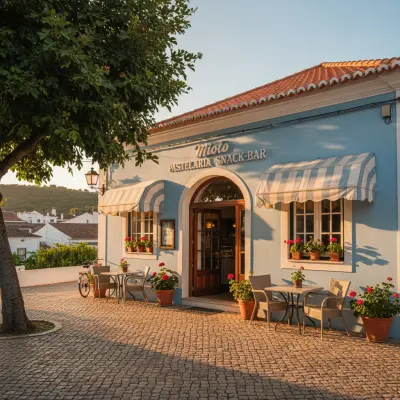
For something more substantial than pure sardine, or for breakfast before a hike, it's worth stopping by Mioto Pastelaria Snack-Bar. It's not the sardine spot, but it's the coffee-before and pastry-after spot, and in Aljezur life organizes itself this way, with short stops and clear purposes.
Arrifana and Monte Clérigo
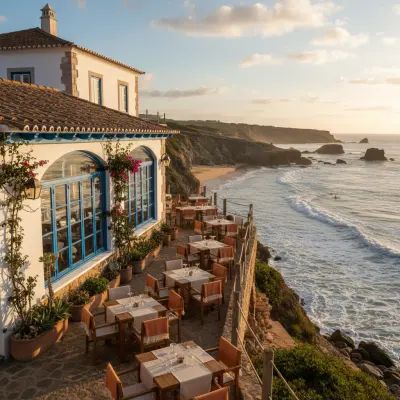
At Arrifana, atop the cliff, there are restaurants with views that fill up in summer. Sardines there carry a view premium, costing 30% more, but if it's sunset hour and you have company worth impressing, it can be justified once. For everyday, avoid. At Monte Clérigo, further north, there's a family restaurant where sardines appear when there are sardines, and when there aren't, it's because the boats didn't go out. Honesty is a rare virtue.
Sagres and Vila do Bispo
If you're in Aljezur, the 40-minute detour to Sagres is worth it, especially in the afternoon. The fish auctions are there, and the sardines you eat at those small taverns near the harbor are literally the ones that came off the boat that morning. It's not a secret, but it's the kind of thing everyone knows and few people do.
Drinking: what works and what doesn't
Forget expensive white wine. Sardines don't ask for sophistication, they ask for freshness. Vinho verde, from Quinta da Aveleda or a small house, served properly chilled. Or house wine, light red, cooled in an ice bucket. Shocking, I know, but in Portugal drinking chilled red in summer is a tradition that makes complete sense when the thermometer hits 35 degrees.
Beer also works, but pick one with body. An ice-cold Imperial in a glass, not in plastic. It makes a difference, I promise.
After lunch, a medronheira. Non-negotiable. The strawberry tree spirit is the Algarve's digestive, especially from the mountain. It costs 1.50 to 2 euros a shot, and there are artisanal producers throughout the region whose quality is absurdly superior to commercial brands. Ask the owner, he'll point you in the right direction.
Beyond the table: what to do between meals
Aljezur rewards those who stay more than one night. The village has the Moorish castle up high, the small but honest municipal museum, and the morning market. To get to know the region in depth, there are experiences truly worth doing, especially if you come with time. One is coastal foraging and wilderness survival on the Vicentine coast, which teaches you to identify edible plants, harvest shellfish, and read the territory the way the first inhabitants read it. It isn't a tourist activity, it's a school of landscape reading.
If you want to extend your trip through the Algarve, there are other villages worth visiting, each with its own personality. Lagos has a very lively old city, and the Lagos neighborhood guide helps separate what's touristy from what's genuine. Faro, capital of the region, is often underestimated, but the local culture there is a surprise to anyone who only knows the airport. And if you're traveling with family, consider Silves, with its red castle and slower rhythm. The honest family guide to Silves gives you the real picture, with what works and what to skip.
Logistics without romance
Aljezur is 1h30 from Faro airport by car, 3h from Lisbon. There's no train. There are buses, but with inconvenient schedules. A car is practically mandatory, especially if you want to explore the beaches and small restaurants in the surrounding villages.
Sleeping? In July and August, book two months ahead or pay triple. In June or September, two or three days are enough. Options range from rural tourism houses in the mountain to apartments in the village and modest hotels near the beaches. Avoid anything describing itself as a "luxury resort", that isn't Aljezur, that's a simulation for people who don't want to be in Aljezur.
Average cost of a sardine meal for two, with bread, potatoes, salad, a bottle of house wine and two medronheiras: between 30 and 45 euros. Check at the moment, because prices have been climbing in recent summers and what was cheap in 2023 isn't anymore in 2026.
What to take home
Nothing material. The sardine doesn't travel, you eat it there. But things stay. The smell that gets into your clothes and survives two washes, so every time you open the closet in winter you remember that day. The conversation with the couple at the next table who were on holiday from Belgium and asked if they could order a sardine from you because they'd ordered too few. The man who had been grilling there for thirty-five years and who, between flipping fish and serving tables, still had time to tell you his family's story.
That's what you take. And that's what makes the difference between eating sardine and having eaten sardine in Aljezur. The first is nutrition, the second is memory. And memory, unlike sardine, has no season. It lasts the whole year, and it will call you back next summer, without needing an invitation.