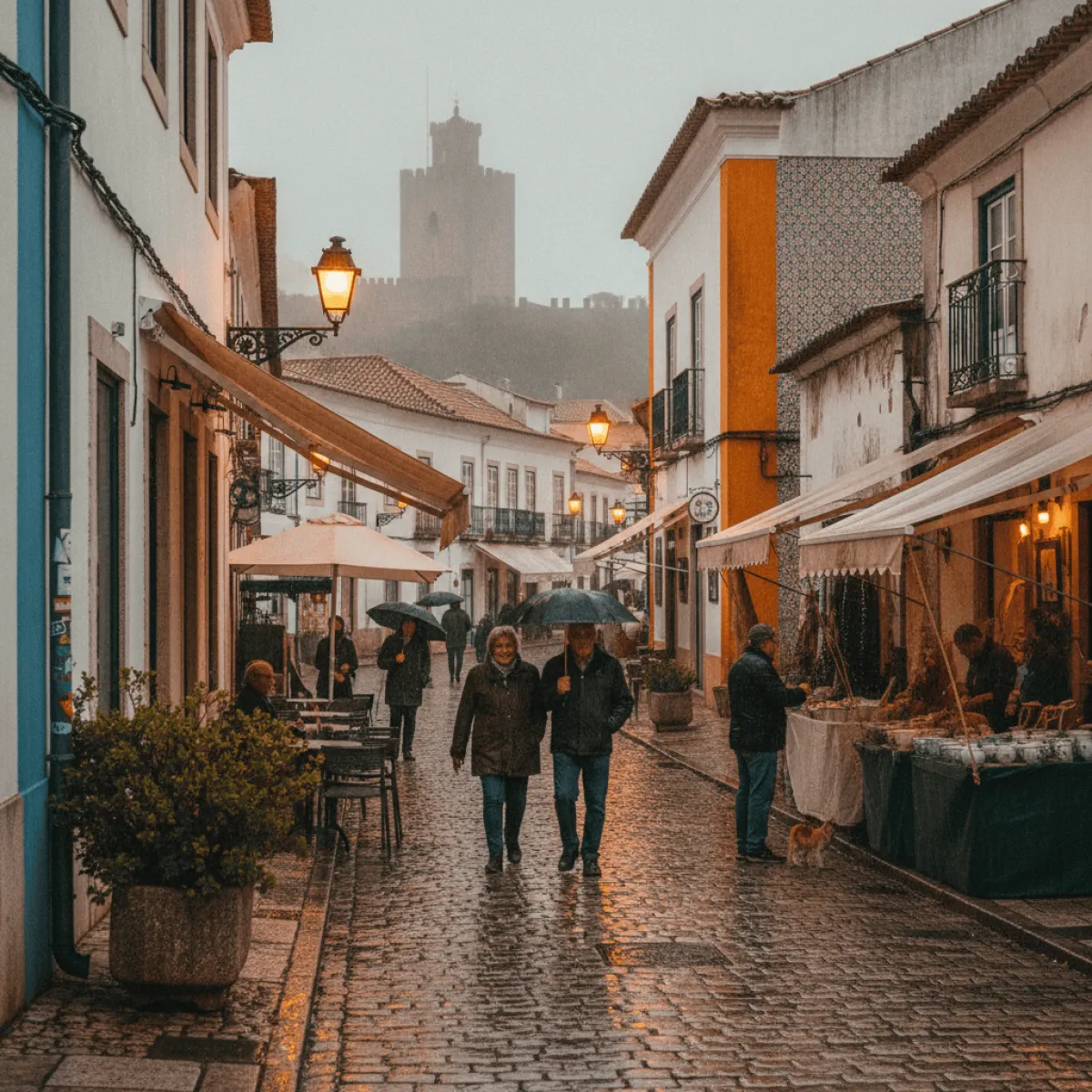
Rain in Tavira? What to Do When the Sun Fails
When it rains in Tavira, the town doesn't stop, it just moves indoors. Between centuries-old churches, a covered market by the river and a wine cellar reviving a nearly lost tradition, there's more to do than the forecast suggests.
Nobody comes to the Algarve hoping for rain, and the numbers back that up: winters in Tavira are mild, most of the rainfall is squeezed into the months between November and March, and even then there are whole weeks of clear sky. But when it rains, it rains properly, and the town changes character. The terraces on Praça da República empty out, the flip-flop crowd retreats into the cafes on Rua da Liberdade, and Tavira, a place that lives so much on its streets and its river, shows the other side of itself: the indoors. Cold churches with centuries of whitewash on the walls, a covered market that smells of fresh fish and coffee, a wine cellar where tasting happens slowly, out of the rain. This is not a sad backup plan. For anyone who actually likes small towns, a rainy day is arguably the best day to get to know Tavira properly, without the August heat pushing everyone toward the beach.
Churches, a Palace and a Market: the heritage that doesn't get wet
Tavira is known locally, with a fair amount of pride, as the town of the 21 churches, and on a rainy day that stops being tourist-brochure trivia and becomes an actual plan. You don't need to see all of them, and you couldn't anyway, many keep irregular hours or open only for mass, but the Igreja da Misericórdia, with its Renaissance portal, is the one genuinely worth chasing down, even if that means checking the schedule on the day itself at the tourist office. The Igreja de Santa Maria do Castelo, next to the castle ruins, holds one of the town's most visited tombs, that of the Seven Knights of the Order of Santiago, and an interior that makes the walk up worthwhile even under an umbrella.
The Palácio da Galeria, run by the town council, works as a cultural centre and displays archaeological remains visible inside the building itself: Roman and Islamic traces beneath the floor visitors walk on. It's one of the few places in Tavira where you feel, physically rather than abstractly, that this was a Phoenician port, a Moorish town and a Christian settlement long before it was anyone's holiday destination. Opening hours and admission depend on the current exhibition, so it's worth confirming locally before heading over.
Mercado da Ilha
If the goal is to kill two or three unhurried hours, Mercado da Ilha, the covered market building by the Gilão river, is the obvious choice. It's indoors, with fruit and fish stalls sitting next to small shops and cafes, and it works as a meeting point both for people doing serious shopping and for anyone who just wants a sheltered coffee while watching the rain fall over the river. It's not a market dressed up for tourist photos, it's a working market that happens to serve tourists too, and that changes everything about the experience. On days of heavier rain, the covered cafe terraces around Praça da República make a solid fallback at any hour.
Tasting the Wine That Came Back to Life in Tavira
If there's one indoor activity in Tavira that doesn't feel like a last-minute swap for the beach, it's wine tasting. The Revival of Tavira's Viticulture: A Wine Experience at Al-Lagar tells the story of a local winemaking tradition that nearly disappeared and is now being brought back by small producers, and the tasting itself happens in an enclosed space, around a table, with no clock running. This is the kind of experience that works better precisely when the weather is bad outside: nobody is thinking about the beach they're missing, because right then there's no beach to miss. Book ahead, especially outside peak season, since groups tend to stay small, and prices vary depending on how many wines you taste, so it's worth confirming details when you reserve.
Where to Wait Out the Rain
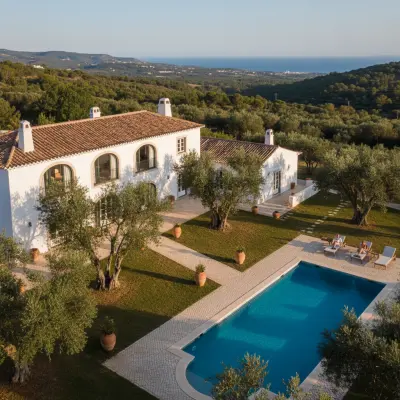
For anyone who would rather wait out the rain without leaving the property they're staying at, Fazenda Nova Country House is a good bet. It sits outside the centre, in the countryside around Tavira, which on a sunny day can feel like a mild inconvenience, a few extra minutes into town, but on a rainy day is exactly the opposite: wet fields, silence broken only by rain on the roof, a pace the old town simply doesn't offer. It's the kind of place that makes up for a lost beach day, because the experience of staying there doesn't depend on sunshine to work.
When the Sky Clears
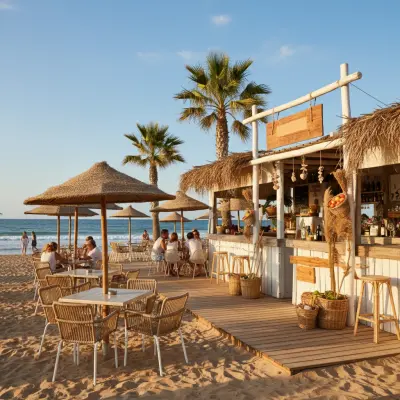
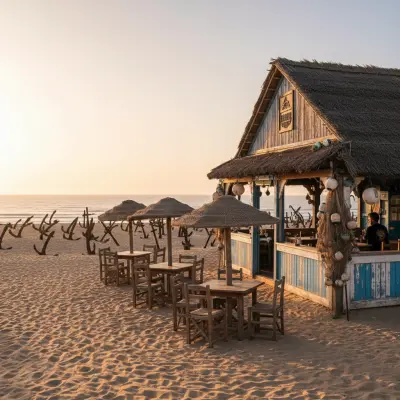
Rain in the Algarve rarely lasts a full day, and Tavira rewards those who wait it out. As soon as the sky clears, even for a few hours, it's worth taking the boat over to Praia da Ilha de Tavira: with far fewer people around and the sand still damp, it's a completely different version of the beach that gets packed solid in August. Praia do Barril, with its old anchor cemetery at the entrance, and Praia de Cabanas de Tavira, across the estuary, offer the same kind of payoff: landscapes that turn more dramatic, not less beautiful, with clouds still hanging on the horizon and loose sand lifting in the wind.
If the rain stops but the sky stays grey and the wind drops, that's also the best moment for Bird Watching in Tavira: Exploring Ria Formosa by Boat. Contrary to what most people assume, bright sunny days aren't ideal for birdwatching on the ria: direct light and heat send the birds into cover among the reeds. The tail end of a rainy morning, with overcast skies and the right tide, is often when there's the most activity in the marshes and channels.
- Heavy rain, no end in sight: Palácio da Galeria and Igreja da Misericórdia, with a coffee break at Mercado da Ilha.
- Light, on-and-off rain: a table at the wine cellar for an unhurried tasting.
- Clearing sky, no sun yet: Ria Formosa by boat or one of the beaches, practically empty.
If the Rain Won't Quit, Change Municipality
Some days the bad weather front covers the whole Algarve and there's no escaping it within Tavira itself. In that case, the more honest move is to change your geography. Our guide to local culture in Faro points to activities that also hold up on grey days, especially the ones built around museums and the neighbouring town's covered old quarter. For anyone travelling with kids and worried the rain will ruin the day, the Silves with Kids guide has suggestions that work fine without sun. And if the aim is to wait out the rain somewhere less touristy, it's worth revisiting the tips on how to dodge the August crowds on the Algarve, in Aljezur, which also work, by extension, for thinking about the region beyond the obvious spots in any season.
Getting to Tavira is simple even in the rain: the Algarve railway line connects Tavira station to Faro in just over half an hour, which makes hopping between towns fairly painless if the bad weather is regional rather than local. By car, the A22 motorway shortens distances, and there are car parks by the river near Mercado da Ilha for anyone who'd rather not carry an umbrella further than necessary.
What's Left After the Rain
Maybe the most honest argument for a rainy day in Tavira is this: without the heat pushing everyone toward the beach, the town gives itself back to itself. The streets settle into the rhythm of the people who actually live there, the cafes fill with Portuguese conversation instead of tourist English, and the churches, the market, the wine cellar, stop being stops on a checklist and become, for one afternoon, the actual destination. There's no need to root for rain. But if it shows up during your stay, Tavira is far from the worst Algarve town to wait it out in.