Portimão's Coffee Trail: From Pastelaria to River View
In Portimão, an espresso still costs less than a coin left over in your pocket, if you know where to stop and what to order. From downtown counters to the viewpoint over the Arade, this is the coffee route that separates locals from passers-through.
In Portimão, the day starts standing up. There's no reserved table, no laminated breakfast menu: there's a barman who already knows your order from the look on your face, and an espresso that still costs less than the coin left over in your pocket. This is a town that grew up around sardine canneries and fish landed straight off the boats, and that working rhythm still shows in the pastelarias before nine in the morning. This isn't an article about pretty terraces for photos. It's about where to drink real coffee in Portimão, without falling into the price traps of the touristy Praia da Rocha strip, and what to order at each spot so you don't give yourself away as a lost tourist.
The ritual before 9am
Anyone who thinks "coffee" means one thing in Portugal is wrong. Here, like everywhere else in the country, the word covers half a dozen different drinks, and ordering the wrong one gives you away immediately. In the pastelarias of the old town, between Rua do Comércio and the Mercado Municipal, the same ritual plays out every morning: construction workers on their way to a site, civil servants with their lanyards still on, retirees with the newspaper under one arm, all standing, all doing the same three-sip-and-go move with a tiny cup.
- Bica: a straight espresso in a small cup. Order it when you don't want to waste time.
- Garoto: a bica with a splash of milk, still in the small cup. The middle ground for people who like coffee but don't want a full glass of milk.
- Galão: milky coffee in a tall glass, roughly one part coffee to two parts milk. The breakfast for people with time to sit down.
- Meia de leite: the cup version of a galão, more coffee, less ceremony, quicker to drink.
- Abatanado: the closest thing to an Americano, espresso stretched with more hot water. Rarely ordered in Portimão, but any counter knows how to make one if you ask.
- Bica com cheirinho: the classic espresso with a splash of aguardente or medronho brandy, still ordered by some older men after lunch. Not something to try at 9am as a visitor, but late afternoon, in a quiet pastelaria, it's a good way to understand how the Algarve has been drinking coffee for decades.
The price, in traditional pastelarias away from the tourist strip, is still around 70 cents to a euro for a bica. Near the marina or Praia da Rocha, expect to pay double or triple for the same cup, just because there's a view of the yachts. It's worth the ten-minute walk to the market area and paying resident prices instead.
What to eat next to the cup
A bica on its own is only half the story. The Algarve has its own regional pastry tradition, overshadowed by the generic pastel de nata that shows up on every stretch of Portuguese coast. Order a Dom Rodrigo if you spot one, an egg yolk, almond and sugar sweet wrapped in coloured paper, dense and too sweet to manage more than one at a time. Or a morgado de figo, made from dried fig and almond with no flour, a recipe that comes from a time when people used whatever the land gave them in summer. Neither is easy to find outside the more traditional pastelarias in the centre, but it's always worth asking. If they don't have either, there's always the pastel de nata, warm, dusted with cinnamon, which in Portimão costs a fraction of what it does in Lisbon and tastes just as good.
Mistakes only a tourist makes
Ordering a cappuccino at three in the afternoon isn't a crime anywhere, but in Portimão it will earn you a sideways glance from whoever is behind the counter. Milky coffee is a morning thing; from lunchtime onward, most locals switch back to a bica or a garoto. Sitting at a street terrace to drink a two-euro bica when the same coffee costs eighty cents at the counter two metres behind you is another classic mistake: prices in Portugal change depending on whether you're sitting or standing, and nobody will warn you before the bill arrives. And leaving a two-euro tip on an eighty-cent bica, however well-intentioned, leaves most counter staff not knowing where to look. Rounding up to the nearest euro is more than enough.
When the restaurant also knows how to make coffee
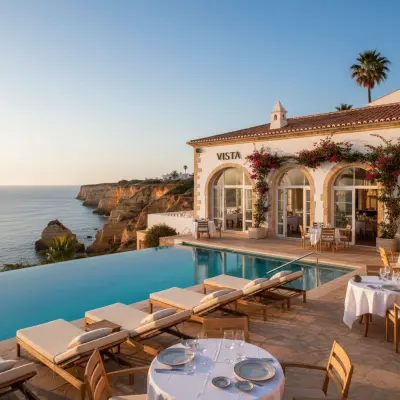
Portimão doesn't live on neighbourhood pastelarias alone. In the last few years, a new generation of restaurants has brought a different ambition to the city, and it shows in the coffee they serve after the meal too, a detail plenty of places ignore but that separates good cooking from a properly thought-out experience. At Vista, the name tells you everything: big windows facing the Arade river, and a closing espresso you drink slowly precisely because the view is in no hurry to end. This isn't the place for a quick bica at the counter, it's the place to stretch lunch another twenty minutes just for the water view.
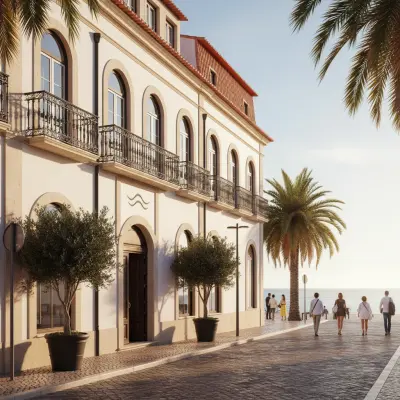
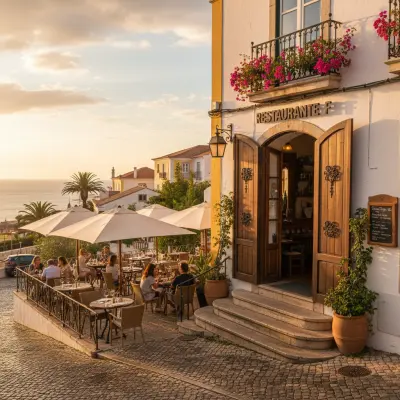
At NUMA, the approach is more restrained, more urban, the kind of place where you order a short coffee at the end of a considered dinner and leave satisfied without feeling you overpaid for it. It's coffee to close the bill, not to linger over. At Restaurante F, coffee works almost as the final punctuation on a meal that was already, on its own, a statement of intent: you don't come here just to eat, you come to understand where Algarve cooking is heading. Ordering coffee after a meal at any of these three is a reminder that in Portimão, good cooking has also learned how to end well, and that the last coffee isn't some forgotten line on the bill.
Coffee with a view over the Arade
If there's one place in Portimão where a paper cup beats sitting at a counter, it's the Miradouro dos Três Castelos. Walk up with a coffee to go, pick a bench facing the river and the bridge, and stay there ten minutes without a phone in your hand. This isn't the coffee that impresses, it's the place where you drink it. Late in the afternoon, as the light drops over the Arade and the fishing boats come back in slowly, a simple garoto tastes better here than on any decorated marina terrace, where you pay for the view twice: once in the price of the coffee, once in the time lost waiting for a table.
Coffee as fuel, not a destination
Real coffee in Portimão isn't the end of a visit, it's what makes the rest of it possible. It gets you through a morning at the market, an afternoon at the beach or a ride along the coast. Anyone who wants to see this in practice should pair this coffee route with an experience like Tastes of Portimão: A Culinary Journey Through the Heart of the Algarve, which takes you through the city eating and drinking with someone who knows where to stop and why. It's the kind of morning that ends exactly where this article began: standing at a counter, bica in hand, listening to someone tell the story of a restaurant or a street that doesn't appear in any brochure.
Anyone who'd rather spend the energy first and drink the coffee after can do it in reverse: a ride along the coast to the Alvor lagoon and the Santa Catarina fortress leaves your throat dry and your legs tired, exactly the kind of hunger and thirst only a well-pulled bica, drunk standing up, can fix. And for anyone with an extra day, it's worth pushing on to Silves, twenty minutes by car, or Faro, to see how coffee and table habits shift, even slightly, from town to town within the same Algarve.
Practical information
Portimão is a walkable city: from the train station to the centre is about fifteen minutes, and from the centre to the Miradouro dos Três Castelos another ten, mostly uphill. You don't need a car for this coffee route, just comfortable shoes and the will to walk. Weekday mornings, before 9:30am, are the best time to see the city actually working, without tour buses clogging up the pastelarias. Late afternoon, between 6pm and sunset, the miradouro fills up with locals walking their dogs and watching the river, and that's when a simple coffee, no fancy name or decorated terrace required, tastes better than anywhere designed with tourists in mind.