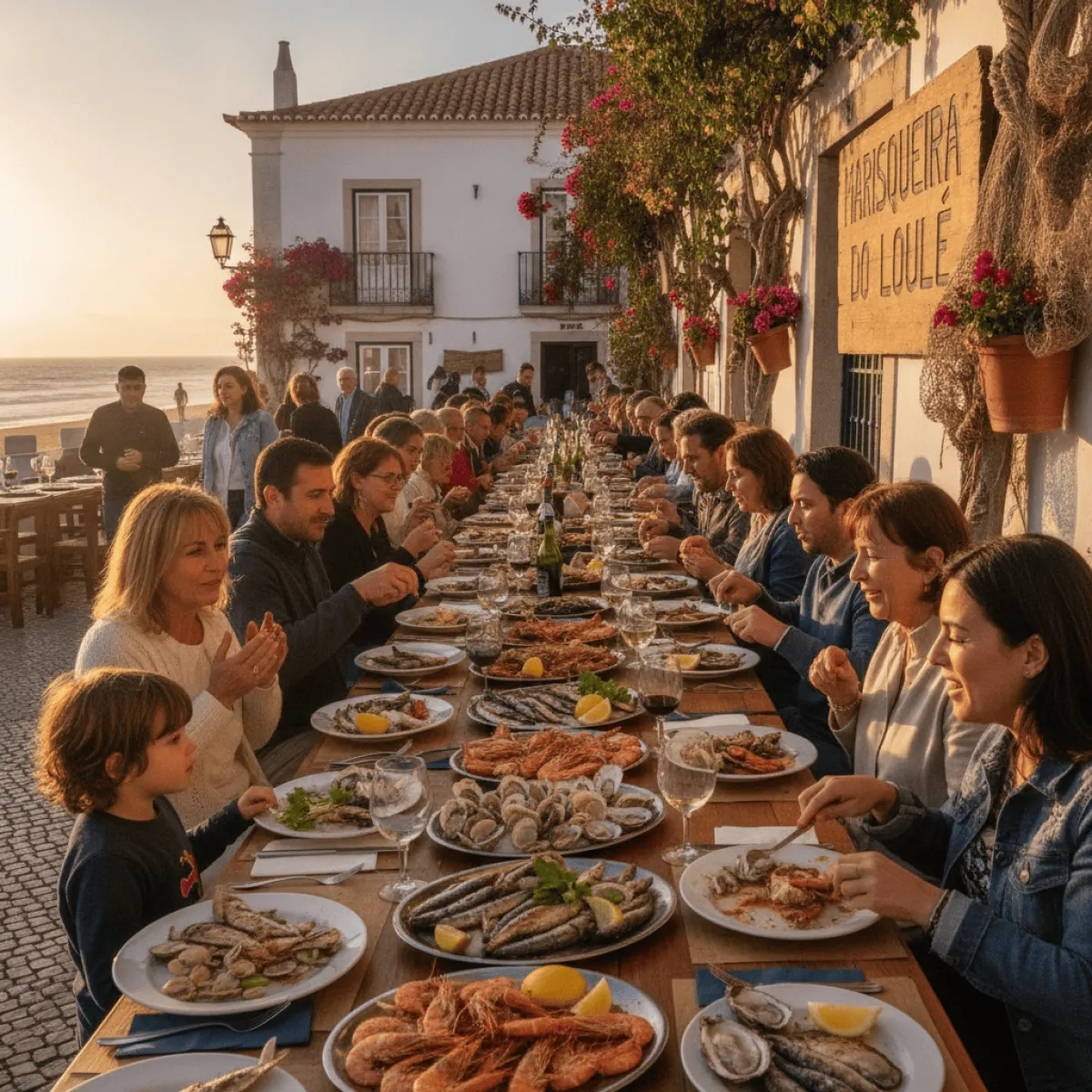
Loulé in September: Fresh Seafood, Found on the Coast
Loulé has no coastline of its own, but it's the smartest base for finding one: a castle, a Moorish market and a French bakery in town, seafood cataplana and arroz de marisco 15 minutes away in Quarteira and Vilamoura. With the sea at 23°C and no queues, September is the month to do both.
Loulé is not on the coast. Better to say it upfront, because anyone arriving at this inland Algarve town chasing clams and barnacles will be confused: there are Moorish domes here, a castle, shaded streets at noon, but no fishing boat unloading around the corner. The seafood is 15 to 20 minutes away by car, in Quarteira and Vilamoura. Which is precisely why Loulé works so well as a base: sleep and eat properly in town, drive to the coast for the catch of the day, and get back in time for the evening cool without fighting August traffic on the seafront road. Except it's September now, that traffic has vanished, and the whole arrangement stops being a fallback plan and becomes, honestly, the smartest way to do this.
The town as headquarters
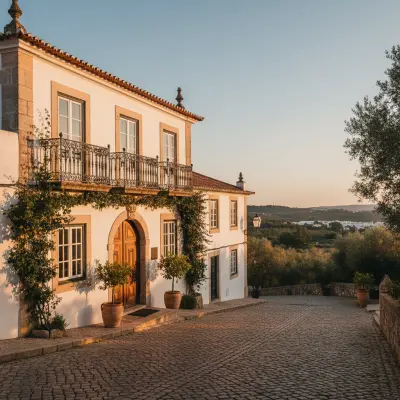
I'm always surprised by people who book an apartment in Vilamoura just to have the marina at their door, then spend the week complaining about coffee prices. Loulé fixes that. CASA BRAVA is the kind of vacation rental that makes sense if you want both sides of this: town life in the morning, beach in the afternoon. It's a short walk from the historic centre, which means waking up without rushing, strolling down to the market, and only then deciding whether the drive to the coast is worth it that day.
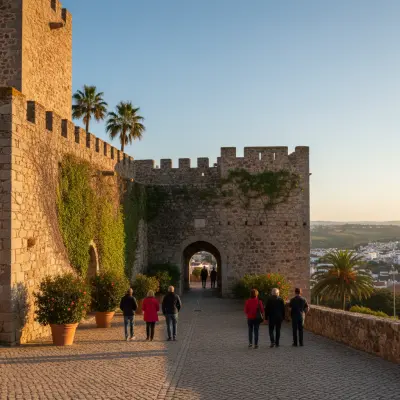
And it's always worth starting in town. Castelo de Loulé isn't grand the way Silves is, but it has an advantage few Algarve castles offer: the municipal archaeology museum sits inside the old alcaidaria, the residence of the medieval alcaide, with walls that still show the Islamic-period construction underneath the thirteenth-century rebuild. Twenty minutes there before the heat sets in place the town in a way no beach can. Afonso III took Loulé from the Moors in 1249, on Saint Clement's day, and that history explains both the layout of the streets and the domes of the municipal market itself, built in the early twentieth century but deliberately designed in a neo-Arabic style to echo it.
Where to eat on dry land
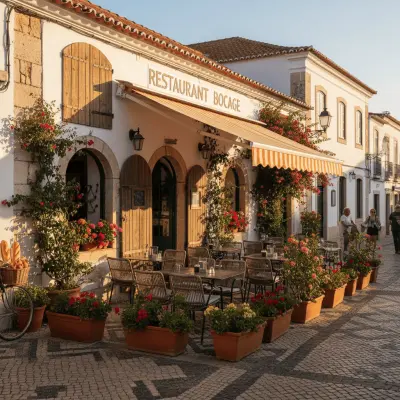
If you're staying in town for dinner, Restaurante Bocage has been open since 1984 and doesn't need to reinvent anything. It sits on Rua Bocage, near Praça da República, and serves fresh fish daily alongside the most traditional Algarve cooking: grilled meats, daily specials, no tourist-menu theatrics. It's the kind of place where prices still make sense and nobody blinks if you order just soup and grilled fish, skipping the parade of starters.
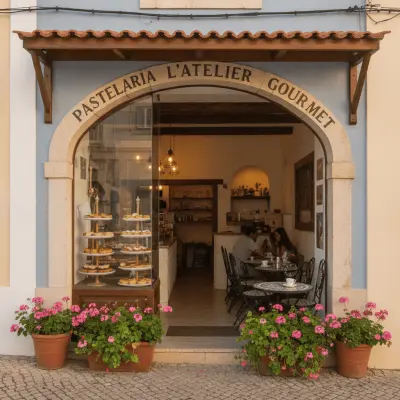
In the morning, before any plan for the coast, the detour to Pastelaria L'atelier Gourmet, right beside the municipal market, is worth it. It's a proper French bakery, opened by Liliana Varela and Stephane da Costa after they left Paris for the Algarve, and the pistachio croissant already has a reputation to match. Saturday mornings get busy fast, so anyone planning to grab something for the drive to Quarteira should either arrive early or order ahead.
The seafood route: Quarteira first, then Vilamoura
The Quarteira fish and fruit market runs Monday to Saturday, 8am to 2pm, right by the port on Largo do Mercado. It's not scenery for a postcard: it's where the local restaurants actually buy, and it's where you can see what's genuinely fresh that day before any menu decides for you. Showing up at 9am, watching the ice still dripping off the crates, is the opposite of sitting on a seafront terrace at 8pm ordering the same grilled sea bream as the last thirty tourists.
After the market, the choice is simple: stay in Quarteira, more casual, with seafood restaurants along the promenade receiving fresh fish every morning, or push on the five kilometres to Vilamoura marina, where the view of the yachts costs more but the seafood cataplana and the arroz de marisco remain the right things to order, done properly, with real saffron rather than colouring, and shellfish that still tastes like the sea. September helps here in a very concrete way: without the August queues, kitchens have time to cook rather than just churn plates out, and you can taste the difference.
On cost, expect Vilamoura to run higher than Quarteira purely for the marina view, and Quarteira to run higher than a town tasca purely for the seafood itself. Prices shift a lot depending on the season for shellfish and the house, so the one reliable rule is to ask the price per kilo before confirming, especially for anything sold by weight.
Why September is the month
The sea off the Algarve sits around 23°C in September, with air temperatures between 21°C and 30°C during the day, meaning beach weather without August's oven and water still warm enough that you don't hesitate before going in. It's the same logic we've already covered regarding Aljezur: the advice on how to dodge the August crowds on the Algarve applies here with barely any adjustment. In Loulé and along its coast, that escape from the queues doesn't need planning at all: it happens on its own once mid-September arrives, when Portuguese families go back to work and school and the Algarve is left to those who already know this is, honestly, the best month of the year to come.
What to do between one meal and the next
The trip isn't only about seafood. History lovers have seven museum hubs scattered across Loulé, and the Loulé Museum Marathon experience lays out how to cover all of them without losing the entire day to it. For anyone wanting to slow down after two straight days of fish and cataplana, there's a yoga retreat in the Loulé mountains, at Wild View, looking inland across the county rather than out to sea, the right counterweight to the coastal rush.
If kids are along and seafood isn't a unanimous vote at the table, Silves is less than half an hour away, with an honest guide to bringing the family without the drama. And anyone wanting to understand the Algarve beyond beaches and seafood restaurants, with traditions that stay alive well outside peak season, will find in Faro a picture of local culture and authentic experiences that fits neatly with the town-as-base approach Loulé represents so well.
Practical guide
- Getting there: Loulé sits about 16 km from Faro Airport, roughly a 14-minute drive. Quarteira is 12.6 km from Loulé (18 minutes) and Vilamoura 13.1 km (19 minutes). Without a car the logistics get complicated fast, so it's worth renting one, even just for beach days.
- When to hit the fish market: Monday to Saturday, 8am to 2pm, in Quarteira. Earlier is always better.
- What to order: seafood cataplana and arroz de marisco on the coast; the day's grilled fish at a town tasca like Bocage; a pistachio croissant at the bakery before leaving Loulé.
- When to go: September, once the school term has started, with the sea still at 23°C and the August queues already forgotten.
- Where to sleep: in town, not the marina, if you actually want both sides of Loulé.
In the end, the joke of writing about seafood from a landlocked town is this: it forces you to think about the whole trip, not just the plate. And that's the real difference between a week of eating well and a week of eating in the wrong place just because it was closer.