Almada Beaches: How to Dodge the Costa da Caparica Crowds
Everyone knows the packed Praia de São João in August, but Costa da Caparica has thirteen kilometres of sand and a little train that quietly carries locals down to the empty beaches near Fonte da Telha. Dinner with your feet over the water in Cacilhas follows, then drinks in Almada Velha.
The beach everyone has already seen on Instagram
Saturday in August, ten in the morning, Praia de São João da Caparica: there is nowhere left to lay a towel without touching your neighbour's. The beach bar has a queue for coffee, kids are shrieking between rented bodyboards, and someone is inevitably trying to double-park on Avenida 1º de Maio as though that will fix anything. This is the Costa da Caparica most people from Lisbon know: the part you can see from the far bank, twenty minutes away by ferry, and precisely for that reason the first to fill up. There is nothing wrong with it, the sand is good and the sea is the sea, but if the plan is to actually relax rather than survive a packed beach, there are smarter ways to do this.
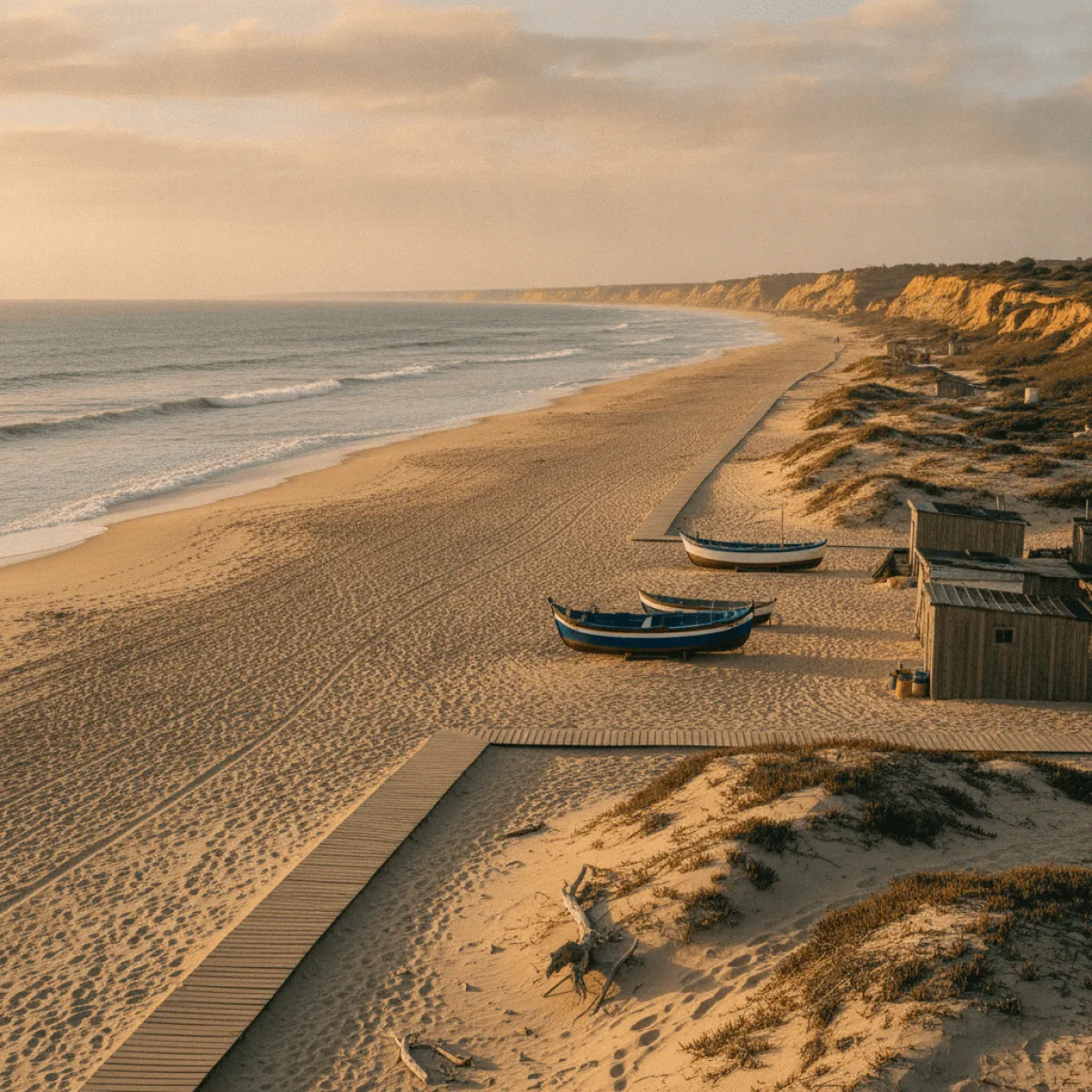
The most common mistake for visitors coming from Lisbon is sticking to the first five hundred metres of sand. It is understandable: it is where the bus drops everyone off, where the grilled fish restaurants with sea-facing terraces are, where everything is. But Costa da Caparica runs for nearly thirteen kilometres of continuous beach, and the further south you go, the thinner the crowd gets. The trick is not arriving earlier, though that helps too. The trick is going further.
The little train that solves everything
Between June and September, a narrow-gauge miniature train called the Transpraia runs along the dune line from central Costa da Caparica down to Fonte da Telha, stopping at numbered beaches along the way: beach 9, 14, 17, 19. It is not exactly a secret, surfers have used it for decades, but it is largely ignored by visitors who settle on the first stretch of sand and never move again. Riding it end to end takes about twenty minutes, cuts through the Mata dos Medos pine forest over the dunes, which is worth the trip on its own, and each successive stop has noticeably fewer people than the last.
Fonte da Telha, the end of the line
Fonte da Telha is the final stop and the reward for anyone with patience. It still has restaurants and some life to it, this is not a deserted or cut-off spot, but the mood is that of a fishing village that accepted tourism rather than one rebuilt around it. Late afternoon, as the tide drops, the strip of exposed sand is enormous and the people-per-square-metre ratio bears no resemblance to what you find near the centre of Costa da Caparica. If you like walking, you can keep going south to beaches that are practically empty outside peak season, though at that point bring your own water and sunscreen, since the beach services stop.
The alternative for people who hate too much sand
Not everyone wants to spend the day picking sand out of their swimsuit. If the plan is to escape the midday sun without leaving the area, there is a spa day at Costa da Caparica built exactly for this, ocean views included and no queue for a towel. It is a solid option for the day after a badly timed sunburn, which happens to more people than they would like to admit on this west-facing, exposed coast.
After the beach: Cacilhas and the river
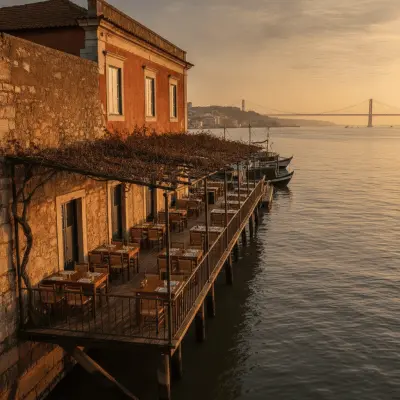
Once the sun starts dropping, the logic changes. Instead of heading straight back to Lisbon, it is worth stopping in Cacilhas, the ferry dock, where Almada shows a completely different face, more river than sea. This is where Restaurante Ponto Final sits, and it is worth explaining why: the tables are set literally in the water, on the old Ginjal quay, with the whole of Lisbon facing you across the Tagus, catching the late afternoon light. It is no secret, locals know to arrive early or book ahead on weekends, but most people who spend the day on the beach have no idea it exists a few minutes away. Go for the grilled fish and the view, stay for the sunset, and you will understand why people cross the river on purpose just to eat dinner here.
Getting to Cacilhas without the stress
- Ferry from Cais do Sodré to Cacilhas: about a ten-minute crossing, running every fifteen to twenty minutes at peak times, and the fare runs around 2 euros with a Navegante or Viva Viagem card.
- From Cacilhas to Costa da Caparica: a direct bus, roughly twenty minutes, or a taxi or Uber if you are in a group, which often works out cheaper per person than it sounds.
- Driving over the 25 de Abril bridge skips the transfers but hits serious traffic in the late afternoon, especially on Sunday returns.
The night belongs to Almada Velha
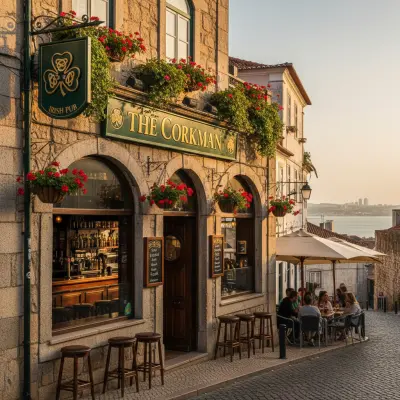
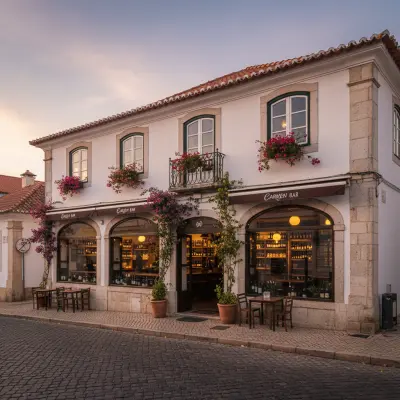
Cacilhas is the dock, but Almada Velha, up on the hill above it, is where the night actually happens, well away from the beach-day rush. It is a small, walkable area with a concentration of bars that rivals anything across the river in Lisbon, minus the pressure of scrambling for a table. Start slow with a glass at Carmen Wine Bar, which takes wine seriously without being precious about it. If beer and an unfussy, easygoing atmosphere are more your speed, The Corkman Irish Pub has the kind of vibe where nobody notices if you show up in flip-flops with sand still stuck to your feet. And to close out the night with a properly made cocktail, Ophelia Cocktail Bar is the right call, with a menu that does not stop at the obvious choices. None of these places is trying to be Lisbon on the other side of the river: they have their own character, friendlier prices, and the advantage that you can still hear the person across the table without shouting.
When to go, and when definitely not to
Weekends in July and August are worth avoiding at any of these beaches, unless you arrive before nine in the morning. September is probably the best month: the water has warmed up over the summer, the heat is more bearable, and school is back in session, which removes a large chunk of the family crowd. June, before the big holidays start, also works well and has the advantage that the Transpraia is already running. Outside that window, from October to May, Costa da Caparica changes personality completely: it settles into the mood that draws surfers year-round, bigger swells, stronger wind, and practically nobody on the sand except the ones there to actually surf.
The practical version
If there is only time for one day, the formula that works is this: early morning at the beach closest to the centre before it fills up, mid-afternoon on the Transpraia heading south to one of the numbered beaches or all the way to Fonte da Telha, late afternoon in Cacilhas for grilled fish with a view of Lisbon, and the night in Almada Velha closing out the drinks. It is a full day, it takes a bit of transport logistics, but it completely avoids the packed-beach experience that makes so many people write off Costa da Caparica after a single visit. The best beach, in the end, is rarely the one closest to the bus stop.