Hiking the Rota Vicentina: Spring Wildflowers and Coastal Cliffs
Explore the wild beauty of the Rota Vicentina in spring. A comprehensive guide to the Fishermen’s Trail, focusing on endemic flora, dramatic cliffs, and logistics for an unforgettable hiking trip.
Walking the Edge: The Fishermen’s Trail in Spring
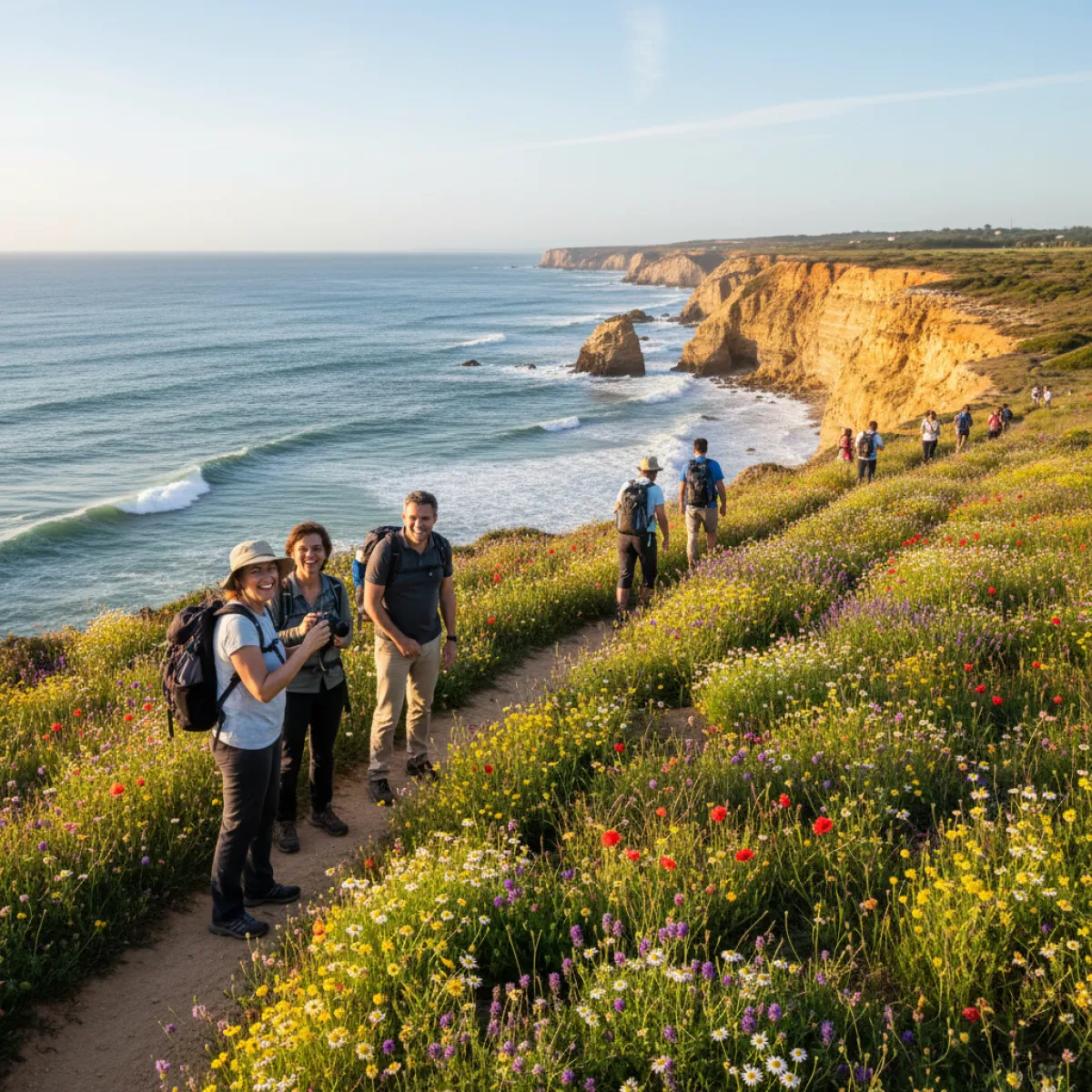
The Rota Vicentina stands as one of Europe’s most evocative coastal hiking experiences, providing a deep dive into the preserved landscapes of the Alentejo and Vicentina Coast. While the interior of Portugal is often defined by its rugged peaks, such as the architectural sites found when exploring Modernism in the mountains and the legacy of Cottinelli Telmo in Seia, the coastline offers a different kind of monumentality. In spring, the trail becomes a vibrant corridor where the deep Atlantic blue meets golden gorse and pink wildflowers blanketing the dunes.
The Itinerary: From Porto Covo to Odeceixe
The experience offered by Vicentina Travel focuses on the iconic Fishermen’s Trail, a specific route within the Rota Vicentina network that follows the coastline. The journey begins in the village of Porto Covo. The sandy terrain requires initial physical exertion, which is immediately rewarded by constant ocean views. Over four to six days, hikers traverse narrow paths carved by the wind and used for centuries by local fishermen to reach remote fishing spots among the rocks.
Each daily stage averages between 15 and 22 kilometers. The first section from Porto Covo to Vila Nova de Milfontes is famous for its deserted beaches and dense dune vegetation. As you move south toward Almograve and Zambujeira do Mar, the cliffs become increasingly dramatic, reaching heights that challenge perspective. These sedimentary rock walls are the only place in the world where white storks nest on sea stacks, a remarkable sight during the spring breeding season.
Flora and Coastal Biodiversity
Spring is the definitive time for this trek. The region’s biodiversity is vast, featuring hundreds of plant species, many of which are endemic to this specific stretch of the Portuguese coast. Hikers can observe the blooming of corema album (beach crowberry), camphor-scented thyme, and various wild orchids emerging among the aromatic shrubs. The salt-laden air mixes with the earthy notes of the vegetation, creating a sensory experience that transcends the physical hike.
Logistics and Practical Preparation
For those seeking an organized experience, Vicentina Travel provides self-guided packages that handle all logistics. The service includes luggage transfers between accommodations, allowing hikers to carry only a daypack with water and snacks. Stay in hand-picked rural tourism houses and local guesthouses, ensuring authentic contact with Alentejo hospitality.
- What to Bring: Hiking boots with good ankle support, sand gaiters to keep grit out of your shoes, high-factor sunscreen, and lightweight, breathable layers.
- Food and Water: It is essential to carry at least 2 liters of water per day, as there are no supply points between the coastal villages.
- Best Time to Book: Late March to mid-May to see the wildflowers at their peak and avoid the intense heat of the summer months.
After completing this coastal challenge, many travelers head inland to explore Portugal's diverse regions, where the industrial history and structural rigor of mountain architecture provide a fascinating contrast to the wild nature of the Alentejo coastline.