Bird Watching at Óbidos Lagoon in Caldas da Rainha
Forget the beach for a few hours and get your boots muddy at Braço da Barrosa to see real flamingos with Interuies. A guided tour that reveals the biological secrets of the Óbidos Lagoon.
The Lagoon Beyond the Beach
Most visitors to Caldas da Rainha head straight for the Atlantic surf at Foz do Arelho. They aren't wrong—it is one of the most striking beaches in Portugal—but they are missing half the story. If you turn your back to the ocean waves and look inland, you’ll see the Óbidos Lagoon. This is the most extensive lagoon system on the Portuguese coast, and its "Braço da Barrosa" (the Barrosa Arm) in the Caldas district is where nature puts on its most compelling show. Bird watching here isn't just for people with expensive cameras and khaki vests; it’s a visceral experience for anyone who appreciates the raw mechanics of an ecosystem.
Don’t try to do this alone if you want to actually see anything beyond a few white dots in the distance. You need a local expert like Helder Ismael from Interuies. Unlike generic tour operators who just recite facts, Interuies focuses on "interpretation." They don't just point at a bird; they explain why that specific Grey Heron is standing in that exact spot relative to the tide and how the lagoon's sediment dictates the survival of hundreds of species. Before you get your boots muddy, it’s worth reading our guide Caldas da Rainha: The Irreverent Logic of Bordallo Pinheiro’s Ceramic City to understand how the city’s identity has always been tied to its natural resources.
The Interuies Experience: Step-by-Step
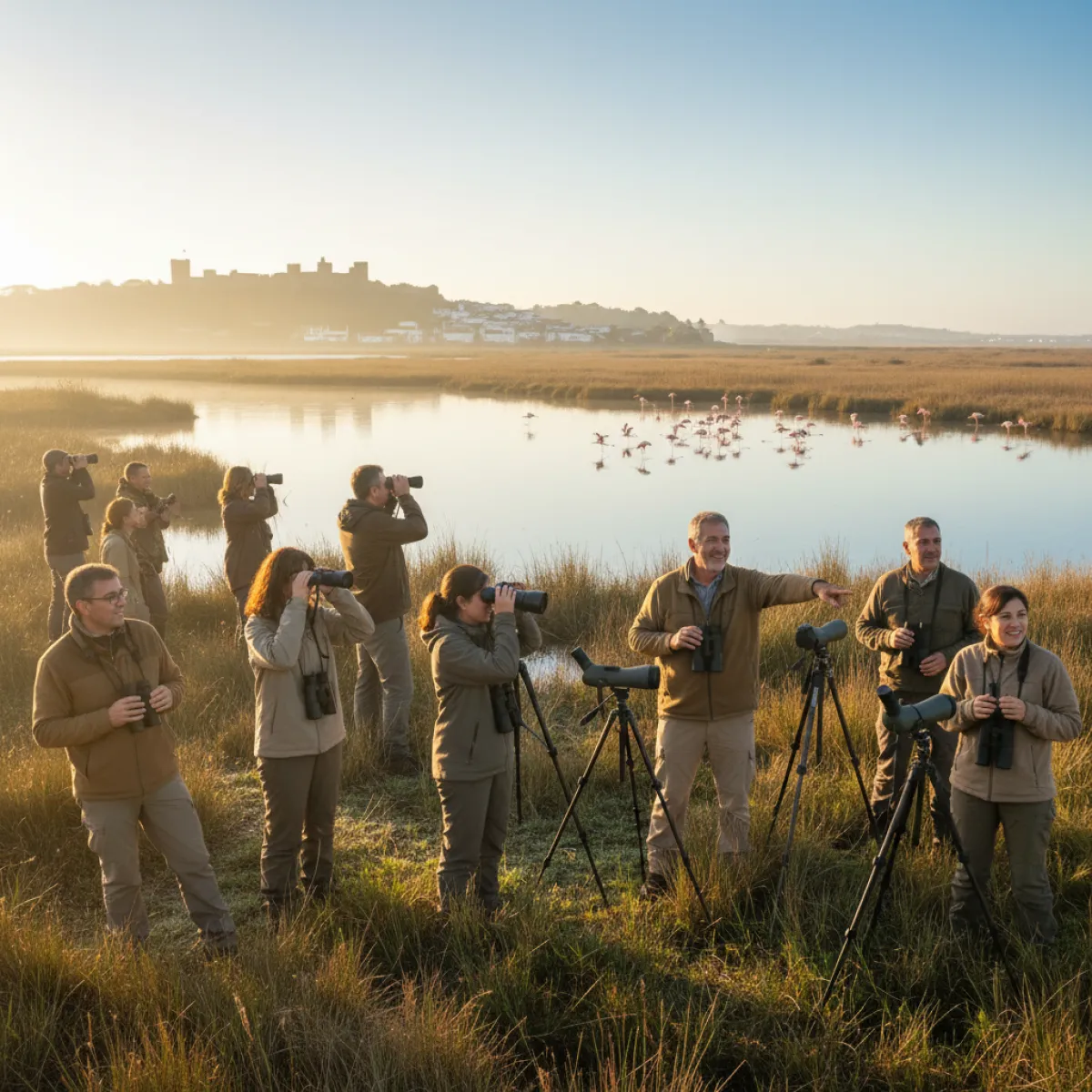
Meeting points are usually at the parking area near Braço da Barrosa in Nadadouro. The tour begins with the distribution of high-quality binoculars—essential gear unless you have supernatural eyesight—and a quick briefing on observation ethics. Silence is the primary tool here. You’ll walk along the edges where salt water meets fresh water, creating a nutrient-rich mudflat that attracts the lagoon's undisputed stars: the Greater Flamingos.
Yes, there are real flamingos in Caldas da Rainha for most of the year. Seeing a Phoenicopterus roseus feeding with its head upside down in the mud is a fascinating display of natural engineering. Helder often sets up a spotting scope (a high-powered field telescope) that allows you to see details the naked eye would miss—like the intense yellow iris of a Grey Heron or the mottled grey feathers of juvenile flamingos that haven't yet turned pink from their carotenoid-rich diet. It is a slow, methodical process that teaches you to distinguish the sharp call of a Kingfisher from the busy chirping of a Common Sandpiper.
Species You’ll Likely Spot
- Greater Flamingo: The most famous resident. Sometimes in groups of dozens, other times hundreds, depending on the season.
- Grey Heron and Little Egret: Elegant sentinels that remain perfectly still while waiting for fish.
- Pied Avocet: With its upturned beak, it is one of the most distinctive and elegant waders in the mudflats.
- Marsh Harrier: If you are lucky, you might see this bird of prey patrolling the reed beds in search of a meal.
Insider Tips: Timing and Gear
Morning light is superior. This isn't just about photography; birds are simply more active in the early hours. Another critical factor is the tide. During low tide, the mudflats are exposed, concentrating the birds in accessible feeding areas. During high tide, they tend to disperse or seek cover in the reeds. Interuies manages their booking schedule based on these tidal patterns, so trust their recommended start time even if it feels a bit early.
As for gear, forget beach attire. Even in mid-summer, the wind across the lagoon can be biting. Bring a windbreaker and closed-toe shoes that you don’t mind getting dirty. If you are visiting during the rainy season, waterproof hiking boots or wellies are mandatory if you want to follow the guide into the more interesting salt marsh zones. After a few hours of focused observation, take a drive up to Miradouro da Foz do Arelho. Seeing the lagoon from above provides a necessary sense of scale and shows how the water interacts with the Atlantic.
Why This Experience is Worth It
What makes this tour special isn't just the species count on your checklist. It’s the connection to the local reality. The Óbidos Lagoon faces constant environmental challenges, from silting to urban pressure. By participating in an Interuies tour, you are supporting a project that promotes scientific literacy and conservation. Helder knows the local shellfish harvesters by name and explains how the traditional gathering of cockles and clams coexists with the bird population. It’s a lesson in applied ecology without the lecturing tone of a TV documentary.
To round out your day, I highly recommend a stop at Miradouro de Santa Catarina. It offers one of the best panoramic views over the southern bank of the lagoon and is the perfect place to digest everything you learned. It’s in these moments of quiet observation that you realize Caldas da Rainha is much more than just ceramics and thermal baths; it is a sanctuary of biodiversity that demands our respect and attention.
Practical Details
Provider: Interuies - Interpretação e Turismo de Natureza
Price: From €30.00 per person (2 to 3-hour session). Family rates available on request.
Contact: +351 917 141 876 / interuies@gmail.com
Booking: Recommended at least 48 hours in advance via interuies.pt or their social media channels.