Ponte de Lima: Where Locals Actually Eat
In Ponte de Lima, locals don't eat by the bridge, they eat in the alleys, with jugs of vinho verde and portions of rojões that defy reason. An honest guide to real Minho food, from arroz de sarrabulho to the biweekly market.
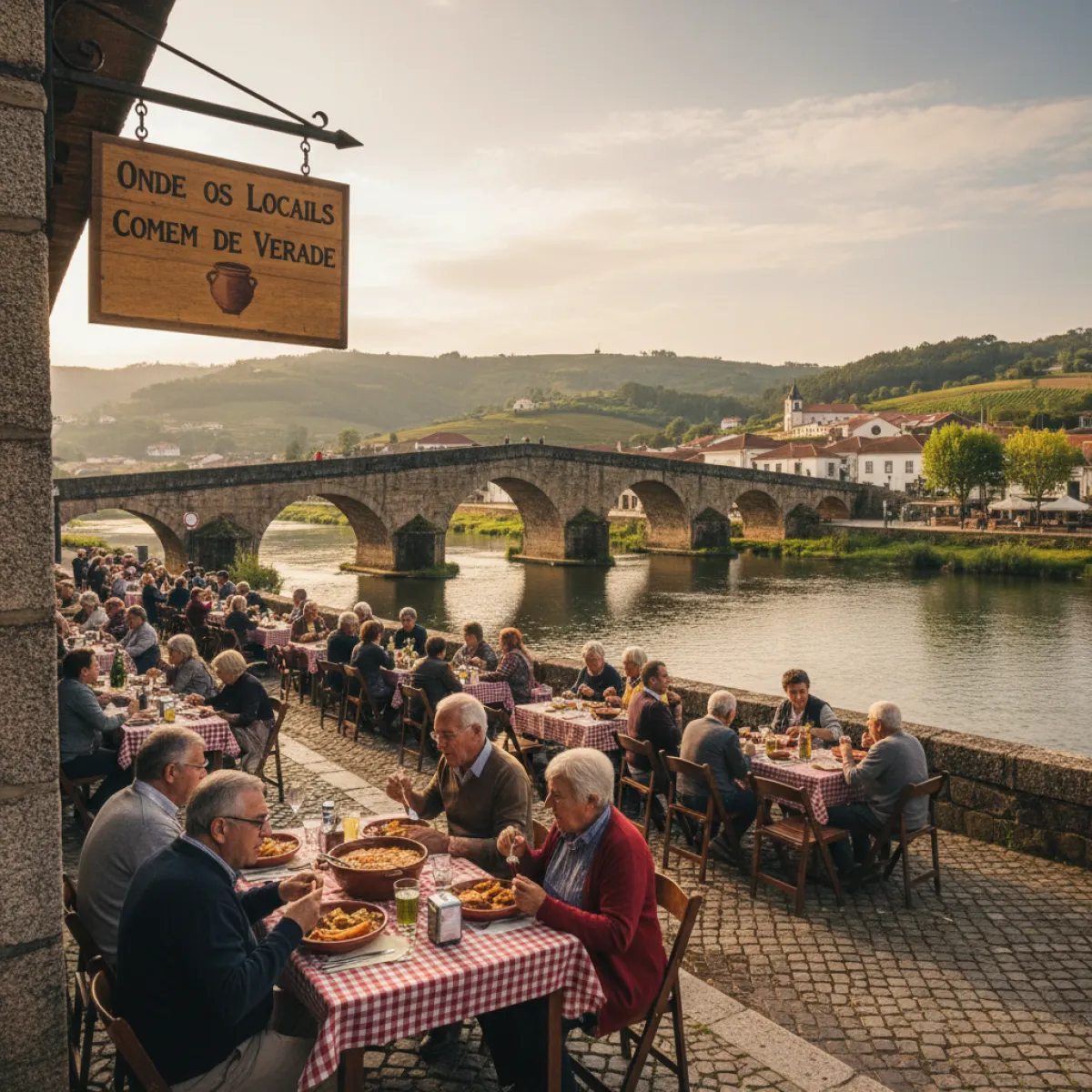
Ponte de Lima has a delicious problem. It's too pretty for its own good. Visitors cross the medieval bridge, photograph the river, buy a bottle of vinho verde, and leave. They eat at the first restaurant with a tourist menu posted outside, order a safe steak, and go home thinking they've had Minho cuisine. They haven't.
Real Minho food, the kind locals eat in Ponte de Lima when nobody's performing for visitors, is heavy, honest, and built for people who've worked all day. It's not Instagram-ready. It's arroz de sarrabulho steaming in a deep bowl, rojões with chestnuts in autumn, salt cod with crumbled broa on top. It's the kind of food that requires a digestive walk along the Lima afterwards. And that's exactly what locals do.
The golden rule: get away from the bridge
The first thing any Ponte de Lima local will tell you, if they actually like you, is to walk away from the area immediately next to the Roman bridge. Restaurants there aren't necessarily bad, but they're calibrated for people who pass through once and never return. Prices run slightly high, portions slightly small, and the arroz de sarrabulho sometimes tastes like it was made with a fear of scaring tourists.
The places worth sitting down at are on the parallel streets, in the alleys climbing from the river, or slightly outside the centre. That's where you'll find paper tablecloths instead of linen, jugs of house vinho verde instead of bottles with fancy labels, and portions that make you question your life choices by the third forkful.
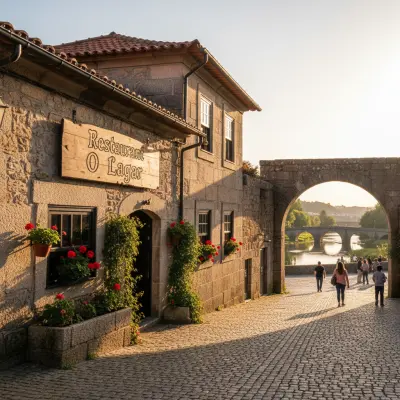
Restaurante O Lagar: Minho cooking done right
If you only have one meal in Ponte de Lima, and this is a firm opinion, spend it at Restaurante O Lagar. It's the kind of place where the menu doesn't need to be long because everything on it is done properly. Traditional Minho cuisine here doesn't apologise for what it is: abundance without pretension.
The rojões à minhota are the flagship. Pork cut into generous chunks, crisped on the outside and juicy within, served alongside potatoes and tripa enfarinhada (flour-coated tripe strips). It's not diet food and it doesn't pretend to be. The bacalhau, when available, deserves attention too, in Ponte de Lima they frequently do it with broa cornbread and good olive oil, no unnecessary complications.
Order the house vinho verde. Seriously. There's no point spending more when the house pick is already well-chosen. The bill rarely shocks, this is Minho, not Lisbon. Check hours locally before going, especially outside peak season.
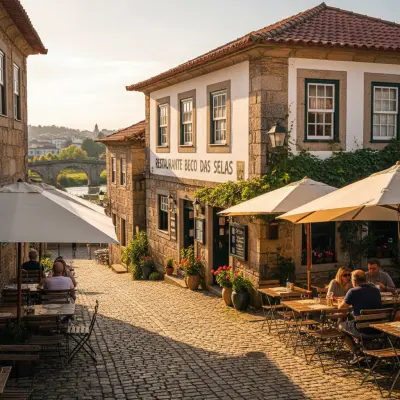
Beco das Selas: the name tells a story
Restaurante Beco das Selas has the kind of name that only exists in towns with real history. It sits in a beco, an alley, literally, and it's the sort of restaurant that doesn't need flashy signage because everyone who needs to know already does.
The cooking here is equally Minhota but with touches that show someone in the kitchen thinks about what they're doing. It's not reinvention, it's respect for ingredients. Grilled meats are consistently good, and fish dishes deserve consideration if they're on the daily board. The atmosphere is more restrained, good for an unhurried dinner.
A note: in Ponte de Lima, as in much of the Minho, lunch is the main meal. If you want to see locals eating, and eat what they eat, show up between 12:30 and 1:30pm. Restaurants still serve dinner, but the rhythm is different.
What to eat: the honest glossary
If you've never had proper Minho food, prepare yourself. This isn't Algarve cooking. Here, people eat with weight and purpose.
- Arroz de sarrabulho, The defining dish of the region. Rice cooked with pork blood, shredded meat, and spices. It sounds strange, tastes like something you can't quite explain, and you'll want seconds. If it's on the menu, order it. It's not decorative, it's pure sustenance.
- Papas de sarrabulho, The denser version of the above, almost a porridge. For those who think arroz de sarrabulho isn't intense enough. Not everyone can handle it, and there's no shame in that.
- Rojões à minhota, Pork fried in its own fat, served with chestnuts or flour-dusted tripe. The definitive comfort food of northern Portugal.
- Bacalhau à minhota, Roasted or boiled salt cod with potatoes, egg, and generous olive oil. Simple, direct, impossible to ruin when made with good product.
- Cabrito assado, Roast kid goat, available seasonally, especially around Easter. When it appears on the menu, it's a sign the kitchen is running at full capacity.
For dessert, don't overthink it. Leite-creme (a custard similar to crème brûlée) or homemade pudim. If it looks like it came from an industrial mould, skip it and order a coffee.
The biweekly market: where food meets culture
The Feira de Ponte de Lima happens every two weeks on the banks of the Lima river, and it's one of the oldest markets on the Iberian Peninsula, documented at least since 1125. This isn't a tourist fair with forced handicrafts. It's a real agricultural market where people sell livestock, vegetables, fresh cheese, cured meats, and bulk vinho verde.
For anyone wanting to understand Ponte de Lima's relationship with food, the market is essential. Arrive early, before 10am, and walk through the fresh produce area. You'll find hand-sliced presunto, goat cheese wrapped in leaves, homemade jams with no labels. Prices are fair and bargaining is part of the ritual.
After the market, locals tend to lunch in the centre, where restaurants are busier that day and consequently stock fresher product. It's a smart strategy worth copying.
Vinho verde: how to drink like a local
Ponte de Lima sits at the heart of the Lima sub-region, one of the most distinctive vinho verde production zones. And yet most visitors drink vinho verde as if it's all the same, that light, slightly fizzy white you find in supermarkets everywhere.
Locals know better. Vinho verde from the Lima can be dry, mineral, with enough structure to stand up to roast kid goat. Always ask for the house wine in restaurants, it's almost always locally produced and costs a fraction of what you'd pay for a labelled bottle. In many places, it arrives in a clay or ceramic jug, served cold, without ceremony.
If you want to buy bottles to take home, the regional cooperative wineries sell at good prices. Ask at the restaurants, they'll often point you directly to the producer.
Beyond the table: what to do before and after eating
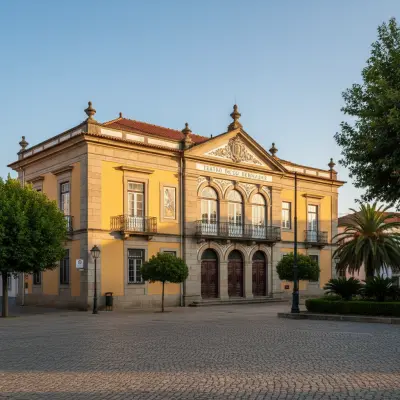
Ponte de Lima has a compact historic centre you can walk in under an hour. The Avenida dos Plátanos along the river is perfect for that post-meal stroll. Teatro Diogo Bernardes is worth a look, not just for the building itself, but for a cultural programme that's surprisingly ambitious for a town this size. Check the schedule before you go.
For those staying more than a day and wanting to offset the excesses of Minho dining, a wellness experience at Axis Wellness is the ideal counterpoint. After a sarrabulho lunch, a spa circuit feels less like luxury and more like medical necessity.
And if you're after a more private retreat, Carmo's Boutique Hotel offers the kind of escape that makes sense in this part of the world, no noise, no rush, with the Minho landscape as backdrop.
Practical information
Ponte de Lima is about 80 km from Porto, accessible via the A3 and then A27 motorways. By car, it's just over an hour. By public transport, the most viable option is a bus from Viana do Castelo or Braga, but schedules are limited, check ahead of time.
Parking in the centre is relatively easy outside market days. On market days, arrive early or park near the football ground and walk in.
If you're exploring the broader Minho region, it's worth combining Ponte de Lima with a stop in Barcelos, it's less than 40 minutes away. If you're travelling with family, our honest Barcelos family guide has tips that actually work.
Ponte de Lima isn't where you go to eat sophisticated food. It's where you go to eat real food. Minho cooking doesn't need reinvention, it needs good ingredients, a steady hand, and hungry people. Show up with that disposition and Ponte de Lima will give you everything you need, and probably more than your stomach can handle.