Local Culture in Setúbal: Traditions, Food and the City's Soul
Setúbal is a city with a powerful cultural identity, shaped by river, sea, and centuries of history. Discover the traditions, cuisine, and cultural expressions that make this one of Portugal's most authentic destinations.
The Soul of Setúbal: A City Between River and Mountain
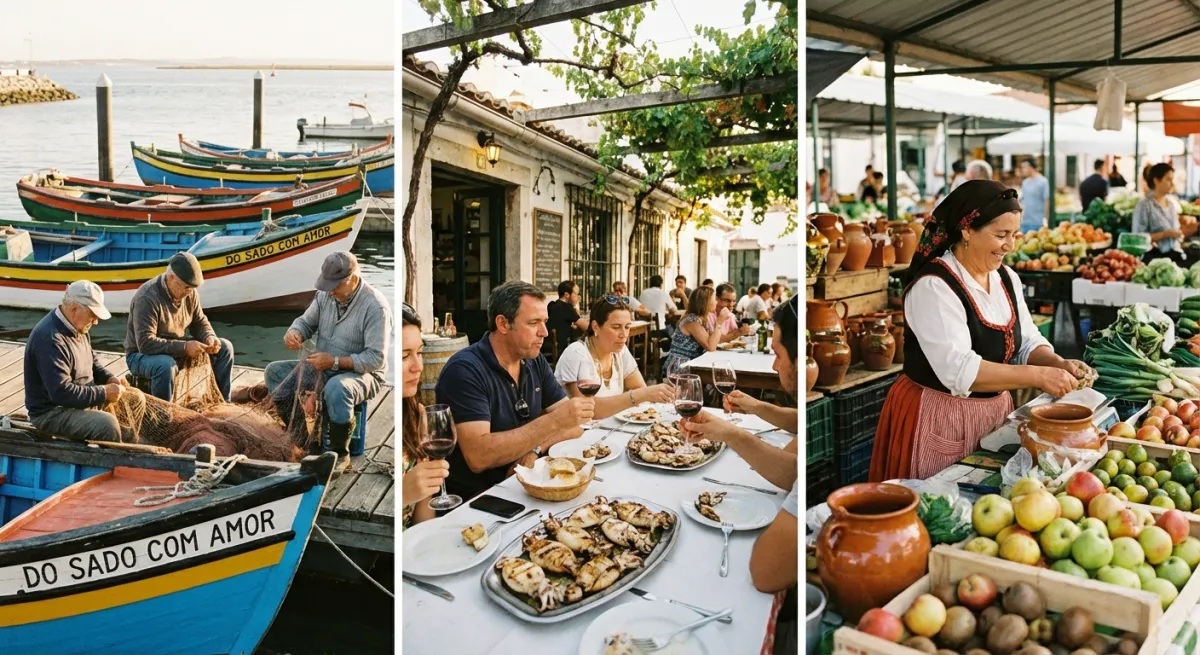
Setúbal is not a city that reveals itself at first glance. You need to walk its streets, sit in a traditional tavern, listen to the fishermen's conversations at the market, and let yourself be drawn into the rhythm of a city that lives between the Sado estuary and the Arrábida mountain range. Sadina culture, as locals call it, is built in layers: ancient traditions, Arab and Roman influences, a deep relationship with the sea, and a warmth that you only find outside the major tourist circuits.
Fado and Musical Heritage
While Lisbon may be the capital of fado, Setúbal has its own fadista tradition, with fado houses that keep alive a musical expression intimately connected to the lives of fishermen and riverside communities. Setúbal's fado has its own sound, rawer, more grounded in the daily realities of life at sea. Beyond fado, the city has a diverse music scene, with jazz festivals, folk music, and year-round cultural events at the Fórum Municipal Luísa Todi, named after the celebrated opera singer born in the city in the 18th century.
Festivals and Traditions
Setúbal's cultural calendar is marked by celebrations that reveal the city's character:
- Festas de Santiago, In July, the patron saint festivities transform the city with popular marches, concerts, food stalls, and fireworks over the Sado River.
- Santiago Fair, One of the oldest fairs in the region, featuring handicrafts, local products, and traditional cuisine.
- Holy Week Processions, Setúbal maintains strong religious traditions, with processions through the historic center that attract the faithful from across the region.
- Arts Festivals, Contemporary cultural initiatives bring theatre, dance, and visual arts to the city's public spaces throughout the year.
The Food: Fried Cuttlefish and So Much More
You cannot talk about Setúbal's culture without talking about its food. Setúbal is, above all, the capital of choco frito, fried cuttlefish. It may seem simple, but it demands the freshest catch, a perfect batter, and the knowledge passed down through generations. Restaurants along Avenida Luísa Todi and at the Livramento Market serve this gastronomic icon with an almost religious pride.
But Sadina cuisine goes far beyond cuttlefish. Grilled fish, caldeirada stew, Sado River oysters, and shellfish are the pillars of a cuisine that celebrates what the river and the sea provide. To accompany your meal, the wines of the Palmela and Arrábida regions are outstanding, with particular pride of place going to Moscatel de Setúbal, a world-famous fortified wine produced on the mountain slopes for centuries.
Livramento Market
Considered one of the finest markets in Portugal, Mercado do Livramento is the gastronomic heart of the city. The decorative tiles lining the interior tell the story of local fishing traditions, while the stalls overflow with fresh fish, fruit, cheese, and flowers. Visiting the market early in the morning is a complete immersion into the everyday culture of Setúbal.
Craftsmanship and Heritage
Setúbal's artisanal traditions are tied to the sea, fishing nets, rope-making, and cork work are expressions of know-how that remains alive today. The historic center, with the Church of Jesus, a masterpiece of Manueline Gothic architecture, and the Setúbal Museum, offers a journey through the city's artistic and architectural heritage.
The decorative tilework found in churches, markets, and public buildings is another striking element of Setúbal's visual identity, telling stories of saints, fishermen, and landscapes of the Sado.
A Living, Authentic City
Setúbal is not a museum city. It is a living city where culture manifests itself in daily life, in the café conversation, the market vendor's call, the neighborhood festival, the pride with which a plate of choco frito is served. For travelers seeking to know Portugal beyond conventional tourist routes, Setúbal offers a genuine cultural experience, rooted in history but open to the present.
