Linen Weaving in Limões: A Hands-On Workshop
In the village of Limões, 30 minutes from Vila Real, six weavers keep the linen tradition alive on century-old looms. The Museu do Linho lets you follow the full cycle, from seed to fabric, and try the loom yourself. Admission is free.
You won't find Limões on most Portugal itineraries. This small village in Ribeira de Pena, about 30 minutes from Vila Real in the Trás-os-Montes region, sits on a hillside surrounded by what used to be flax fields. Inside a converted farmhouse at the village entrance, six women keep a centuries-old weaving tradition alive, and they'll let you sit at the loom and try it yourself.
What Is the Linen Museum
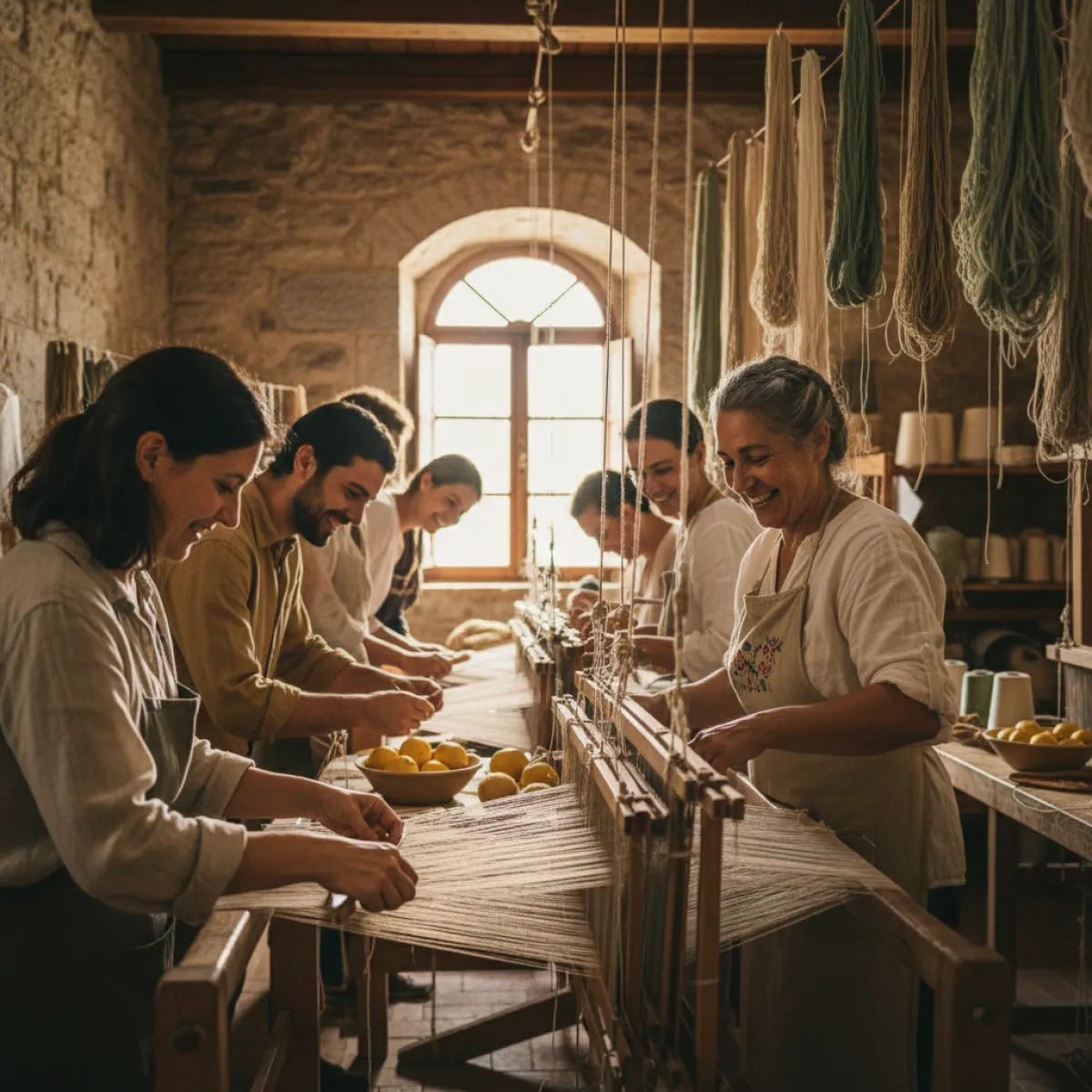
The Museu do Linho is part of the Ecomuseu de Ribeira de Pena, and it's housed in the headquarters of the Grupo de Tecelagem de Limões (Limões Weaving Group). This isn't a static museum with things behind glass. The weavers actually work here, at their looms, while visitors walk through. The space combines a permanent exhibition on the full linen cycle with a live weaving workshop where you can get hands-on.
The exhibition traces linen from seed to fabric: planting (between April and May), harvesting, retting, scutching, spinning, and finally weaving. There are traditional tools, multimedia displays, and, best of all, the songs and stories the weavers themselves share as they work.
What You'll Actually Do
The best part of the visit comes when you move from the exhibition into the workshop. Here, the weavers demonstrate two main techniques: ripado, a relief weaving method that follows geometric pattern maps, and mantês, worked on three-shaft looms. The pieces they produce, blankets, towels, bedspreads, tapestries, are displayed on the first floor, and some are available for purchase.
What's remarkable is that three of these women master the entire process, from sowing the flax to working the finished thread on the loom. This isn't a historical reenactment, it's the real craft, practiced without interruption. When you sit at the loom and try to replicate their rhythm, you quickly realize those coordinated hand-and-foot movements take years to learn. But with their patient guidance, you can produce a few centimetres of fabric to take home.
Timing tip
The afternoon session, starting at 2:30 PM, is when the weavers are most available to teach. Mornings can get busy with school groups. Go on a Saturday if you can, the pace is more relaxed and there's more time for questions.
European Recognition
In 2017, the museum received an honourable mention from the Portuguese Association of Museology for its partnership with VERde NOVO promoting local linen production. Even more notable: the project was distinguished by the Interreg Europe programme as an example of best practices, recommended for implementation by any European region. For a village workshop run by six women, that's a significant achievement.
Practical Information
- Address: Rua Pe. Armindo Ferreira, 6, Limões, 4870-078 Ribeira de Pena
- Hours: Tuesday to Saturday, 9:30 AM–1:00 PM / 2:30 PM–6:00 PM. Closed on public holidays. Other days available by prior booking.
- Admission: Free
- Phone: +351 259 479 206
- GPS: 41.4531597, -7.8282844
Getting There
From Vila Real, it's about 30 minutes via the N2 towards Ribeira de Pena, then following signs to Cerva and Limões. The road is fine but narrow in the last stretch. Parking is easy near the museum. From Porto, allow about 1 hour 15 minutes via the A4 to Vila Real, then another 30 minutes. On the way, stop at Pastelaria Gomes in Vila Real for coffee and pastries.
What to Wear and Bring
Comfortable clothing without dangling accessories, large rings, bracelets, and scarves can catch on the loom threads. Bring a camera; the weavers are generally happy to be photographed, but ask first. In winter, bring a warm jacket: the building is old and Trás-os-Montes mornings are cold.
Is It Worth It?
Absolutely. This isn't an adrenaline experience or a polished tourist attraction. It's something better: direct contact with people doing extraordinary work with their hands, in a place where the pace hasn't changed. What sets this apart from any ethnographic museum is that the work here is real, the weavers are there because they choose to be, and you enter the process rather than watching it from behind a barrier.
If you're planning a trip to northern Portugal and want something genuine, away from the usual circuits, the Museu do Linho in Limões is one of the most authentic experiences you'll find. And the price, free, makes it even easier to say yes.