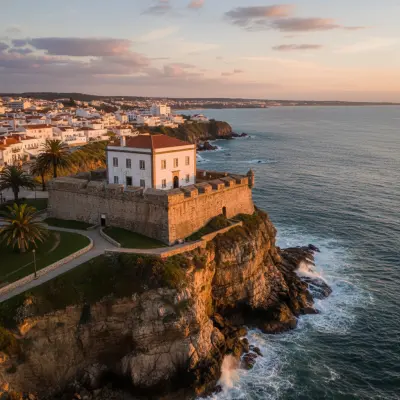
Forte de Nossa Senhora da Natividade
Ericeira
Find your next good idea
A city, a flavour, somewhere new. Portugal begins with your curiosity.
Ericeira
Olhão
Olhão
Mafra
Mafra
Mafra
Mafra
Loulé
Valença
Valença
Valença
Ribeira Grande
Anyone who shows up in Arrábida with a surfboard leaves disappointed: this sea doesn't make waves, it makes turquoise mirrors where the real riders are the dolphins of the Sado. A guide that doesn't pretend the swell exists.
Setúbal's best beaches don't charge admission, the dolphins are visible without a boat, and fried cuttlefish costs what it should. Here's how to do a full day here without overspending.
The water's still cold in September, but Lisbon's beaches finally empty out and the sun holds through mid-afternoon. From Caparica to Guincho, with a detour to Praia Grande near Sintra, here's where to swim without the crowds, and what to do back in the city on the days the sea doesn't cooperate.
A bed at the youth hostel, a riverside daily special, and viewpoints that cost nothing: here's how to do Arcos de Valdevez without overspending or missing a thing.
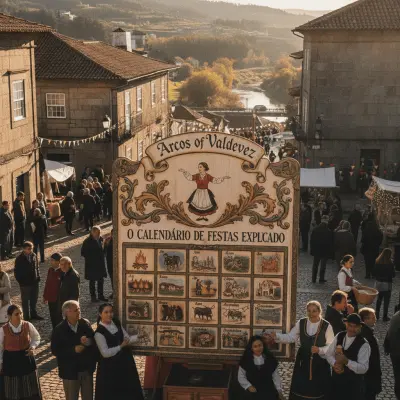
Arcos de Valdevez runs on three real dates: the flower carpets of Nossa Senhora do Castelo, nine days celebrating Nossa Senhora da Lapa, and the big romaria up at Peneda, where accordions play until seven in the morning. None of it was built for tourists.
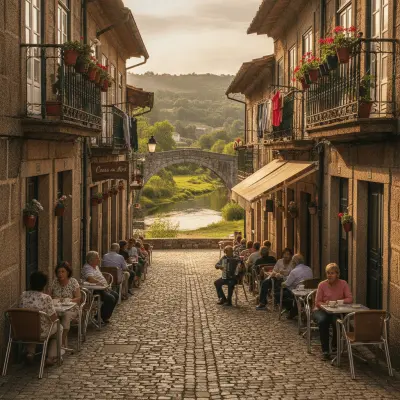
Arcos de Valdevez has no landmarks worth a thirty-minute queue, and that's the point: a river, a retro bar that isn't performing for anyone, and hikes only worth doing with someone who knows the route. This is the Minho weekend without the Instagram captions.
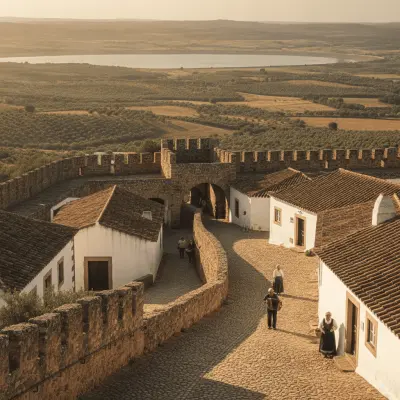
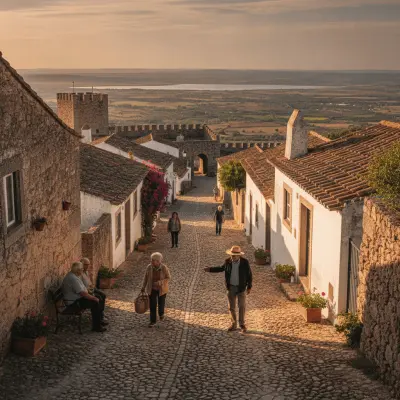
Inside Monsaraz's walls sits a 15th-century fresco that stayed bricked up for four hundred years, a bullring inside a medieval castle, and a view over Western Europe's largest artificial lake. A walking route, no car needed, from the town gate to the top.
A street under three hundred metres long, a castle with a bullring built inside it, and five thousand years of stone deliberately aligned. This route walks Monsaraz the way it was built: slowly, and without wasting an inch of space.
Santa Maria isn't just the oldest island in the Azores: for nearly two decades, the runway above Vila do Porto was the last stop for transatlantic flights before they crossed the ocean. The town that grew up around it still feels like the end of the line, just with golden sand.
In Belmonte, the granite doors still turn inward, an architectural trace of five hundred years of Jewish discretion. A self-guided walk through the Judiaria, no gold plaques, just close attention.
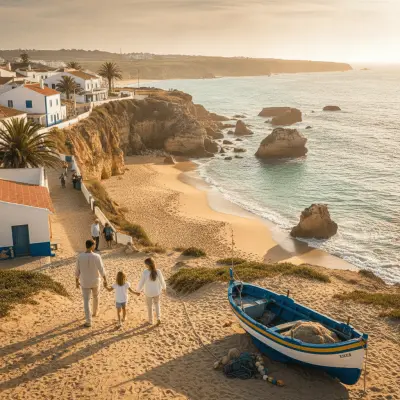
Porto Covo has no water parks or organized kids' clubs, and that's exactly why it works so well with children: a wide, sheltered beach, a short trail kids can actually finish, and a boat ride to Ilha do Pessegueiro that steals the day from everything else.
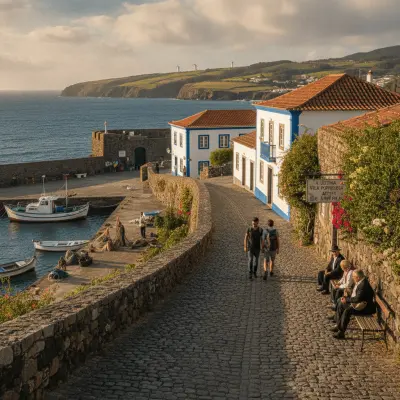
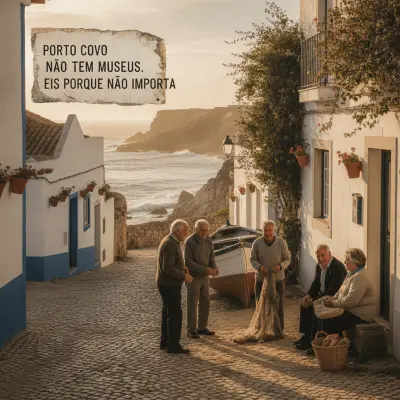
Porto Covo has no museum, no visitor center, no gift shop. What it has is a 17th-century fort with no plaques, Roman ruins sitting underwater off Ilha do Pessegueiro, and a whitewashed village that tells the story better than any panel could.