Belmonte's Jewish Quarter: A Self-Guided Heritage Walk
In Belmonte, the granite doors still turn inward, an architectural trace of five hundred years of Jewish discretion. A self-guided walk through the Judiaria, no gold plaques, just close attention.
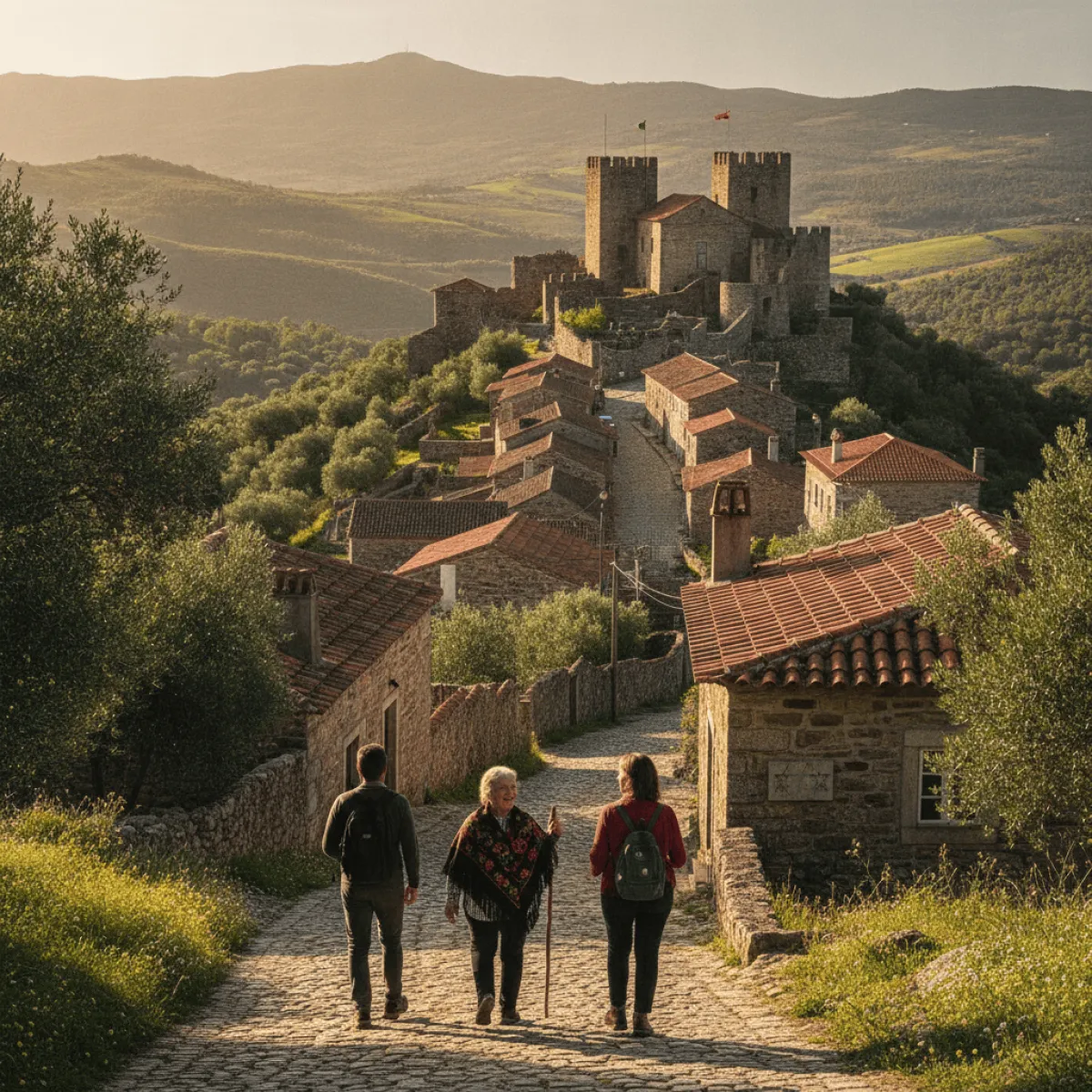
Belmonte doesn't keep its Jewish history behind museum glass. It's out in the street. It's on Rua da Portela, where the granite houses have doors turned toward the inner courtyards, an architectural detail historians link to the discretion crypto-Jewish families needed after 1497, when King Manuel I decreed forced conversion. It's in the Beit Eliahu synagogue, inaugurated in 1996, the first built from scratch in Portugal since the Middle Ages. And it's above all in the strange, moving fact that this community survived five hundred years hidden in plain sight, practicing an adapted form of Judaism with no rabbis, no books, only oral memory passed from mother to daughter, until they were rediscovered in 1917 by a mining engineer named Samuel Schwarz.
This isn't a museum piece. There are still families in Belmonte today who identify as Jewish, and the community, though small, maintains an active synagogue and a kosher butcher, and follows a calendar of festivals. That's why walking through this quarter calls for a different attitude. This isn't Óbidos, it's not built for postcards. It rewards paying attention.
Where to start: the Judiaria, unhurried
The obvious starting point is the Judiaria, the old Jewish quarter, which today is simply Belmonte's historic center. There's no official route marked with gold plaques, and that's a good thing. It forces you to slow down, to look up. Notice the granite doorframes on some of the older houses: on certain homes you can still spot the mark where a mezuzah once hung, removed or hidden centuries ago, its outline still carved into the stone. There's no signage pointing this out. Finding it is part of the experience.
The Beit Eliahu synagogue, in the upper part of the village, is the modern counterpoint to that discretion. It's a simple, functional building, no grandeur to it, and that sobriety is exactly what hits hardest after wandering the alleys where these worshippers' ancestors once prayed hidden in cellars. Check visiting hours locally, since it isn't always open to the public outside of worship times.
The Jewish Museum, for context
Before or after the walk, the Belmonte Jewish Museum is worth the stop. It occupies the center of the narrative: the 1496 expulsion edict, the forced conversions, the survival mechanisms of secret religious practice (blessings whispered under the breath, the Sabbath kept behind closed curtains, a pig hung at the front door as camouflage), and later, in the 20th century, the reconnection with world Jewry. Without this backdrop, the streets outside say less. With it, every granite doorway carries weight.
Where to eat after the walk
Belmonte isn't a food destination the way neighboring Covilhã is, but it has what you need: cured meats from the Beira region, Serra da Estrela cheese a short drive away, and roast kid goat in the traditional casas de pasto. If you're looking for something tied to the Jewish community specifically, the local kosher butcher serves the resident community more than tourists, which is exactly as it should be. This isn't a theme park.
Where to sleep: stay in the countryside, not the village
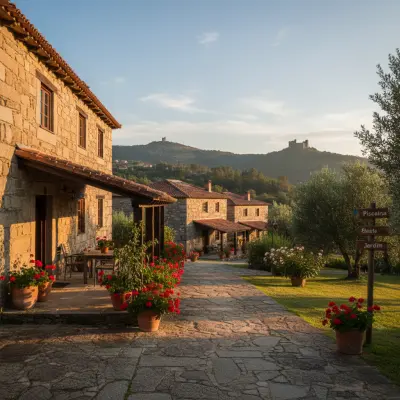
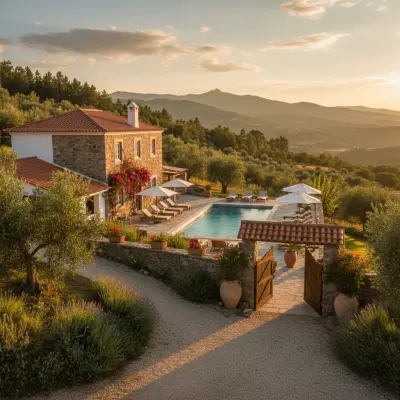
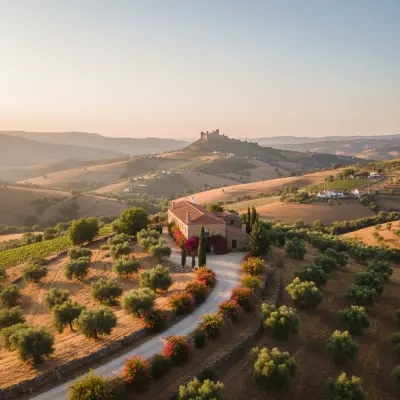
My recommendation, after several visits, is not to sleep inside the village itself. Belmonte is small and can be seen unhurried in a day; what really pays off is staying in the surrounding countryside, among vineyards and mountain views. TheVagar Countryhouse has that advantage: waking up away from any noise, with a view of the serra, and reaching the Judiaria in ten minutes by car for breakfast.
For groups or anyone wanting more space, Kazas do Serado - Turismo Rural offers independent houses, which works well if you're traveling with kids or simply prefer cooking your own meals after a day spent wandering granite alleys. Quinta do Rio - Belmonte, meanwhile, sits right by the water, which in the summer heat of the Beira interior is not a small thing.
An afternoon in the vineyards, after the history
Belmonte doesn't live on memory alone. It's also wine country, and the area around Quinta dos Termos produces some of the best reds in the Beira Interior, using local grape varieties you rarely find elsewhere. After a morning spent in the Judiaria and the museum, Wine Tasting at Quinta dos Termos in Belmonte is the perfect counterpoint: lighter, more sensory, and still deeply tied to this same land. Book ahead, since tastings tend to run in small groups.
For those who want to go deeper into the history
If a self-guided walk leaves you wanting more, or if you'd rather have context from someone with direct ties to the community, there's an alternative: The Hidden History of the Sephardic Community: A Private Tour of Belmonte is led by someone with a direct connection to the local story, and it covers details and places a written guide simply can't, especially around customs still practiced today by the families who held on.
Getting there, and what to do with the rest of your day
Belmonte is about a 20-minute drive from Covilhã, and it's entirely possible to do the trip without a car of your own. Some visitors organize the whole visit by train, riding the Beira Baixa line and then taking a taxi or local lift for the final stretch. If that's your plan, the guide Belmonte by Train: 48 Hours Without a Car covers the logistics, from train schedules to where to stay without depending on your own vehicle.
For those with a car who want to stretch the trip further, the region has far more to offer than the Judiaria. The Schist Villages are a short drive away, and Covilhã to the Schist Villages: A One-Day Road Trip is the most efficient way to fit Belmonte into a broader day around the Beira Interior, without wasting time on poorly planned back roads. And if your trip lands in August, when the Algarve is packed past the point of enjoyment, it's worth heading down to Fundão instead: Fundão in August: The Beaches the Algarve Can't Offer covers the river beaches in the area, a real alternative to the overcrowded coast, and just minutes from Belmonte.
What stays with you
It isn't the architecture that lingers after Belmonte, it's the fact that an entire community managed to keep a religious identity alive for five centuries, with no synagogue, no rabbi, no visible sacred texts, held together by sheer stubbornness and memory. That changes how you look at the granite doors turned inward, at the scraped doorframes where a mezuzah once hung, at the near-institutional quiet of the village outside peak season.
- Set aside half a day for the Judiaria and the museum, unhurried
- Pair it with a wine tasting at Quinta dos Termos in the afternoon
- Sleep outside the village, in the surrounding countryside, for the better views
- Check synagogue hours locally before planning your visit
- Without a car, the train to Covilhã covers most of the logistics
Belmonte doesn't ask for grand photographs or dramatic captions. It asks you to stop in front of a granite door and think, for a second, about who once hid an entire faith behind it, five hundred years ago.