Vila do Porto: The Last Portuguese Town Before America
Santa Maria isn't just the oldest island in the Azores: for nearly two decades, the runway above Vila do Porto was the last stop for transatlantic flights before they crossed the ocean. The town that grew up around it still feels like the end of the line, just with golden sand.
The runway that connected the Azores to America
In 1944, with the war still raging across Europe, American engineers cut a runway nearly two kilometers long into the plateau above Vila do Porto. It wasn't a random choice. Santa Maria sits closer to North America than any other Azorean island, and for almost two decades Santa Maria Airport was the mandatory last stop for transatlantic flights before they committed to the ocean crossing. Seaplanes, and later Pan Am Stratocruisers, refueled here; passengers spent the night in town and continued on toward New York or Bermuda the next morning. Only once jets could cross the Atlantic without stopping, in the 1960s, did Santa Maria lose ground to Lajes, on Terceira. What remained was a runway far too long for such a small island, a town that grew up around it, and a fact that is literal rather than poetic: this is the last piece of Portugal before the map turns entirely into ocean.
Today that runway mostly handles SATA's short regional hops between Ponta Delgada and Santa Maria, about thirty minutes in the air, plus the occasional transatlantic diversion that nobody on board is thrilled about. Ferries run in high season too, but flying is what makes sense for anyone giving three or four days to the oldest island in the archipelago.
The oldest town in the Azores
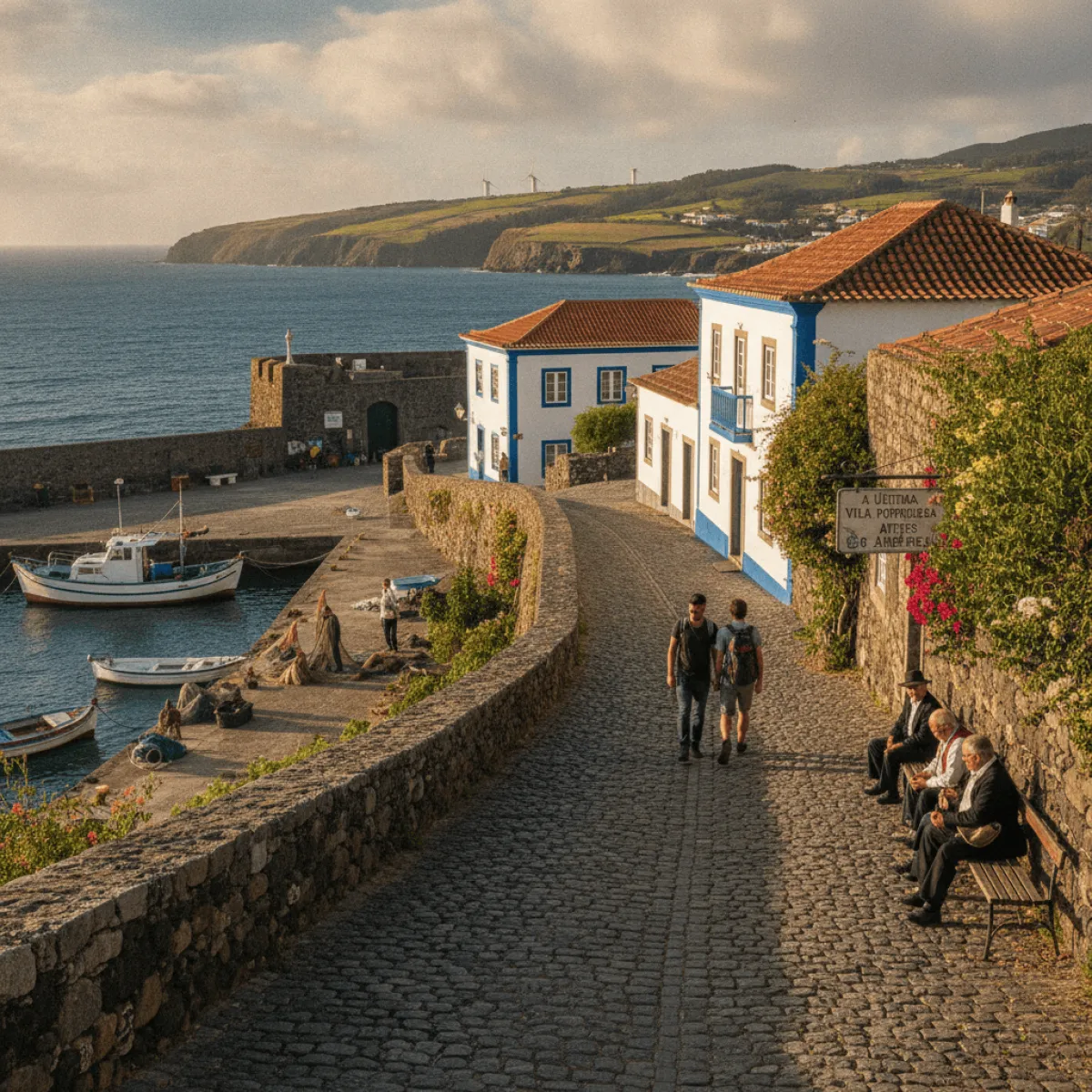
Vila do Porto isn't just the last stop before the western Atlantic, it's also the first officially chartered settlement in the Azores, founded around 1439 by Gonçalo Velho Cabral, the same captain who opened the way for the colonization of the whole archipelago. That status shows in the scale of the place: the streets around the Igreja de Nossa Senhora da Assunção have a domestic, almost village feel, whitewashed houses with doors painted deep blue or dark red, nothing built to impress.
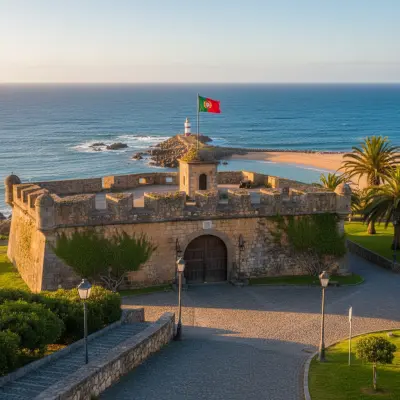
That calm wasn't always guaranteed. Forte de São Brás de Vila do Porto, right by the harbor, is proof of that: Barbary corsairs attacked the island repeatedly through the 16th and 17th centuries, at times carrying off entire populations as slaves, and the fort you can walk through today, low-slung with its battlements facing the water, is the result of successive rebuilds meant to make sure that stopped happening. It's worth visiting not for grandeur, because it has none, but for the flat view over the harbor and for the sense of scale it gives you: this small town took its own defense seriously, for centuries.
Golden sand where you'd expect black lava
Anyone arriving in Santa Maria after São Miguel or Pico notices something off: the sand is golden, not black. Santa Maria is geologically the oldest island in the archipelago, built from sedimentary rock and fossil-rich limestone that the younger volcanoes on the other islands never produced, and the result is Praia Formosa, a stretch of pale sand that looks like it wandered in from the Caribbean rather than the Azores. It's the go-to spot for swimming and beginner-friendly surf, framed by a small amphitheater of dark volcanic rock, and it's also where the town gathers on weekends, with zero pretension.
It's not the only one. The south and southwest coast of Santa Maria is a run of small coves, some reachable only on foot or by boat, and that alone is the main reason people make the trip: no lines, no rented umbrellas, just rock, clear water, and the sea doing all the talking.
Trails and natural pools, no unnecessary detours
Santa Maria has a well-marked network of official trails, but the island is small and rugged enough that, for at least one outing, it pays to go with someone who knows the route and can read the tide well enough to know when it's actually safe to jump in. That's what the Guided Hikes and Natural Pools from Vila do Porto program is built for: a coastal walk combined with stops to swim in rock pools that the tide fills and drains like clockwork. It's the most efficient way to see the coastline without burning half a day wondering whether that narrow path is actually the right one.
For a wider view of the island, including beaches you'd never spot from the main road, Santa Maria Trails and Beaches with SMATUR runs day trips that string several coastal spots together with transport included, which saves you the hassle of decoding unsigned rural roads in search of a beach access that exists but that nobody bothered to mark on a map.
Where to sleep: farmhouses instead of chain hotels
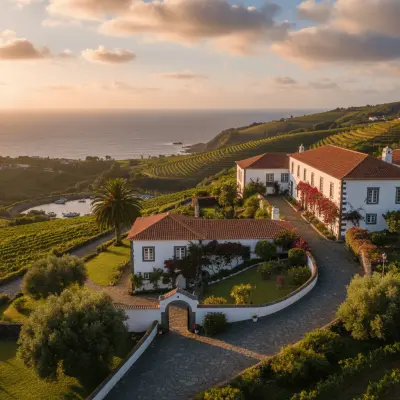
Santa Maria never went through the hotel-building boom that hit São Miguel over the last decade, which is good news if you'd rather sleep somewhere with history than in a concrete block next to a pool. Quinta do Falcão is the right example: a rural property on the outskirts of Vila do Porto, with the kind of quiet that only exists when the nearest road sees almost no traffic and the neighbor's cows are the loudest thing around. It's the obvious choice for anyone who wants to wake up already inside the landscape instead of driving to it every morning.
On food, the rule on Santa Maria is simple: fresh fish, local cheese, and Verdelho wine, still produced on an island too small for large vineyards but with a winemaking tradition that goes back to the earliest settlers. This isn't the island to go looking for fine dining; it's the island to eat well, without fuss, at a neighborhood tasca where today's fish genuinely arrived that morning.
Miradouro da Macela and the rest of the island
For a first read of the island's geography, Miradouro da Macela is the right stop: from up there you can see much of the south coast, the contrast between terraced farmland and the dark Atlantic, and on a clear afternoon it's easy to understand why the first settlers picked this stretch, sheltered from the prevailing wind but open to the sea.
Anyone with a day or two to spare should climb Pico Alto, the island's highest point, with views that on a clear day reach São Miguel, then head down to Anjos, the small bay on the north coast where local tradition holds that Christopher Columbus landed in 1493, on his way home from the first voyage to the New World, to fulfill a religious vow. There's no way to confirm that with total certainty, but the small chapel by the water, and the fact that the story has been told for over five centuries, make the detour worthwhile on its own.
After Santa Maria: island hopping onward
Santa Maria works well as either the first or last stop of a longer Azores trip, precisely because it has direct flights to Ponta Delgada and, seasonally, to other islands in the central group. Anyone continuing to Terceira will find Angra do Heroísmo an entirely different kind of city, and it's worth planning that day properly: the guide to Angra do Heroísmo in 24 Hours, at a Local's Pace saves you from wasting time on obvious decisions, and the backup plan in Angra do Heroísmo in the Rain: A Real Plan B is worth reading given how many times Azorean weather can change its mind before lunch.
For those pushing further, to the western group, Horta, on Faial, offers a completely different stop, more cosmopolitan, shaped by the international sailing culture that has settled there for generations; the guide to 24 Hours in Horta: Cosmopolitan Soul in the Heart of the Atlantic explains well why so many sailors choose it as a stopover before crossing the ocean, much like the planes did in Santa Maria eighty years ago.
When to go and what it costs
The best window for Santa Maria runs from May to October, with July and August bringing the warmest swimming water, though they're also the busiest months for the island's limited number of beds, so booking ahead pays off. A Ponta Delgada-Santa Maria flight in low season can cost well under 100 euros round trip; renting a car on the island is close to essential, since taxis are scarce and public transport is minimal, and rental prices generally run lower than on São Miguel. Factor in simple lodging, a rental car, and meals at local tascas, and a day on Santa Maria typically costs noticeably less than the same day on São Miguel in high season, one more reason to stretch the trip out here before heading back to the mainland, or on to America, if that happens to be the final stop.