Porto Covo Has No Museums. Here's Why That's Fine
Porto Covo has no museum, no visitor center, no gift shop. What it has is a 17th-century fort with no plaques, Roman ruins sitting underwater off Ilha do Pessegueiro, and a whitewashed village that tells the story better than any panel could.
Wrong Question
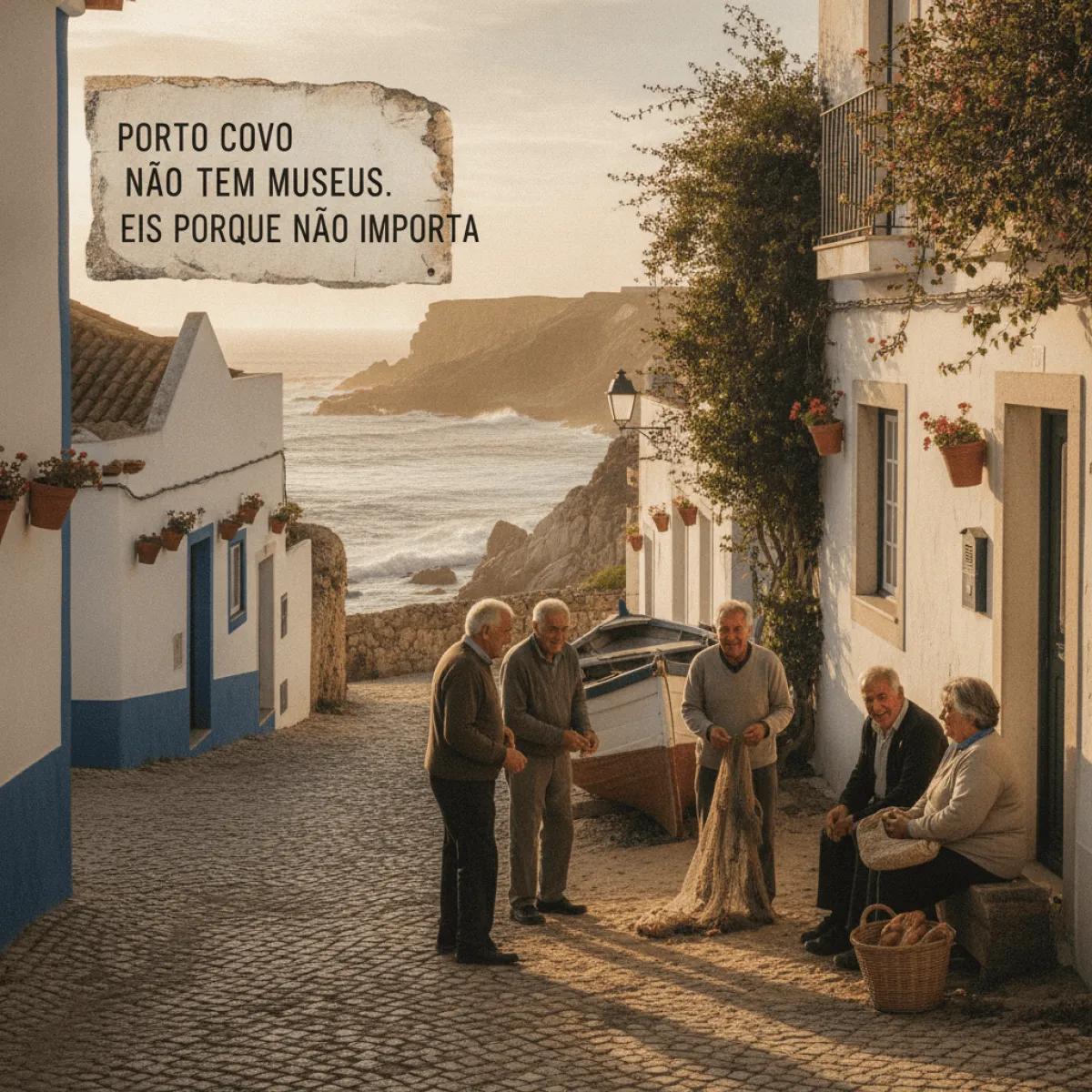
Show up in Porto Covo asking for the museum and you'll get the same look you'd get asking a fishmonger for a wine list: patient, a little amused. There isn't one. No visitor center with backlit panels, no ticket desk, no gift shop selling magnets shaped like sardines. What Porto Covo has instead is a seventeenth-century fort nobody bothered to over-restore, a stretch of coast known among divers for its shipwrecks, and a village of whitewashed houses trimmed in blue that is, honestly, the most convincing permanent exhibition on this stretch of coast.
The Village as Exhibit
Before you even reach the fort, the logic of Porto Covo is already obvious: low whitewashed houses, blue trim around doors and windows, a tradition kept alive not by a council bylaw bolted to a wall but because that's simply how it's always been done here. No oversized two-story additions competing with the Atlantic view, no glass facades trying to outshine the water. The small central square, where the whole village shows itself within a hundred meters, is a café, a grocery store, people sitting and watching the day go by. It isn't staged for visitors. It's the daily rhythm of a village that still lives off fishing and, increasingly, off people walking the Rota Vicentina.
The Fort That Stayed Small on Purpose
A few minutes' walk from the center, on the headland above the water, sit the remains of Porto Covo's small coastal fort, built to watch for corsairs and smugglers on a stretch of Atlantic that has always been more dangerous than its postcard version suggests. There's no signage, no guide, no opening hours because it's either always open or always closed, depending on how you feel about a ruin with no door. It's free. It's where sunset happens without an audience on most weekday evenings, and it rewards ten minutes of sitting still far more than two minutes of photographing everything in sight.
Ilha do Pessegueiro: The Real Museum Is Underwater
If anything in Porto Covo comes close to a proper museum, it's offshore, not on land. Ilha do Pessegueiro holds Roman-era fish-salting tanks cut into the rock and the ruins of another fort, built to protect the same coast from the same corsairs the mainland fort was watching for. There's no ticket booth here either, but there is a practical requirement: a boat, because tide and distance don't forgive anyone who underestimates either. The full guide to the boat trip to Ilha do Pessegueiro handles the logistics: departures follow the sea, not a printed schedule, so check locally before walking down to the dock with fixed expectations.
What You'll Actually See
Low stone walls, a handful of tanks carved into the rock, gulls that have never learned to be afraid of people, and a view back over Porto Covo that explains exactly why the Romans picked this spot to cure fish. It isn't the Colosseum. That's the point: no queues, no four-language plaques, just stone, salt, and wind.
The same waters are also known among divers for shipwrecks scattered along the coast over the centuries, wrecks that now function as informal artificial reefs and draw people diving for sport as much as for history. This isn't a casual, unguided activity: currents and visibility vary considerably, and it's worth checking conditions with local operators before suiting up.
Vasco da Gama, Maybe
Locals tell a story with more conviction than historians usually confirm: that Vasco da Gama was born nearby, around Sines, and that Porto Covo carries a trace of that in street names and café conversation. There's no dedicated museum, no birth certificate behind glass, and it's best treated as solid local legend rather than textbook fact. That said, it's a story that lands better over a beer on the main square than off an information board.
What To Do Instead of Chasing Air-Conditioned Rooms
The real permanent collection here is the coastline. Praia Grande de Porto Covo is the obvious starting point: wide sand, water that stays cold even in August, and low cliffs that throw natural shade late in the afternoon. For anyone who wants more than a towel and an umbrella, the Fisherman's Trail of the Rota Vicentina starting in Porto Covo is the most honest open-air exhibit in the region: red cliffs, packed-earth paths hugging the sea, and a physical reminder that this coast was built for fishermen, not photo ops. The trail runs through a protected coastal zone, so this isn't the place for shortcuts across dune vegetation: stick to the marked path, keep dogs leashed, and expect fellow walkers doing the multi-day Rota Vicentina rather than a quick afternoon loop. Bring water, bring sunscreen, and don't underestimate the wind even on clear days.
- Worth your time: the village fort at sunset, the Ilha do Pessegueiro ruins by boat, the first stretch of the Fisherman's Trail.
- Skip it: any expectation of finding a conventional museum in Porto Covo itself. It doesn't exist, and hunting for one just steals time from the beach.
- Worth the extra drive: Vila Nova de Milfontes to the north or Zambujeira do Mar to the south, both still on the Rota Vicentina, for a change of scenery without leaving the trail.
Where to Sleep Without Leaving the Village
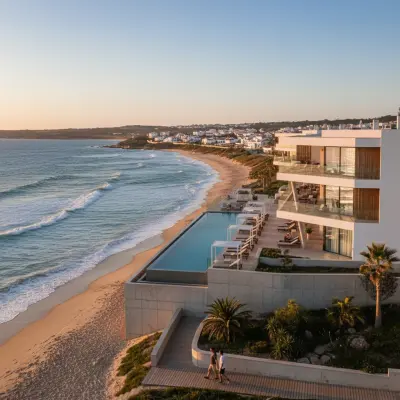
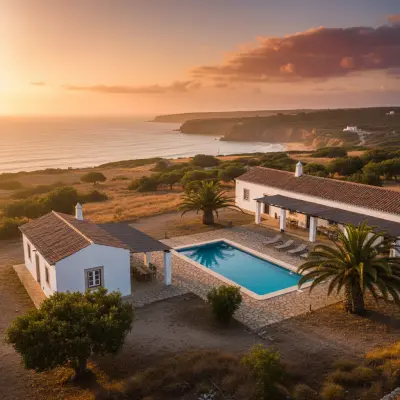
Porto Covo is small, and the lodging options reflect that: no sprawling resorts, everything within walking distance of the water. Porto Covo Praia Hotel & SPA is the most fully equipped option in the village, with a spa for the windy days when the beach isn't tempting anyone. Hotel Apartamento Porto Covo works better for anyone staying longer than a weekend and wanting their own kitchen. For those who'd rather have countryside than concrete, Monte da Bemposta sits outside the center, closer to quiet than to café terraces, and it's the right call for anyone here for the Rota Vicentina rather than a village-view breakfast.
Where to Eat
This is seafood coast, not laminated-menu-with-photos coast. Before sitting down anywhere with flags strung across the terrace, it's worth reading the guide to Odemira's seafood summer, covering percebes, oysters, and Atlantic tables, which covers the wider region Porto Covo belongs to and helps separate what's actually fresh from what's frozen and priced like it isn't. In Porto Covo itself, the rule is simple: if the seafood spot has a line of locals as well as tourists in new flip-flops, it's worth the wait.
When to Go, How to Get There, What It Costs
July and August bring crowds and peak-season prices, especially for anything near the beach. May, June, and September strike the best balance: the water is still cold (this is the Atlantic, never expect Mediterranean warmth), but without the pressure of booking everything months out. Off-season, Porto Covo empties out enough that some restaurants close mid-week, so check locally before building a dinner plan around one specific place. Cost-wise, Porto Covo tends to run cheaper than Vila Nova de Milfontes for a bed, but pricier for fresh seafood at the height of summer, a trade-off that works out for anyone who prioritizes quiet over a long menu.
By car, the village sits roughly two and a half hours from Lisbon via the A2 and then the N120/N261, with Sines as the nearest town for supplies or a bigger grocery run. By public transport, there are bus connections from Lisbon and Sines, though schedules shift with the season and are worth confirming directly before travel. There's no train to Porto Covo, and the nearest station is far enough away that it isn't a realistic backup plan.
For anyone stitching Porto Covo into a longer Rota Vicentina trip, the guides on Vila Nova de Milfontes in August and dodging the crowds and Zambujeira do Mar for digital nomads, cliffs, and slow season help build a multi-day route without repeating the same view twice.
The Museum Porto Covo Doesn't Need
Some villages on the Portuguese coast make up for a mediocre beach with a big, well-funded museum. Porto Covo is the opposite: it has the beach, it has the fort with no plaques, it has Roman ruins sitting underwater, and it doesn't miss anything else. Showing up looking for an air-conditioned room with a gift catalogue is time better spent on the sand or on the trail. The village doesn't apologize for that, and after a weekend here, neither will you.