Porto Covo Has No Museums, and Doesn't Need Any
The short answer is Porto Covo has no museums. The long answer involves Roman salting tanks being eaten by the sea, a fort that was never finished, and why that beats any air-conditioned room.
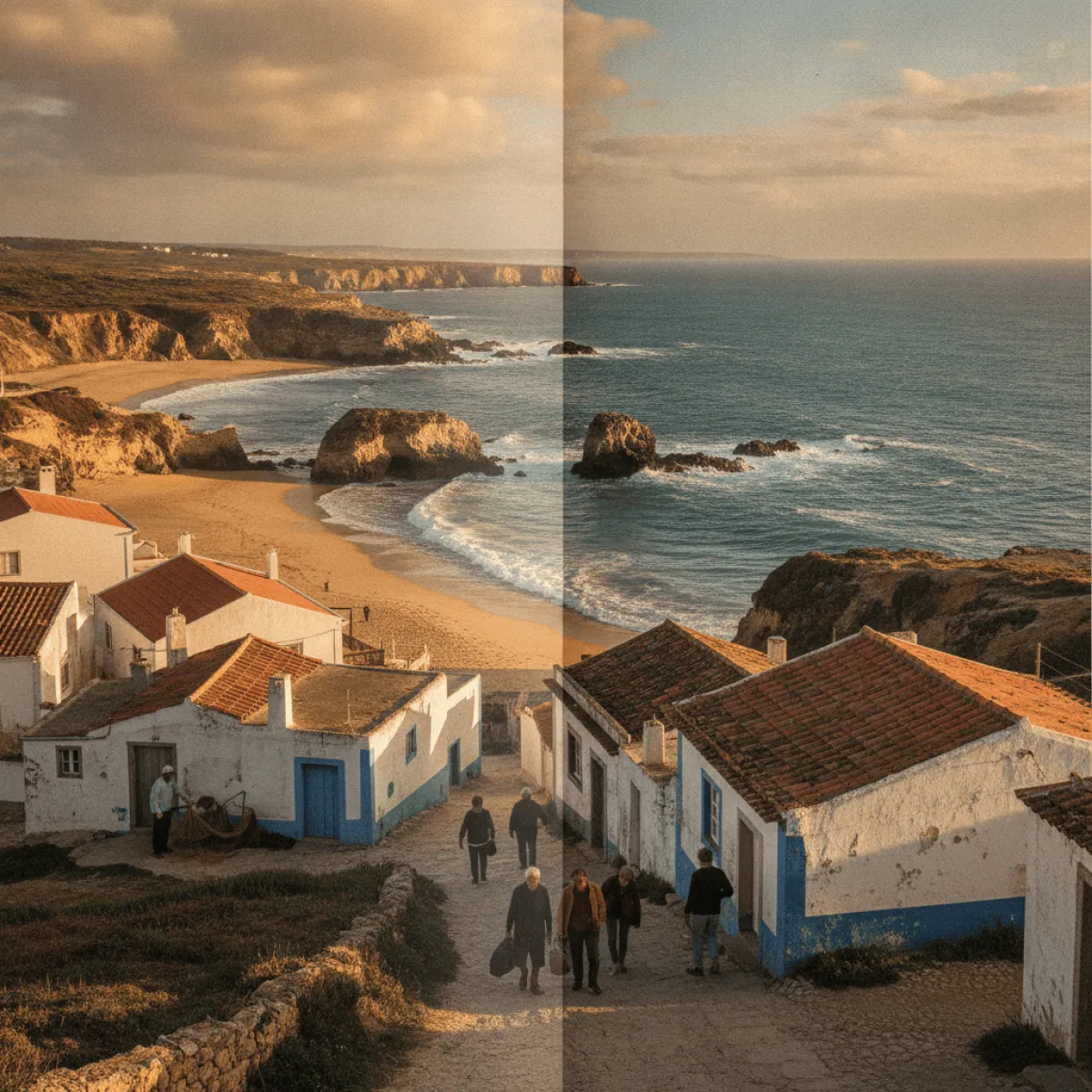
Someone wrote asking us for the best museums in Porto Covo. The short answer is there aren't any. The long answer is this: Porto Covo has one eighteenth-century church, an island full of Roman ruins, and nobody ever felt the need to build an air-conditioned room with bilingual captions to explain any of it. Honestly, that's fine.
The wrong question
Porto Covo was flattened by the 1755 earthquake, like most of this coast, and rebuilt on the orders of the Marquês de Pombal following the same grid logic you see in downtown Lisbon, just shrunk down and facing the ocean instead of the river. The center of the village is Largo do Marquês de Pombal, a square white plaza with the Igreja de Nossa Senhora da Soledade in the middle, baroque, eighteenth century, still functioning as the parish church. No ticket booth, no guide, no gift shop. It's open for mass and for anyone who wants to step in quietly and look at the altarpiece. That's the closest thing Porto Covo has to a museum, and it doesn't even act like one.
If you came looking for a building with explanatory panels about local history, you'll be done in fifteen minutes and disappointed. If you accept that the history here isn't kept in glass cases but scattered across the landscape, the whole visit changes shape.
The museum that's an island
About a ten-minute boat ride from the village sits Ilha do Pessegueiro, and that's where the real heritage of Porto Covo actually lives, in the open air. The Romans used the island as a garum production center, the fermented fish sauce that seasoned half the empire, and the salting tanks where the fish was cured are still visible carved into the rock, the oldest trace of an occupation that goes back millennia. In the sixteenth century, under Philip I, the Forte de Santo Alberto was built there to protect the natural harbor from Berber corsair raids, and on the mainland the Forte de Nossa Senhora da Queimada went up, commissioned in the seventeenth century by Dom Pedro II. The 1755 earthquake ruined both. Nobody restored them for tourists, so they're still there, half eaten by salt spray, no rope barrier, no sign telling you not to touch.
To get there without winging it, it's worth checking this full guide to the boat to Ilha do Pessegueiro, which covers schedules and what the crossing is actually like. Go in the morning if you can, before the afternoon wind picks up and makes landing trickier. Bring water, there's nothing to buy on the island, and shoes that can handle loose rock.
The coastline on foot tells its own story
If you'd rather arrive on foot, the stretch of the Rota Vicentina that runs through here, known as the Fisherman's Trail, hugs the clifftop toward Vila Nova de Milfontes and is, for all practical purposes, an open-air museum of geology and maritime life. Worth reading this guide to the Fisherman's Trail in Porto Covo before setting out, because parts of the route are exposed to wind with zero shade, and in August that means carrying more water than seems necessary at nine in the morning.
Along the way, or just as a reason to stay near the village, Praia Grande de Porto Covo is the other big exhibit around here, a cove sheltered by rock outcrops that makes it one of the safer beaches on the Vicentine Coast for swimming, which around here is not a small thing. No captions, no curation, just clean water and sand that hasn't yet been colonized by the overpriced rental umbrellas you'll find further north.
The only real museum is in Sines
If the word museum is truly non-negotiable for your holiday, the honest answer is to leave Porto Covo. Sines, a short drive up the coast, has the Museu de Sines, also known as Casa Vasco da Gama, housed inside the town's castle, in the keep tower. Vasco da Gama was born in Sines, and the museum pays tribute to him with a multimedia installation, but the collection actually goes much further, with objects covering the region's history from the Paleolithic all the way to the twentieth century. Entry is free, it's open Tuesday to Sunday from 10am to 1pm and 2pm to 5pm, with extended hours until 6pm in summer. It's a proper museum, properly curated, and worth the morning it will take from you. Just don't confuse it with anything Porto Covo has, because Porto Covo has nothing like it.
Where to stay while you're not visiting any museums
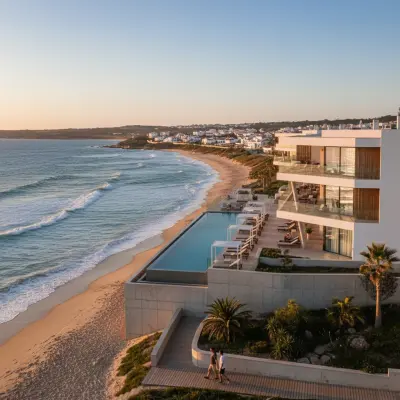
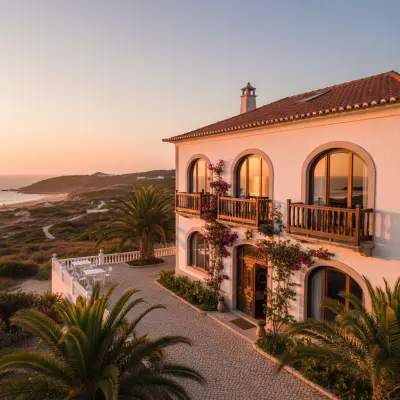
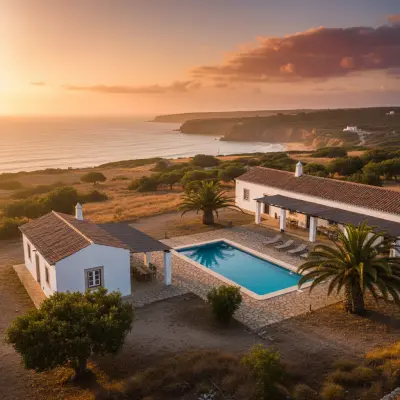
For travelers who want a base in Porto Covo itself and prefer hotel comforts, Porto Covo Praia Hotel & SPA sits a short walk from both the beach and the village center, which saves car trips for anyone planning to just cycle between beach, terrace, and nap. For longer stays or groups, Hotel Apartamento Porto Covo comes with its own kitchen, which in August, as village restaurant prices climb with demand, actually pays off. Anyone who'd rather sleep outside the center, with more quiet and a view of fields instead of rooftops, has Monte da Bemposta as a rural alternative a few minutes' drive from the village.
And eating, since museums don't feed anyone
Porto Covo has no Michelin stars and doesn't need any. What it has is fresh seafood from the local auction and village restaurants that do one thing well instead of running a long menu built to please everyone. To understand what to order and where this region takes its percebes and oysters seriously, it's worth reading this guide to Odemira's seafood summer, which covers the whole stretch from Porto Covo down to Vila Nova de Milfontes. The practical rule is simple: order the grilled catch of the day, no frills, and save the fancy sauces for another trip.
If you have a day to spare
Anyone staying more than a weekend usually widens the radius south. Vila Nova de Milfontes is the obvious neighbor, and it genuinely fills up in August, so it's worth reading this guide to Vila Nova de Milfontes in August first to know where to escape the crowds without leaving the area. Further south still, Zambujeira do Mar has taller cliffs and a slower pace outside peak season, covered in this guide for remote workers, useful even if you just want to know when the village empties out.
The village is the museum
Here's the joke, in the end: anyone who comes to Porto Covo looking for a museum is already staring at one, they just don't realize it. The Pombaline square rebuilt after the earthquake, the Roman salting tanks being slowly eaten by the sea, the forts that never got finished, the smell of grilled fish drifting out of kitchens in the late afternoon: it's all a permanent exhibition, no glass case, no ticket, no closing time. If you truly need an air-conditioned room with captions, Sines is right next door. But if you come to Porto Covo looking for something to photograph behind glass, you're missing exactly what the village is offering, which is the opposite of that.