Vila Nova de Milfontes in August: Dodging the Crowds
In August, the secret of Milfontes isn't avoiding high season, it's learning to move within it: the beach at 8:30am, the river at noon, Odemira percebes at dusk. A guide to living on the edges of the day and the map.
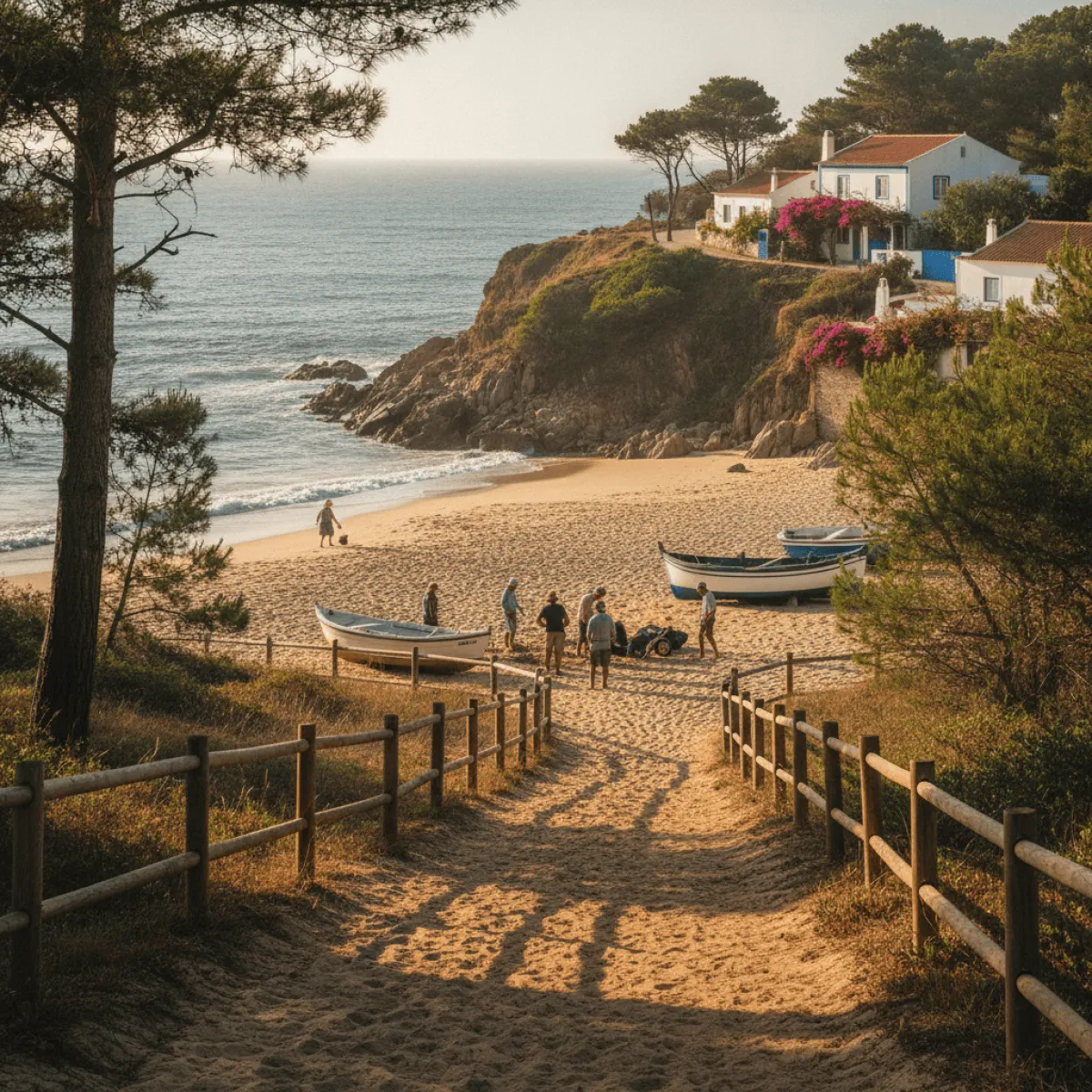
August in Vila Nova de Milfontes is a strange animal. The village that in May has two occupied tables at the café on the square, in August has queues for everything: for bread, for the terrace, for a patch of sand to drop your towel. They come from Beja, from Évora, from Lisbon, all at once, in the first fortnight. And yet this is still one of the best places to escape the Algarve's chaos, as long as you know when to move your body and where to point the car.
My rule is simple: in August, here, whoever sleeps until ten has lost the day. Not out of some early-riser moralism, but pure logistics. Between 8am and 10:30am the village is yours. After that, it belongs to everyone. This guide is about living on the edges of the day and the edges of the map, where the Vicentine Coast still breathes.
The morning belongs to the early riser
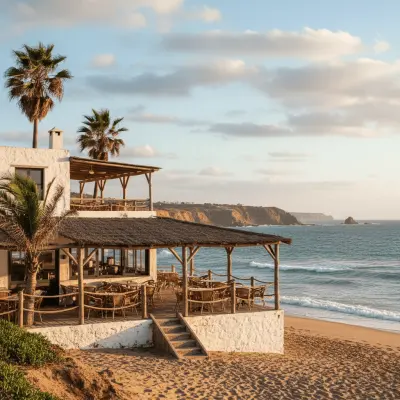
Start at Praia da Franquia, the estuary beach that faces the Mira river rather than the open sea. It is the most sheltered, the warmest, the one with calm water. At noon in August it is an anthill. But at 8:30am you have nearly all the sand to yourself, with the tide creeping up and the light still low and sideways. Bring your coffee from home or buy it in the village before you walk down: at this hour nothing has opened on the sand.
The Franquia is deceptive. It looks like a harmless river beach, but the tidal current is serious when the water changes direction. Great for families at high tide, respectable on the ebb. If you want to swim properly, do it at high water, when the river sits still and warm as a bathtub.
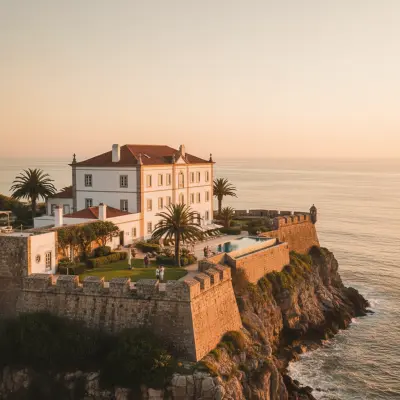
After your swim, climb up to the Forte de São Clemente, the small 16th-century fortress guarding the mouth of the Mira. Built to defend the village from the Barbary pirates who once raided this coast, it is privately owned today and not always open inside, but the walk out to the promontory is the best lookout in town. From there you see the whole estuary, the bar where the river meets the Atlantic, and across the water the wild dunes of the south bank. Go early, before 10am, and the parapet is yours and the fishermen's alone.
The river is the crowd's emergency exit
Here is the trick most holidaymakers miss: in August, the escape is not to another beach, it is into the water itself. The Mira is broad, calm and navigable for kilometres upstream, and the moment you leave the village stretch, there is no one else.
Rent a kayak and go kayaking the Mira estuary. It is the activity I would recommend to anyone who has just one day. You paddle against the current in the morning, before the wind gets up, past banks of reeds, herons and small river beaches no one reaches on foot. Half a dozen strokes and the village disappears behind a bend. Bring water, a hat and sunscreen: there is no shade on the river and the sun bounces off the water mirror at double strength.
If you can only do one thing in Milfontes, make it the sunset kayak on the estuary. In the late afternoon, once the buses have carried the campers back to the parks, the Mira turns golden and empty. The sun sets directly over the bar, aligned with the river, and for twenty minutes the water goes the colour of burnt orange. It is the only time of day when August in Milfontes feels like May.
Where to eat without going to war for a table
Food is the real August battlefield. The good restaurants fill up at 8pm and stay full until midnight, and many take no bookings. My strategy is twofold: late lunch, early dinner. Sit down at 1:30pm, while the bathers are still on the sand, or at 7pm, before the avalanche.
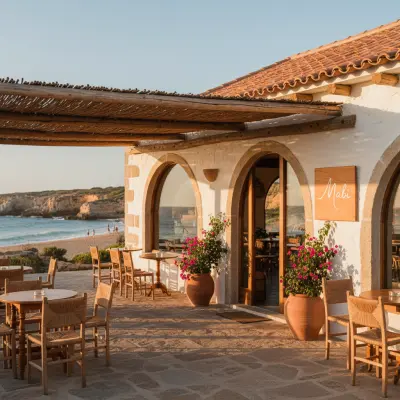
For a break from the endless grilled sardine, go to Mabi. It is the kind of spot that rescues a holidaymaker worn out by fish three times a day, a place with a lighter, more relaxed offer, perfect for mid-afternoon when the hunger is not for a banquet but you want to sit in the shade and slow down.
But the real gastronomic lesson of this coast is not inside the village, it is south, in Odemira and its fishing hamlets. Read the guide on Odemira's seafood summer, from percebes to oysters before you come, because this is where you understand why this coast is worth the trip. The gooseneck barnacles of the Vicentine Coast, torn from the rocks by men who risk their lives in the surf, are among the best in Portugal. They are not cheap, somewhere between 40 and 60 euros a kilo depending on the year and the catch, but eaten by the sea, still warm from the boiling water, they are the most serious thing this coast has to offer. Order them plain, with their own salty juice, and nothing else.
Leave the village: the alternative map
The first fortnight of August is the absolute peak. If you can, come in the second, when the Portuguese head back to work and the village visibly deflates. But even at the height, there are exits.
North: the rock pools of Porto Covo
Twenty minutes by car, the Porto Covo coast hides natural pools carved into the schist rock, seawater basins that warm in the sun where you swim sheltered from the waves. It is the perfect alternative when the sandy beaches are unswimmable with people. The guide to the natural pools near Porto Covo maps the best ones. Go at low tide, wear water shoes because the rocks cut, and bring everything from home: no bars, no shade. The reward is swimming in crystal water without strangers' elbows around you.
South: the cliffs of Zambujeira
Zambujeira do Mar, half an hour south, is the opposite of Milfontes: less river, more raw cliff and cold Atlantic. Outside the week of the Festival do Sudoeste (avoid it like the plague if you want quiet), it is surprisingly calm even in August. The guide on Zambujeira do Mar for digital nomads focuses on the slow season, but the clifftop lookouts and hidden beaches at the bottom of steep stairs work all year round. These beaches, precisely because they take effort to reach, never get as packed as the Franquia.
Logistics: how to survive August
Let's get practical, because August in Milfontes punishes the unprepared.
- Parking: nightmare number one. After 10:30am there is not a free space in the centre. Leave the car on the upper streets, near the entrances to the village, and walk down. Or better still, don't touch the car during the day: the whole village is walkable.
- Where to stay: if you haven't booked for August yet, good luck, because the village sells out in May. Consider the campsites, which are vast and a local institution, or lodging in the inland villages of Odemira, ten or fifteen minutes away, where there are still openings and human prices.
- When to come: if you have flexibility, aim for the last week of August or, ideally, the first of September. The water is still warm, the sun still burns, but half the crowd has already gone. It is the secret the locals keep.
- Costs: a fresh fish lunch runs between 15 and 25 euros a head. A rented kayak is around 15 to 25 euros for a few hours, depending on the operator. Always check locally, as summer prices shift.
The right rhythm
Vila Nova de Milfontes in August is not for those who want absolute quiet. For that, come in October. But it is for those who know the secret is not avoiding high season, it is learning to move within it. Wake early and catch the Franquia empty. Escape to the river at midday, when the sand boils. Lunch late, dine early. And at sunset, be in a kayak in the middle of the Mira, with the village glowing in the distance and the Atlantic swallowing the sun. At that moment, with the fire-coloured water around you, you will realise the crowd stayed on land, and that the best place in Milfontes in August is always a few metres from where everyone else is looking.