Where to Swim Near Lisbon in September: The Best Beaches
The water's still cold in September, but Lisbon's beaches finally empty out and the sun holds through mid-afternoon. From Caparica to Guincho, with a detour to Praia Grande near Sintra, here's where to swim without the crowds, and what to do back in the city on the days the sea doesn't cooperate.
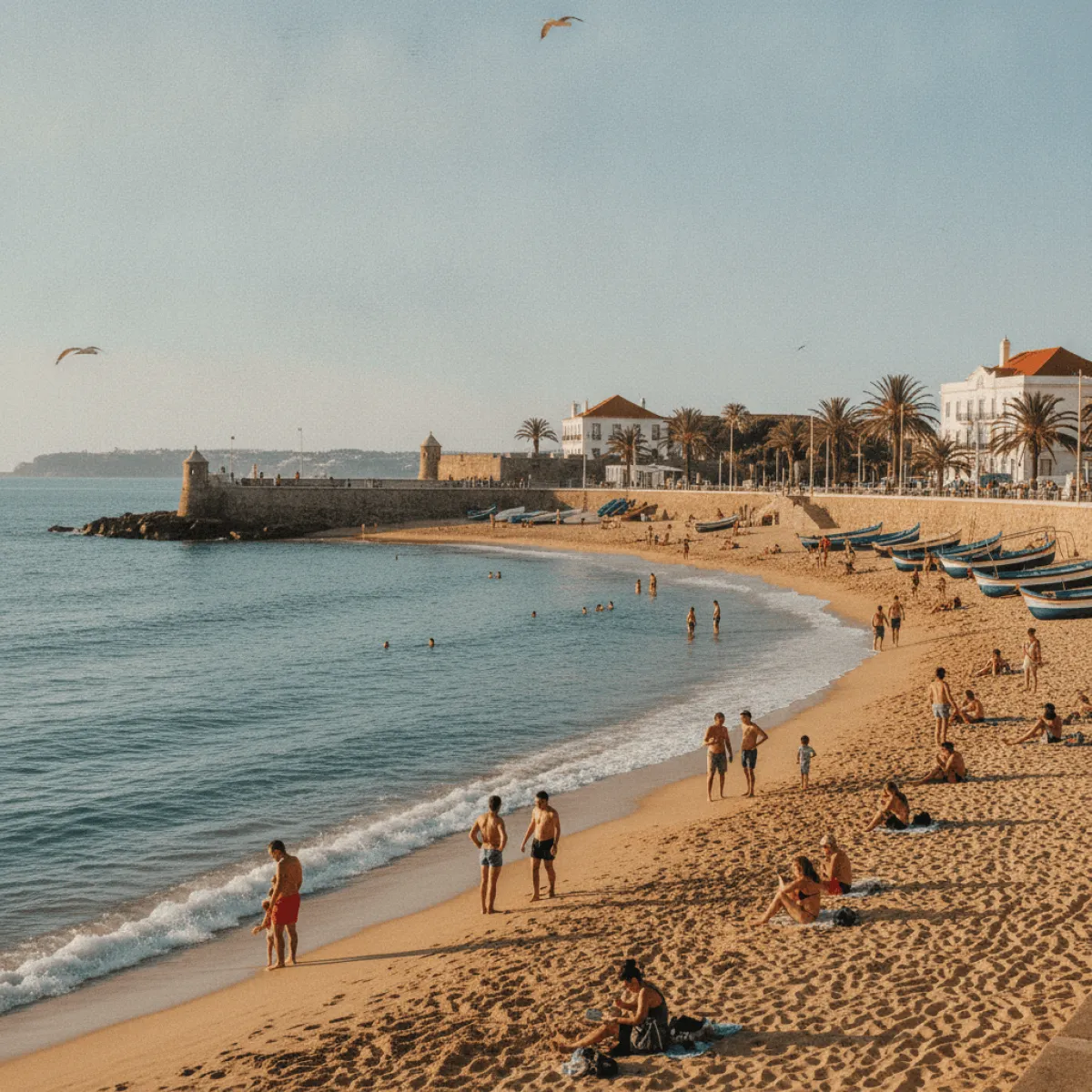
August is for people who like crowds and doubled prices. September is for people who know better. The Atlantic doesn't warm up on schedule, so the water stays cold regardless of the month, but the sun still holds through mid-afternoon, Lisbon residents go back to work, and suddenly there's open sand again. If you're based in Lisbon, or visiting this time of year, you've got three directions to choose from: south to Costa da Caparica, west along the Cascais line, or northwest to the Sintra beaches. Each has its own character, and none of them is more than an hour from downtown.
Costa da Caparica: the easy one
Caparica is the beach for people who don't want to burn the whole morning in transit. Catch the ferry from Cais do Sodré to Cacilhas or Trafaria, about 10 to 15 minutes on the water, roughly €2.90 with a loaded Navegante card, then a bus to the beach itself, another 20 minutes or so. Door to door, you're looking at just over 45 minutes, which makes it the most practical option for a morning swim before lunch.
The stretch of sand is enormous, which means even in September, with smaller crowds, there's always a quieter patch if you walk a few minutes past the main kiosks. I'd point you north, toward São João da Caparica, where the waves tend to be more manageable if you just want to get wet without fighting the sea. If you like surfing, or at least watching people surf, the stretches south toward Fonte da Telha get more consistent swell. One serious note: this is open Atlantic, no bay to soften it, so red flags come up regularly in September, especially with southwest wind. Check the flag on the beach itself before going in, not an app on your phone.
The Cascais line: convenience above everything
If you'd rather trade beach size for a direct train ride, the Cascais line wins easily. Trains leave Cais do Sodré every half hour, more often at peak times, cost around €2.25 one way, and stop at Carcavelos, Estoril, and Cascais, all under 40 minutes from the city center.
Carcavelos is the beach Lisbon locals actually use, wide, close to the station, about a 10-minute walk, and packed with surf schools and a well-known beach bar scene along the central stretch. It's the right pick if you want convenience without giving up space.
Estoril has a smaller, more sheltered beach, good if you're traveling with kids or simply don't want big waves. Cascais, further along the line, offers Praia da Conceição and Praia da Rainha, both in relatively calm bays right in town, walkable from the station. If you want rougher water and more dramatic scenery, there's always Guincho, about 15 minutes by taxi or the 405 bus from Cascais, dunes and wind that windsurfers love and casual swimmers sometimes find a bit much.
Sintra and the beaches most people skip
Fewer people realize the Sintra line also gets you to the coast, though it takes one extra step. From central Sintra, bus 403 runs to Praia das Maçãs and Praia Grande in about 20 to 30 minutes, with stops along the way worth making even if you don't get in the water: Azenhas do Mar, with its white houses stacked against the cliff, sits right on the route.
Praia Grande is the pick for anyone chasing serious waves, and it has a saltwater pool right by the sand that usually opens in September, a solid backup if the sea's too rough that day. Praia das Maçãs is more low-key, with a handful of pleasant seafront cafés good for stretching the afternoon after a swim.
If you're already headed to Sintra, it's worth remembering the town is a lot more than the Pena Palace everyone photographs. The Sintra neighborhood guide helps separate the historic center from the newer part of town, and it's worth setting aside half a day for it before or after the beach. And if you decide to stretch the trip further north toward Ericeira or Mafra, there's a convent pastry route in Mafra worth the detour: the traditional sweets route in Mafra isn't just an Easter thing, several of the town's bakeries keep the recipes going year-round.
What to do when you're not in the water
The upside of swimming close to Lisbon, instead of turning it into a beach-only trip, is you can mix water days with city days without wasting time. On a morning without a beach plan, or after an early swim in Carcavelos, it's worth riding down to Belém by bike instead of taking the metro. There are two guided routes that follow exactly that path along the river: one is the downhill ride from Lisbon to Belém, mostly rolling with the slope, and the other is the riverside tour with Bike a Wish, calmer and closer to the water. Neither requires athlete-level fitness, and both end near viewpoints and pastry shops where your legs can recover.
In the late afternoon, once the sun's stopped justifying another hour on the sand, head up to Miradouro da Senhora do Monte, arguably the best view over the castle and the river, and still one of the less touristy ones in the city. Grab a beer from the kiosk next to it and stay for sunset, September still gives you golden light past 7:30pm.
For dinner, skip the tourist-menu terraces by the river and go find As Bifanas do Afonso, where the bifana is made the way it should be, bread soaking up the sauce, no unnecessary extras. If you want a proper fado night without the tour-group circus that fills some spots in the Baixa, O Faia, Casa de Fados, in Bairro Alto, is an old-school reference and still books serious singers.
On rough-sea days, or just when you want culture instead, Lisbon's museums are a solid fallback. The Museu Nacional de Arte Antiga holds the São Vicente Polyptych and has river views from the back garden, one of the better-kept secrets in the city for anyone wanting shade and quiet mid-afternoon. The Museu Calouste Gulbenkian is a bigger time commitment, but the garden surrounding the building is worth the entry fee on its own, especially in September when it's still green and cool. And for a break between beach and museum, A Brasileira in Chiado still pours the classic bica, even if the Pessoa statue outside gets more photos than the coffee arguably deserves.
If you want to understand why Lisbon works this way, with such distinct neighborhoods a few minutes apart, and why locals treat the beach as a natural extension of the city rather than an escape from it, the local culture guide to Lisbon lays out that relationship between river, hills, and sea pretty well.
Practical info for September
- Water temperature: between 18°C and 20°C at Cascais and Caparica beaches, a bit cooler at Guincho. Not warm, but bearable with sun on your back.
- Getting around: load a Navegante card (about €36 covers the card itself, then you top up trips or a zapping balance) for trains, ferries, and buses without buying separate tickets each time.
- Best hours: between 10am and 4pm the sun still delivers real warmth; after that the temperature drops fast, especially with wind.
- Flags: always check the flag posted at the beach before going in, especially at Caparica and Guincho, where currents can catch even confident swimmers off guard.
- Bring your own umbrella: by September a lot of kiosks have already cut back on the number of loungers for rent.
September isn't the postcard-perfect beach month, no clouds, no wind. It's the month Lisbon stops pretending it's only for July tourists and goes back to being a city that actually functions: morning swim, afternoon museum or bike ride, evening fado or bifana. Take advantage while it lasts.