Sardines in Lisbon: Where to Eat Them in Season
In March the sardine is thin and not worth what they charge for it. The good ones run from June to September, and the rules are simple: open coals, coarse salt, bread underneath, cold beer alongside. A guide to eating sardines in Lisbon, and why 12 June is the worst night to try.
Nobody tells the tourists who arrive in Lisbon in March craving grilled sardines the one thing they need to hear: in March, the sardine is bad. Thin, small, no fat. If you find it on a plate in February it was frozen, probably shipped from somewhere far away, and it will taste like generic fish. Good sardines run on a calendar, and the calendar belongs to the fish, not the restaurant.
The Portuguese rule of thumb is that sardines are only worth eating in the months without an R in them, in Portuguese at least. In practice: May through September, peaking between June and August. That is when the fish has fed properly, when it carries enough fat to survive the coals without falling apart, when the skin crisps and the flesh stays juicy. Outside that window you are eating a worse version of the same thing for almost the same money.
This is a guide to eating sardines in Lisbon when the sardines are actually good: how to spot a real grill, what to order alongside, and where not to go, because in June half the city turns into a smoke festival with airport pricing.
First: what a properly grilled sardine looks like
A well grilled Lisbon sardine has very specific and very checkable traits. The skin should be browned and still attached to the fish, not welded to the grill or turned to charcoal. It arrives whole, head on, with the scales mostly gone because the heat took them. It is seasoned with coarse salt and nothing else. No marinade, no oil brushed on beforehand, no herbs, no pre-squeezed lemon.
Size matters. The fat summer sardine, the one people call sardinha gorda, is roughly the length of a hand. If six tiny fish land on your plate, either it is the wrong season or you are being served petinga, which is a different thing and should not cost the same.
Then there is smell, the simplest test of all. A proper sardine grill announces itself from the street. If you walk past a restaurant in June and do not smell smoke before you see the door, they are grilling indoors with an extractor fan, probably on a flat top. Not the same. Sardines need open coals. They need to drip fat onto burning charcoal and they need that smoke to rise back over the fish. That loop is where the flavour comes from.
How you actually eat one
There are two schools in Lisbon and both are legitimate.
- The plate school: sardines on a plate, boiled potatoes in their skins, roasted peppers, tomato and onion salad. Knife and fork, split the fish along the spine, lift the fillet off. This is the restaurant format.
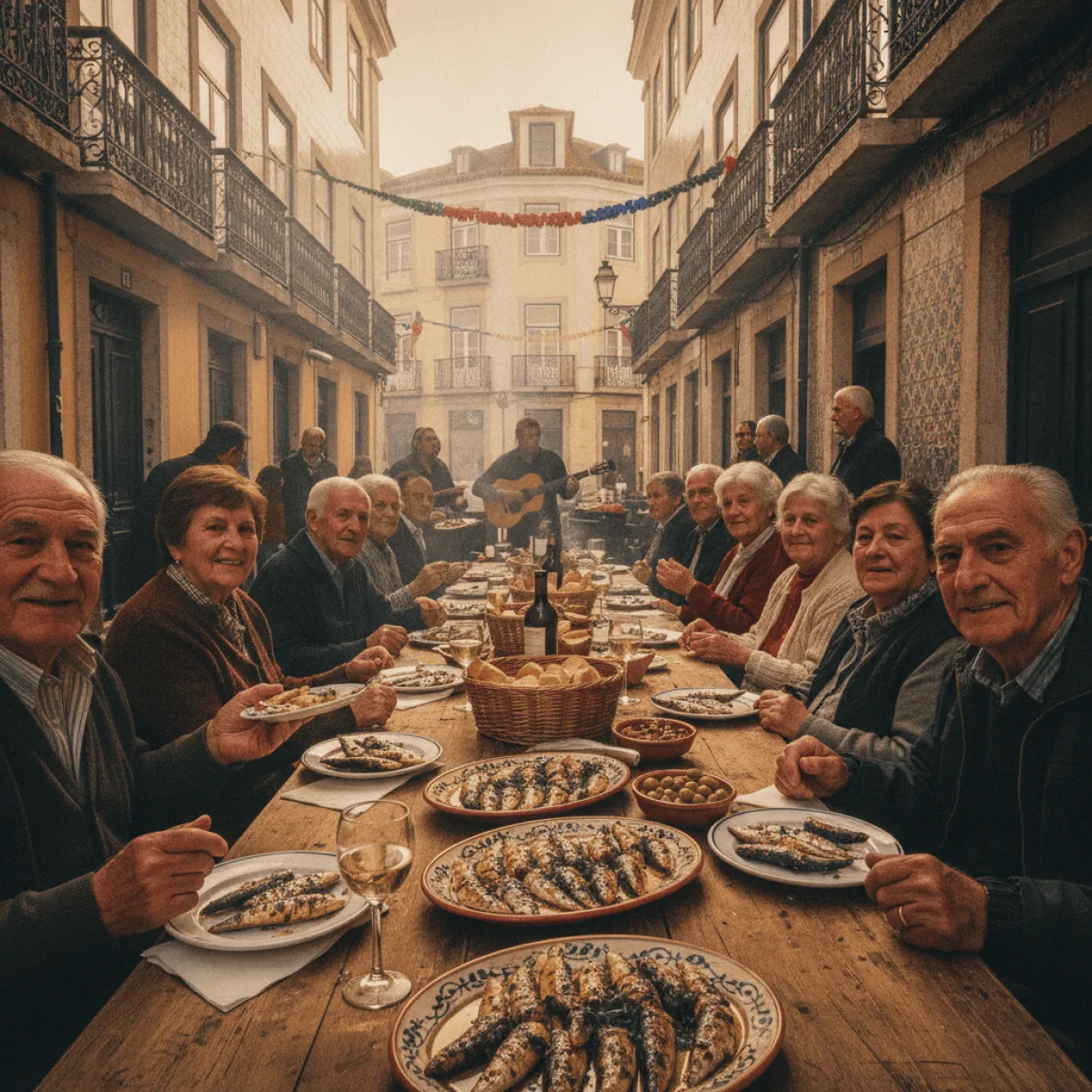
- The bread school: sardine laid on a thick slice of bread that acts as the plate. The fat soaks down into it and at the end you eat the bread, which is the best part. Hands only. This is the festival format, and the original one.
Given the choice, take the bread. And if they offer broa, the dense Portuguese cornbread, take that over wheat bread. The sweetness of the corn against the fat of the fish is one of the great pairings in Portuguese cooking and nobody calls it that because it is street food.
June: the month the whole city grills
The Festas de Lisboa in June, peaking on the night of the 12th into the 13th for Santo António, are the reason sardines became the city's edible symbol. Alfama, Mouraria, Graça, Bica, Madragoa and Ajuda fill with street parties, and the smell of grilling fish settles into the neighbourhoods for weeks.
Here is the unpopular opinion: the night of 12 June is the worst night of the year to eat a sardine in Lisbon. Everything is packed, prices climb, the queues are absurd, the grills are overloaded, and the fish often comes out scorched outside and cold in the middle because whoever is working the coals has thirty people waiting. Go any other night in June. Same streets, same grills, half the people, and the fish comes out right.
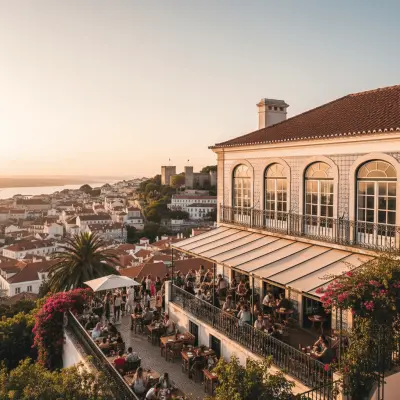
If you want the atmosphere without the crush, the trick is to go up. Miradouro da Senhora do Monte in Graça is the highest accessible viewpoint in the city, and in June you can watch the smoke from the street parties rising out of the neighbourhoods below. Go in the late afternoon, before eight, while the light is still on the river side and the trestle tables are still being set up. Then walk down through Graça towards Alfama and you will pass grills being lit along the way. That descent, between seven and nine in the evening, is the best hour of the sardine day in Lisbon.
Eating at the street parties without getting fleeced
At neighbourhood arraiais, a sardine on bread typically costs a few euros a piece, but check locally because it varies by association and by year. The practical rule: if the stall is run by a residents' association or a local club, the price is fair and the fish is good, because whoever is grilling has been grilling since childhood. If the stall has a laminated menu in four languages with photographs of the food, keep walking.
Another tell: look at the queue. If the queue is made of locals carrying their own plastic chairs and jugs of wine, you are in the right place.
Beyond June: sardines for the rest of the summer
July, August and September are technically better sardine months than June. Less party, more fish. And the city calms down enough that you can actually get a table.
The old beer halls and fish houses
Lisbon has a cervejaria tradition that grills sardines without making a performance of it. In these places the fish comes by the piece or by the portion, with what it should have: boiled potatoes in their skins, roasted peppers dressed in oil and vinegar, a simple salad. Order an extra plate of roasted peppers. It is the single best thing to eat with sardines and almost nobody orders enough of it.
For drinking there are two correct answers. A well poured imperial, ice cold, served in a small glass so it never warms up. Or white vinho verde, also very cold. Heavy red wine with sardines is a mistake you see tourists and distracted Portuguese people make. The fat in the fish wants acidity and cold, not tannin.
The south bank alternative
To do it the way Lisboetas do on weekends, take the ferry from Cais do Sodré to Cacilhas. The crossing takes about ten minutes, costs very little (check the current Transtejo fare), and drops you at a riverfront lined with fish restaurants facing Lisbon. The view back at the city in late afternoon, sun hitting the Baixa, is worth the trip on its own. And because Almada is not Lisbon's historic centre, prices tend to be more reasonable.
Building a whole day around the fish
A sardinhada is a heavy, smoky meal, and the rest of the day should be built around it. Here is a day that works, based on the simple logic of eating well, walking, and not wasting the hot hours.
Morning: coffee and a museum
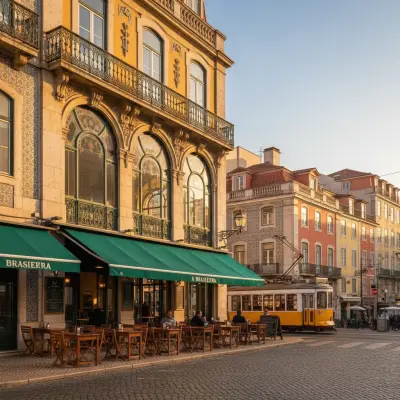
Start at A Brasileira in Chiado, with one condition: drink your coffee standing at the counter like a local, not on the terrace next to the Pessoa statue. At the counter you pay the normal price for an espresso. Sitting outside you pay several times more for the privilege of being in a photograph. The coffee is identical.
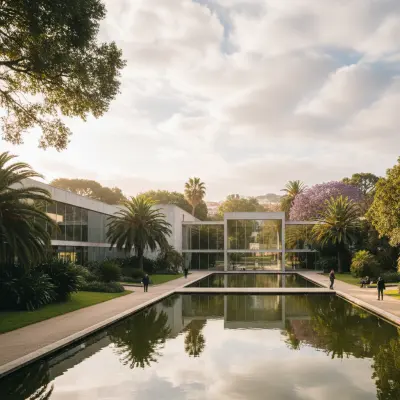
Then a museum, before the heat sets in. The Museu Nacional de Arte Antiga in Santos is the thematically correct choice for a sardine day: minutes from the riverside, home to the Saint Vincent Panels and the best collection of Portuguese painting in the country. It also has a garden overlooking the river where you can sit without paying anything extra. If you want art on a different scale, the Museu Calouste Gulbenkian has one of the coolest gardens in Lisbon, which in August is not a minor detail. Check opening hours and closing days before you go.
Mid afternoon: bikes or a bifana
If you want to arrive at dinner genuinely hungry, move. The smartest option for anyone unwilling to climb hills in July is the downhill cycling route to Belém, which solves Lisbon's topography by letting gravity do the work. Alternatively, the Bike a Wish riverside tour is flat from start to finish and follows the waterfront, which is where the breeze is.
And if hunger arrives before dinner time, there is a very Lisbon solution: a mid afternoon bifana. As Bifanas do Afonso, near the Sé, does a counter version you eat standing up in four minutes. It is the perfect bridge between the museum and the coals.
Evening: sardines, then fado
Eat early, between half seven and half eight, especially in June. Anyone showing up in Alfama at ten in high season eats standing.
After the fish, the natural next move is fado, and it pays to know what you are walking into. Plenty of fado houses in the Baixa and Bairro Alto run tourist shifts with expensive set dinners and rushed singing. O Faia in Bairro Alto is the real thing, with professional fadistas and proper Portuguese guitar. Book ahead and expect a minimum spend, which is standard across Lisbon fado houses. If you have already eaten sardines, just order drinks and cover the minimum that way.
For the wider context behind all of this, the street parties, the marching bands, the neighbourhood habits that hold this season together, read our guide to local culture in Lisbon.
Mistakes that cost you
- Eating sardines on Rua Augusta or Praça do Comércio at a terrace with a tout outside. If someone invites you in, walk away. Good restaurants in Lisbon do not need a salesman at the door.
- Accepting the starters without asking. The bread, cheese, olives and pâté that appear on the table are not free. This is not a scam, it is Portuguese custom, but if you do not want them say so and they go back. In an honest place the couvert costs a few euros. In a tourist trap it costs far more.
- Ordering sardines in January. We covered this. In January order bacalhau.
- Confusing sardine with carapau. Both grill beautifully, but they are not the same fish and horse mackerel is usually cheaper. If the price looks too good, ask what it is.
- Drinking heavy red. Repeating it because it matters. Imperial or vinho verde.
If you have more days
Sardines occupy one evening, not a week. With more time, the region around Lisbon offers other edible excuses. Sintra is forty minutes by train from Rossio station and has a pastry tradition of its own, alongside the districts and corners covered in our Sintra neighborhood guide. And if you happen to be in the region at Easter, when sardines are firmly out of season, the sweet alternative is documented in our Easter sweets route in Mafra.
The short version
- When: June to September. July and August are the best months for the fish itself.
- When not: October to May. And the night of 12 June, unless you enjoy crowds.
- Where: neighbourhood street parties in Alfama, Mouraria and Graça in June; central cervejarias the rest of summer; Cacilhas for the view and better prices.
- What to order: sardines on bread or broa, roasted peppers, boiled potatoes in their skins, tomato salad.
- What to drink: imperial or white vinho verde, both very cold.
- Timing: dinner between 7.30pm and 8.30pm in high season.
Grilled sardines are the cheapest and most democratic food in Lisbon and, done properly, among the best. No reservation required, no chef required, no view required. What it needs is charcoal, coarse salt, a fat fish, and for it to be June, July or August. Everything else is noise.