Monsaraz's Beach: The One Nobody Expects to Find
Alentejo has no ocean, but Monsaraz hides a river beach at the foot of its castle hill, warm water and almost nobody around before ten in the morning. Between a swim in Lake Alqueva and a proper Alentejo dinner, there's still time to sleep under one of Europe's darkest skies.
The wrong question
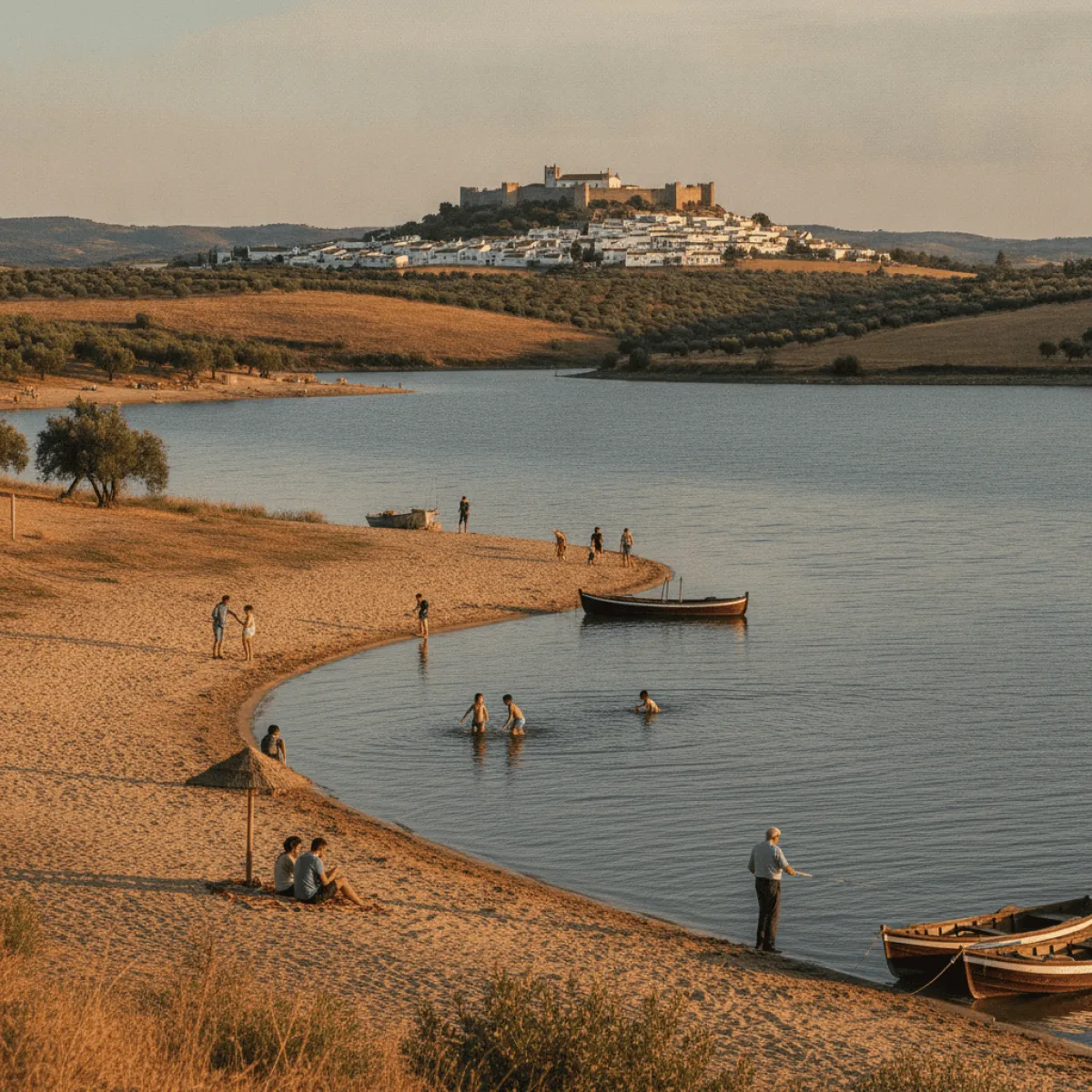
People arrive in Monsaraz asking about the beaches and get the same puzzled look from locals every time: "Beaches? Here?" Landlocked Alentejo has no ocean anywhere nearby, but it has something most summer tourists never think to look for: Lake Alqueva, the largest artificial lake in Western Europe, lapping at the base of the hill where Monsaraz castle has kept watch over the horizon for seven hundred years. No waves, no coarse sand, no beach bars charging airport prices for a warm beer. Just still water, dry heat, and, if you time it right, almost nobody else around.
The river beach, where the village meets the water
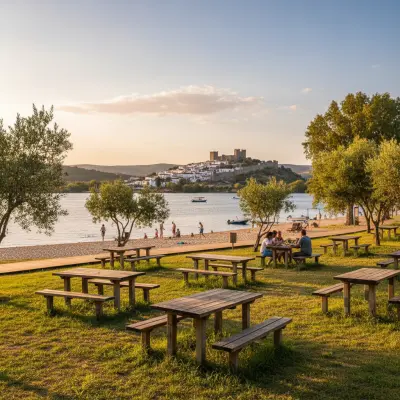
A few minutes' drive from the main square, the road drops off the hill in tight curves down to the lake shore, where the Monsaraz river beach sits. Forget any image of an Atlantic beach: the entry into the water here is gradual, the bottom is more stable underfoot, and swimming feels closer to a giant swimming pool than to fighting the sea. By July and August the water warms up enough to stay in for hours, which more than makes up for the lack of a sea breeze or waves.
Right next to it, the Parque de Merendas da Praia Fluvial de Monsaraz solves the problem of what to do if you want to stay all day: shaded picnic tables, room to spread a towel after lunch, and the option of bringing your own food instead of paying tourist-zone prices for something on a plastic plate. It is the kind of spot locals use for Sunday family lunches, and visitors tend to discover it too late, after they've already spent their lunch budget at some café up in the village.
How to dodge the crowds
Monsaraz fills up from around eleven in the morning, when the tour buses start unloading groups onto the cobbled streets. The beach follows the same rhythm with roughly an hour's delay, since everyone wants their castle photo before the heat sets in. The formula for having the lake practically to yourself is simple:
- Get in the water before ten in the morning, when it's mostly locals swimming before work.
- Avoid Saturdays and Sundays in August, which are, without exception, the busiest days of the year across the whole region.
- Come back in the late afternoon, after six, when the sun softens and the light on the lake turns gold, but most day visitors have already left for dinner.
- For real quiet, weekdays in June or September have almost the same water temperature and a fraction of the crowd.
- Park near the beach rather than in the village: on peak days the lot by the castle fills first, and parking lakeside saves the walk up and down the hill that everyone else has to make.
What to do between swims
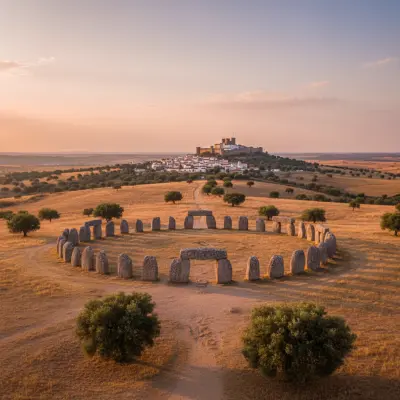
Nobody stays in the water all day, and this is where Monsaraz beats a proper beach destination: there's somewhere to go without an hour-long drive. Cromeleque do Xerez is a stone circle that predates the Egyptian pyramids, and unlike the better-known Cromeleque dos Almendres near Évora, it rarely has more than a handful of visitors at any given hour. Entry is free, there's no ticket booth and no rigid schedule: you just walk in among the stones and take in the odd quiet of a place that has watched thousands of years pass without any hurry.
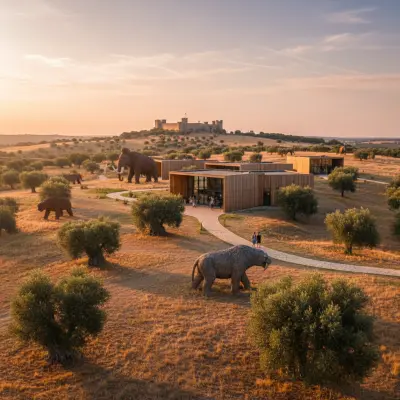
For travelers with kids, or anyone who just likes the unexpected, Parque Megafauna Monsaraz is a stop nobody expects to find in the middle of the Alentejo plain: an open-air park with life-size sculptures of extinct megafauna, giant animals recreated at real scale. It's unlike anything else in the region and fills that awkward window after lunch, too early to head back into the water but too late for anything more demanding.
The village above, before or after the water
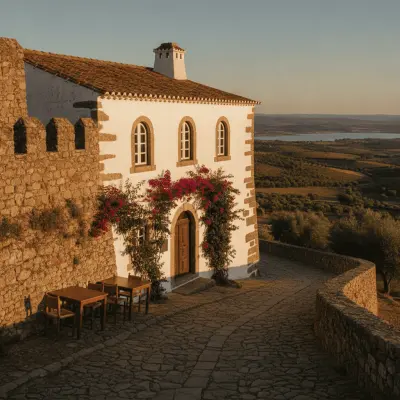
It's worth climbing up to the village early, before the tour groups arrive, or again in the late afternoon once the buses have pulled out. The narrow cobbled streets between whitewashed houses, the castle overlooking the plain and the lake, the main church and the pillory in the central square all take about half an hour to see unhurried, but they feel completely different without twenty people blocking the main street. A coffee or an ice cream on the terrace by the walls, with the Alqueva spread out below, is the kind of pause worth building any schedule delay around.
Where to eat after the beach
Alentejo cooking has little patience for anyone showing up from the water expecting a light salad. This is food built for people who worked the land, and it's still served that way: açorda, migas, lamb stew, Serpa cheese oozing out of its rind. Monsaraz has three addresses that handle this late-afternoon hunger well.
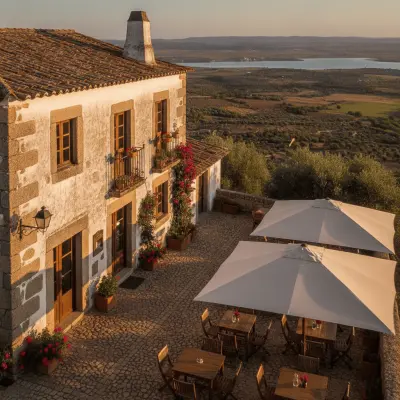
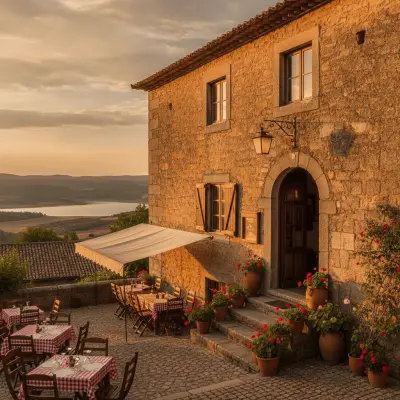
Sahida looks out over the plain and the lake, which makes it the obvious call for anyone who wants sunset with dinner, but the view isn't the only reason to go: the kitchen respects the traditional dishes without overcomplicating them. Xarez Restaurante Bar has a more relaxed setting, good for grazing on petiscos and a glass of Reguengos red without ceremony after a day in wet shorts. And Taverna Os Templários, inside the walls, is the pick for anyone who wants to eat surrounded by the old village stone, in a small space that fills up fast and needs booking ahead in high season.
None of these places are cheap in the neighborhood-tavern sense, but none of them charge the tourist-trap prices you'll find in other historic villages around the country either. The region makes its own wine, and ordering the house bottle is usually the smartest call of the meal.
The night makes up for the day
If the beach is the daytime surprise, the night in Monsaraz is the real reason to sleep in the region instead of heading straight back to Évora or Lisbon. The Alqueva area has been recognized as a starlight tourism destination, with some of the lowest light pollution rates in Europe, and it shows the moment the sun goes down: the Milky Way appears to the naked eye, no effort and no mountain climb required.
Anyone who wants to take it further can book Celestial Precision: Astronomical Observation at the Alqueva Lake Observatory, with telescopes and guided explanations, ideal for anyone who's never quite understood what they're actually looking at overhead. For something simpler and outdoors, with no heavy equipment, there's also Stargazing in Monsaraz: The Dark Sky Alqueva Experience, built for people who'd rather just lie back on a blanket and let their eyes adjust to the dark. Both require advance booking and prices vary by season, so it's worth confirming availability before heading up the hill at dusk.
Before you go
Monsaraz sits roughly fifty minutes by car from Évora and just over two hours from Lisbon, but there's no public transport that reliably covers the last stretch down to the river beach, so a car is essentially mandatory. Parking in the village is limited and fills early in summer: anyone planning a full day is better off leaving the car near the beach and walking up to the village later, rather than the other way around. Bring a hat, water, and sunscreen: between the beach, the stone circle, and the picnic park, the whole day happens outdoors with very little shade along the way.
It's also worth remembering that Monsaraz is only one corner of the Alentejo worth exploring off the obvious track. For anyone drawn to this idea of skipping the predictable tourist routes, the guide Portalegre Without the Tourist Traps: A Weekend follows the same logic on the other side of the region, with the same promise of fewer people and more substance.
In the end, anyone coming to Monsaraz expecting an Algarve-style beach will be disappointed. Anyone willing to trade waves for still water, fine sand for oak-tree shade, and beach-bar noise for a sky full of stars will leave asking why nobody told them about this place sooner.