Porto Covo's Escape Plan: Portugal's Best River Beaches
The north wind arrives at one o'clock and the sea never gets above eighteen degrees. The answer isn't to tough it out, it's to drive inland. From Pego das Pias to the Santa Clara reservoir, here are the river beaches worth leaving Porto Covo for.
It always happens on the same day. Third afternoon of the holiday, the north wind kicked in around one o'clock, the sand on Praia Grande is travelling sideways at head height, and the water, which rarely climbs above eighteen degrees on this coast, killed your enthusiasm after the first dip. You are lying behind a wall of rented windbreaks with sand in your teeth, pretending this is relaxing.
It isn't. And the answer is not to tough it out for another two hours. The answer is to get in the car and drive inland, looking for fresh water.
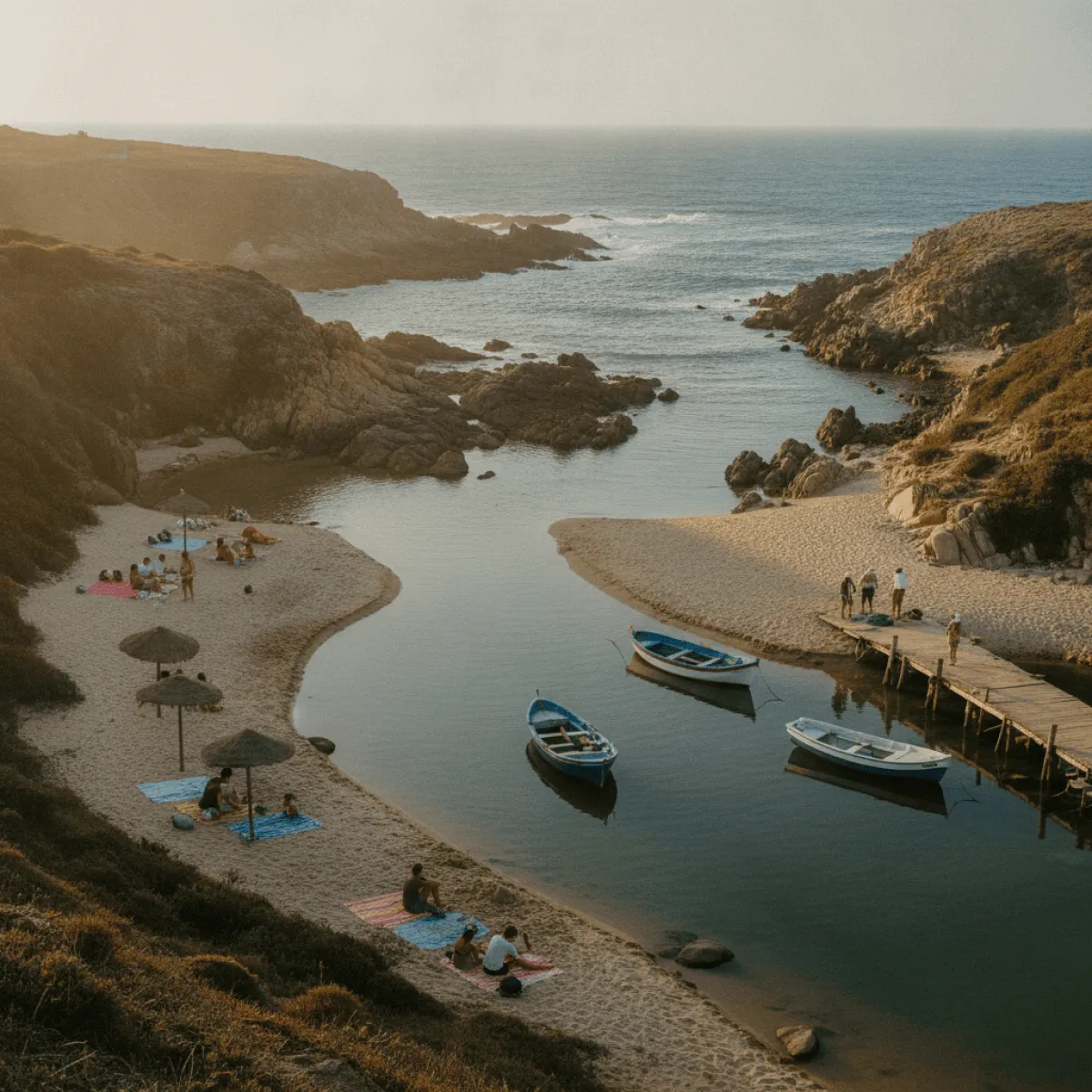
Porto Covo sits on a stretch of properly wild Atlantic: cliffs, swell, a wind you can set your watch by, and cold water pushed up from the deep by coastal upwelling. It is magnificent and it is exhausting. Portugal's praias fluviais, its river beaches, exist for exactly the days when the ocean stops being a good idea. Still water, no salt, no rip currents, real shade, and usually half the crowd.
What a praia fluvial actually is
It is a stretch of river, stream or reservoir set up (sometimes barely set up) for swimming. Some have a blue flag, a lifeguard, a bar and a lawn. Others are a dark pool between rocks at the end of a dirt track, with nothing at all except what you carried in. Both are worth your time, but they demand different attitudes: the first is a family day out, the second is a half-morning expedition.
From Porto Covo, the map arranges itself into three rings: what you can do before lunch, what eats a full day, and what only makes sense if you are already driving north or east. Let's take them in order.
The 45-minute ring: Pego das Pias
If you only have the patience for one river beach this holiday, make it this one. Pego das Pias sits near São Domingos, in the municipality of Santiago do Cacém, reached via the road through Cercal do Alentejo in roughly forty-five easy minutes. The stream runs squeezed between rock, forming deep dark pools that stay shaded for much of the day. It is not a beach in any conventional sense: it is a small gorge of polished stone, clear water, and an odd echo that makes a conversation ten metres away sound like it is happening at your elbow.
House rules, and they are serious. No lifeguard, no bar, no toilets, and parking amounts to whatever space exists beside the track. Arrive before ten in August or you will spend twenty minutes reversing. Bring water, bring fruit, bring a bin bag and take it home again. And never, under any circumstances, dive head first: the pools have wildly uneven depths and submerged rocks that shift with whatever the winter threw down the valley.
The local move is to pair a Pego das Pias morning with a late lunch at a village tasca on the way back, the kind that serves pork and soup with no printed menu. Bring cash. Half these places still regard the card machine as a suggestion.
A full day: Barragem de Santa Clara
The Santa Clara reservoir, at Santa Clara-a-Velha, is the exact opposite of Pego das Pias. It is huge, open, postcard blue, and ringed by eucalyptus and cork oak under the hard inland Alentejo light that punishes anyone who forgot a hat. It falls within the Odemira municipality, more than an hour from Porto Covo, which makes it a full-day plan rather than a lazy afternoon.
The reservoir feeds the river Mira, the same Mira that meets the sea at Vila Nova de Milfontes, which turns the trip into a pleasing geography lesson: swim at the top of the river in the morning, watch its mouth at sunset. There is a bathing area with seasonal support and watersports activity on the lake, but concessions and opening times change year to year, so check locally before you count on an open bar or a kayak rental.
One unromantic but important warning: on a reservoir, the surface water lies to you. Half a metre down it is considerably colder, and your body works this out around the third stroke of front crawl. Get in slowly, stay inside the marked zone, and obey every sign near the dam structures, where discharge currents are completely invisible from above.
Half river, half sea: Milfontes and Odeceixe
There is a middle category the Alentejo has quietly perfected: the estuary beach. Technically not fluvial. Practically, it solves the same problem.
Franquia, Vila Nova de Milfontes
Twenty-odd minutes from Porto Covo, Praia da Franquia is the river Mira before it surrenders to the Atlantic. Flat water, no shorebreak, a far more civilised temperature than the open ocean, and one of the best late-afternoon views in the district looking across to the south bank. This is where Milfontes families release their children and where you can learn to stand on a paddleboard without public humiliation.
The catch is obvious: in August it fills up to an almost comic degree. Go early, or cross to the opposite bank, where Praia das Furnas offers more room and fewer towels. In summer there is usually a small boat crossing between the two sides, but check locally, since it depends on the operator and the tide. If you are planning the big week, read our guide to dodging the August crowds in Milfontes first. Timing is everything here.
Odeceixe, where the stream beats the ocean
Further down the coast, Praia de Odeceixe is the single best argument for learning to read a tide table. The Ribeira de Seixe comes down its valley, meets the Atlantic on a curve of sand, and at low tide the river side forms a warm, shallow lagoon with no waves whatsoever. Left side: proper surf and neoprene. Right side: toddlers splashing in bathwater. Same beach, two climates.
It is about an hour's drive from Porto Covo via Odemira. Take it slowly: beach in the morning, lunch up in Odeceixe village a few kilometres inland, home in the late afternoon. If you are tempted to keep heading south, our portrait of Zambujeira do Mar out of season explains what this coast becomes once August finally lets go.
Worth a detour if you're already driving
Nobody drives three hours from Porto Covo just to swim in a river. But if you are heading north or east anyway, these three are among the finest river beaches in the country.
- Fragas de São Simão, Figueiró dos Vinhos. The Alge stream held inside a schist amphitheatre, with the hamlet of Casal de São Simão just above and walking trails leaving from the car park. One of the most photogenic swimming spots in Portugal, and one of the coldest.
- Praia Fluvial do Alamal, Gavião. The Tejo in lake mode, with lawns, shade and proper beach facilities. A stress-free family option, especially if you are travelling with small children who object to sharp rocks.
- Praia Fluvial de Monsaraz, Alqueva. Europe's great artificial lake with a walled hilltop village as the backdrop. Warm water by late summer, and some of the darkest, clearest night skies in Europe, since the whole area is a certified dark sky reserve.
The rules nobody puts on the signs
- Never dive head first. It is the leading cause of serious freshwater accidents. The riverbed changes every winter.
- Assume there is no lifeguard. At smaller spots there genuinely isn't one. Do not leave children unwatched, not even for two minutes.
- Water shoes. Algae-covered rock is slippery in a way that seems funny right up until it stops being funny.
- Cash. Small villages, seasonal bars, patchy mobile data.
- Mosquitoes after seven. Standing water plus dusk equals war. Bring repellent.
- Carry your rubbish out. None of these places has decent collection in August.
- Fuel up on the coast. Inland Alentejo petrol stations are few and close early.
Basing yourself in Porto Covo
The case for Porto Covo as headquarters is simple: forty minutes to a rock pool, twenty to an estuary, fifteen paces to a cliff. Very few places in Portugal give you that spread.
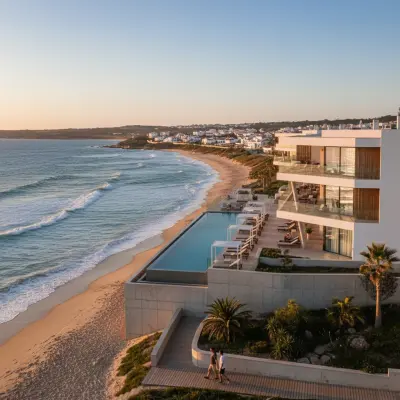
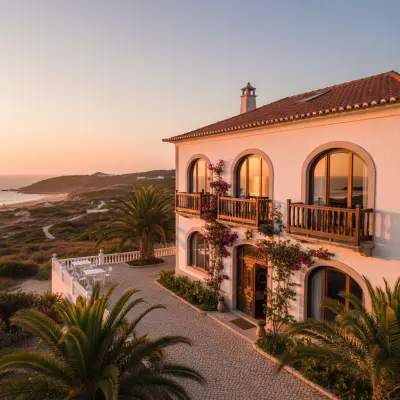
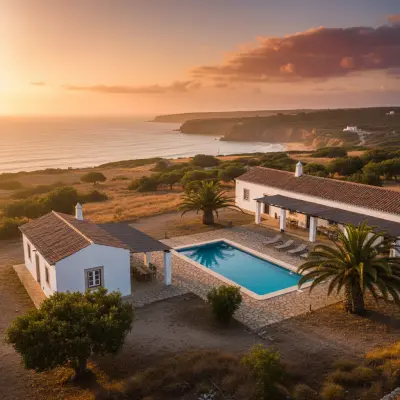
If you want a pool and proper service waiting after a day on dusty roads, Porto Covo Praia Hotel & SPA is the straightforward pick. Families who need a kitchen, a fridge and somewhere to hang wet swimsuits without drama will do better at the Hotel Apartamento Porto Covo. And if the goal is waking up away from summer traffic altogether, Monte da Bemposta hands you the Alentejo countryside with breakfast, which pairs nicely with a week of freshwater days.
Save at least one morning for the ocean anyway. The Fisherman's Trail out of Porto Covo is the best coastal walk in the country and should be done early, before the heat. And when the sea is flat, the boat crossing to Ilha do Pessegueiro fills a morning nicely, sixteenth-century fort included.
Then go back to salt for dinner. The Odemira coast handles percebes and oysters with a seriousness that embarrasses half the Algarve, and our Odemira seafood guide tells you what to order and when. It is the logical end to the day: freshwater morning, horizontal afternoon, shellfish and cold white wine on a terrace while the north wind finally drops around nine.
The Atlantic here is for looking at. The rivers are for swimming in. Understanding that difference is probably the most useful thing this guide can give you.