Montalegre: Roast Kid Goat and the Barroso Meat Trail
In Montalegre, roast kid goat only really shows up on weekends, and knowing that is half the meal already won. From the wood oven at Cafe Petiscos Rampa to the communal villages of Barroso, this is the meat trail worth planning ahead for.
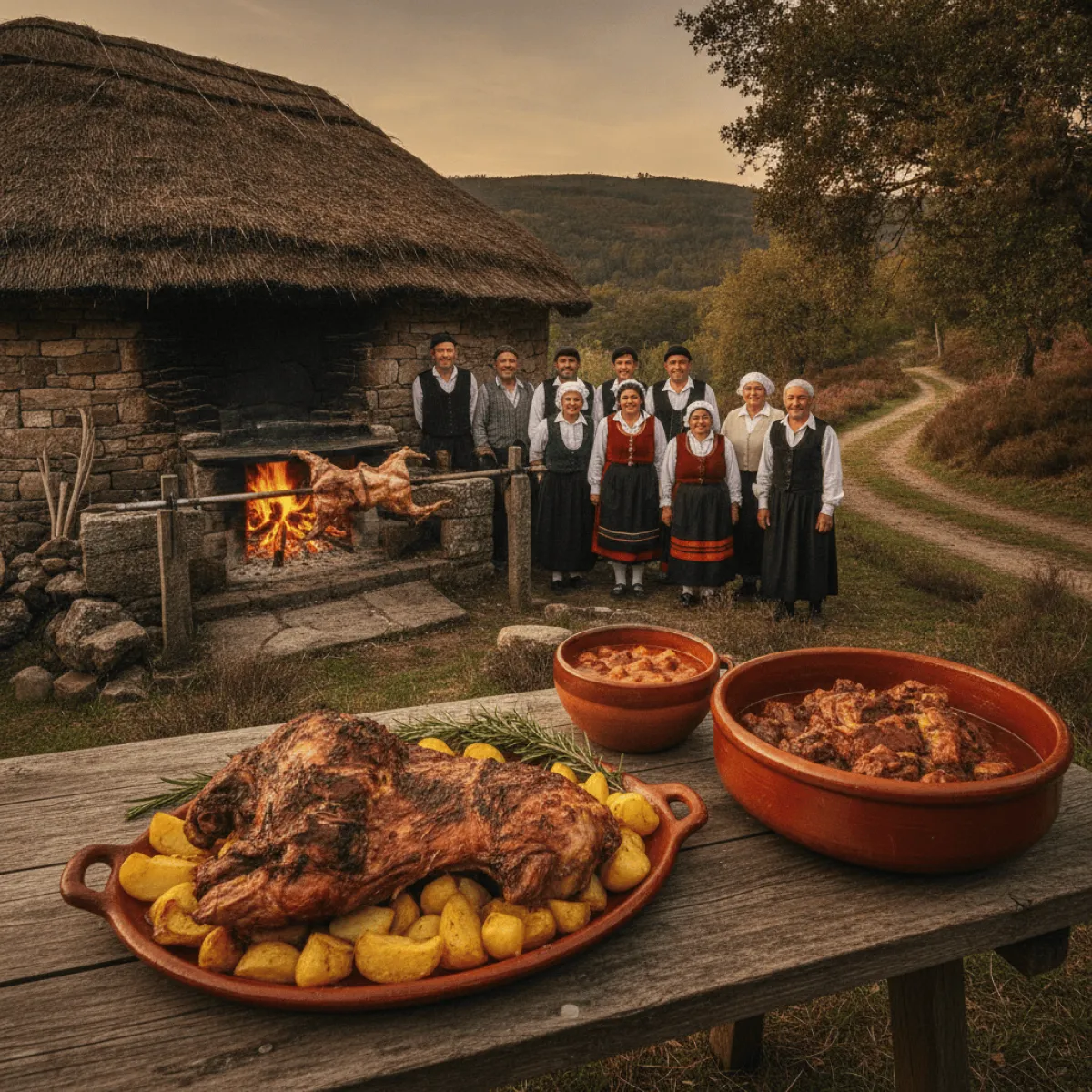
There is a question you hear on Friday afternoons in the cafés of Montalegre, asked by people coming down from the mountain and by people who just showed up for lunch: "is there cabrito today?" It is not small talk. In this corner of Trás-os-Montes, roast kid goat cooked in a wood-fired oven is not an everyday menu item, it is a weekend event, and knowing where and when it shows up is half the meal already won.
Montalegre sits at the center of the Barroso plateau, a region of communal pastures, known locally as baldios, that the FAO recognized as a Globally Important Agricultural Heritage System. That same communal system is what sustains the Barrosã cattle breed and, with it, an entire meat culture that extends to the kid goats raised in the hills around town, now protected under the Cabrito Transmontano protected designation of origin. This is not an animal raised in a hurry: born in November or December, milk-fed for months, slaughtered young, which is exactly why the meat that comes out of the oven is so tender. This is not fast food, it is a calendar.
The starting point: Cafe Petiscos Rampa
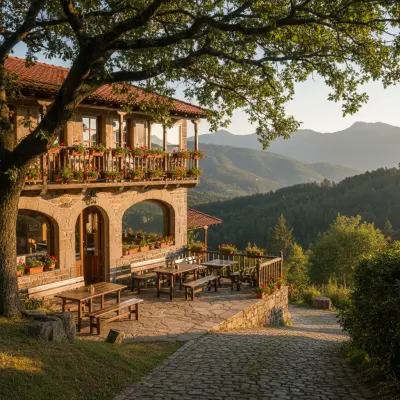
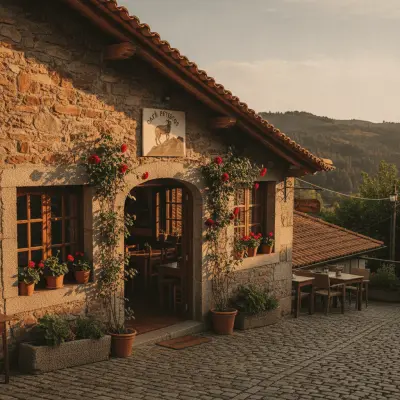
If you only get one meal in Montalegre, spend it at Cafe Petiscos Rampa. It is the kind of place that does not need decor pretending at tradition, because the tradition is already on the plate: oven-roasted kid goat, smashed potatoes, baked rice on the side, and a glass of regional red or vinho verde that nobody is going to overcharge you for. This is not fine dining and it does not pretend to be. It is food cooked by people who learned the recipe from whoever came before them, which is exactly why it works.
Order the roast kid goat and do not overthink it further, that is the reason you are there. If it is the right season, say yes to roasted chestnuts or sautéed turnip greens on the side, which show up on the table almost out of habit in autumn and winter. A full meal with house wine usually runs about 12 to 15 euros a person, which, if you are coming from a restaurant in Lisbon or Porto, feels almost like a billing error. Go for lunch on a Saturday or Sunday if you can: the room fills with locals, whole families at the table, and that, more than any restaurant review, is the clearest sign the food is worth it.
One practical note worth remembering: call ahead, especially on a winter weekend. A wood-fired oven does not mass produce anything, and when the day's cabrito is gone, it is gone. Showing up at three in the afternoon hoping for the best is the most common mistake outsiders make here.
Beyond the Rampa: the rest of the meat trail
Montalegre does not live on one address alone. Around town and in the villages nearby, butchers sell chouriço, alheira and presunto smoked in stone smokehouses that still work the way they did a century ago, and in the winter months it is common for families to slaughter and smoke enough meat to last the year. Communal villages like Pitões das Júnias, Tourém and Meixide, all within Montalegre's municipality, are where that logic of shared land and smokehouses still follows the old rules, far from anything resembling organized food tourism. You will not find this on a menu with fixed prices, it is village economy. But ask at a local café or grocery where to buy fresh smoked meat, and someone will point you to the right door, which is the kind of information you cannot search for online, only ask for in person.
Working up an appetite before eating
Roast kid goat tastes better to someone who arrived tired. The walk through Barroso's agricultural heritage trails passes through communal meadows, terraces and granite and schist villages that explain, without needing a single information board, why this land produces the meat it does: pastures managed communally for centuries under the same logic, cattle grazing on shared ground, grass that grows thick because water never runs short on this part of the plateau. After three or four hours climbing and descending between villages, arriving at the Rampa genuinely hungry changes the whole experience of the meal. The cabrito stops being a regional curiosity and becomes, simply, the most logical thing in the world to eat.
If the day allows, close it the opposite way it started. After dinner, with no light pollution in the villages around Montalegre, the plateau's sky is among the darkest in mainland Portugal. The stargazing experience in Barroso's dark-sky nights has nothing to do with food, but it is the obvious bookend to a day spent walking and eating well: full stomach, no hurry at all, lying back in a chair looking up until you forget there is a road to get back on tomorrow.
Where to sleep after the cabrito
After a dinner like that, nobody wants to drive back to Braga or Porto. Hostel Retiro do Gerês solves that without drama: simple, close to the town center, and a perfectly good base for anyone who came for the cabrito and stayed for the walk and the stars. It is not a boutique hotel with architectural pretensions, it is a comfortable bed and a decent breakfast before getting back on the road, which, after a night like that, is exactly all you need.
When to go
Roast kid goat shows up year-round, but it takes on a different meaning in winter, when the Barroso plateau wakes up under frost and meat roasted in a wood oven stops being a nice idea and becomes the only idea that makes sense after a day of cold outside. Anyone looking to combine the meat trail with the region's most dramatic winter scenery has a ready-made route in Montalegre in Winter: A Photography Itinerary on the Plateau, with the spots where the plateau shows its harshest and most beautiful face at once, and where a hot meal after hours in the cold means something else entirely.
Anyone curious to compare smokehouse cultures across Trás-os-Montes should also read about the smoked sausages and wolf country of Vinhais, a town a good drive away that shares Montalegre's devotion to smoked meat and wood ovens, though with its own accent and a different relationship to the landscape.
Beyond the meat
It would be unfair to reduce Montalegre to one dish, however good it is. The town has a medieval castle, the plateau, and a mountain kitchen that goes well beyond cabrito, from smoked meats to posta and the oven-baked soups that show up on the coldest days. Anyone wanting to understand the town beyond the food trail will find the rest of the story, castro included, in Montalegre Beyond Barroso: Castle, Castro and Mountain Kitchen.
Getting there and planning the day
Montalegre is about an hour and a half from Braga and close to two hours from Porto, most of it on national roads through the interior of Trás-os-Montes, which is already half the point of getting to know the landscape before you arrive. There is no train, the trip is done by car or bus, and it is worth timing your arrival for early Friday afternoon or a Saturday, which is when the Rampa and the other houses in town tend to have cabrito guaranteed. Anyone driving has the added advantage of being able to stretch the day out to the nearest communal villages before heading back for dinner.
- Best time to go: weekends, especially autumn through winter
- What to order: oven-roasted kid goat, with smashed potatoes
- Rough cost: 12 to 15 euros per person, house wine included
- How to get there: by car or bus, about 1.5 hours from Braga
- Where to sleep: Hostel Retiro do Gerês, in the town center
- Before you go: call ahead to secure cabrito, especially on weekends
In the end, the meat trail in Montalegre is not about finding the best cabrito in Portugal. It is about understanding why this land still cooks the way it does, slowly, with wood and patience, at a time when almost nobody has either left to spare.