Cascais on the Cheap: A Five-Euro Day Out
Everyone assumes Cascais is expensive, so everyone ends up paying 14 euros for mediocre bacalhau on a bay-front terrace. There is another way: the 500-metre rule, a lighthouse museum that costs almost nothing, and the free clifftop walk to Boca do Inferno that beats anything you can buy. A full day for less than lunch in Chiado.
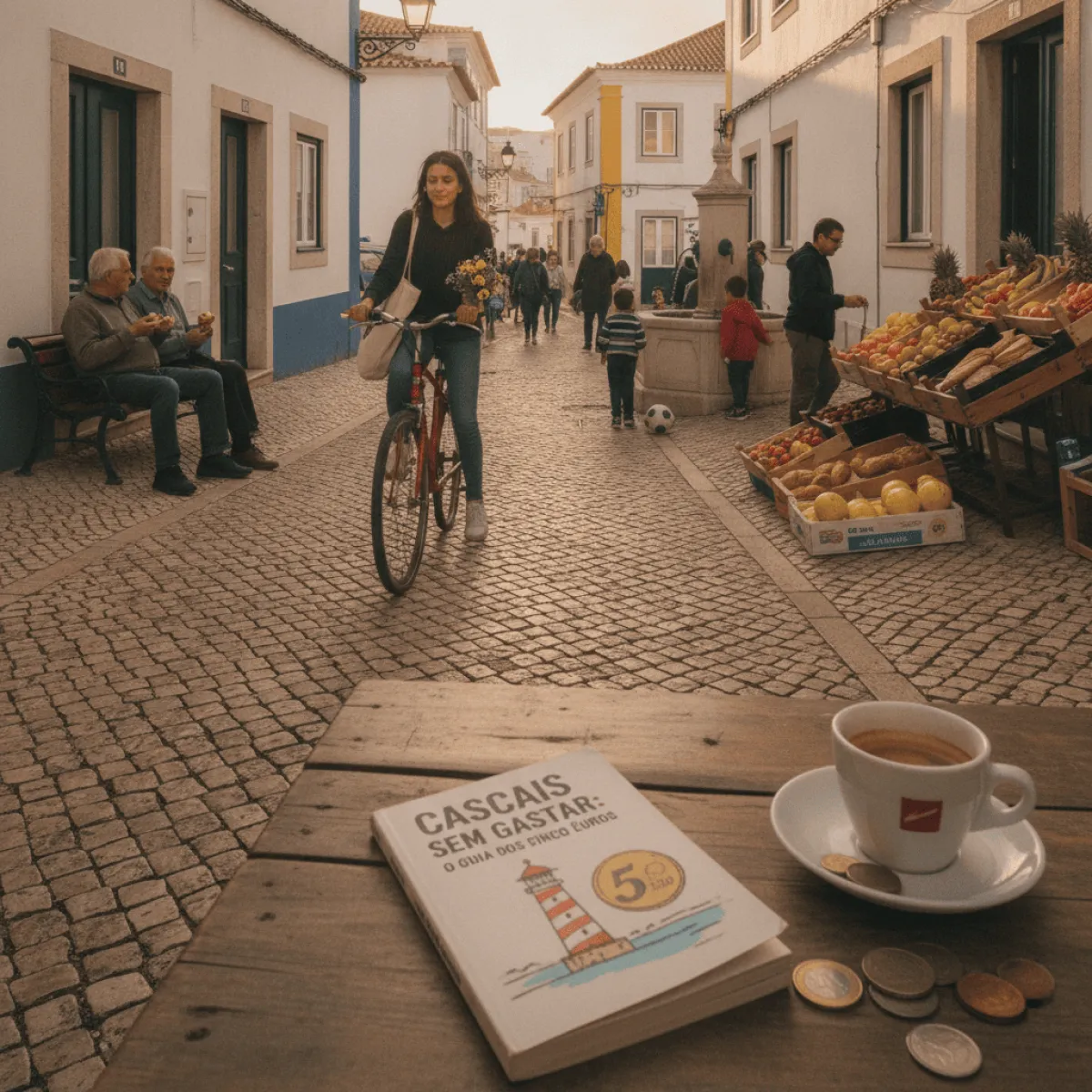
Cascais has an image problem, and the problem is this: everyone assumes it is expensive. The town of kings, the marina full of yachts, the five-star hotels along the Estrada da Boca do Inferno, the Casino sitting up the road in Estoril. You arrive by train, walk out of the station, glance at the first terrace on Rua Frederico Arouca, and see a beer priced like tourist Lisbon. Quick conclusion: not for my budget.
Wrong. Cascais is one of the cheapest places to spend a day in the entire Lisbon metropolitan area, provided you know what you are doing. The reason is simple and almost nobody says it out loud: the best things in Cascais are the sea, the cliffs, the gardens and the light, and none of them takes a credit card. What costs money is the thing tourists do by default, which is sitting on a bay-front terrace paying 14 euros for a mediocre plate of bacalhau à brás.
This guide is about the other way. A full day in Cascais, from the morning train to sunset, for roughly what a decent lunch costs in central Lisbon. And without the feeling you are missing anything, because you are not.
Rule one: the train is the best money you spend all day
The Cascais line leaves from Cais do Sodré and is, with very little room for argument, the most beautiful commuter train ride in Portugal. Thirty-odd minutes hugging the Tagus, then the open Atlantic, passing Belém, Algés, Caxias, Paço de Arcos, Oeiras, São Pedro do Estoril. Catch it in the late afternoon coming back and the light over the water does what it does, and there is no need to write anything more about it.
Use a Navegante card loaded with zapping credit. It is noticeably cheaper than buying single tickets and it keeps you out of the ticket machine queue. Sit on the right side going out (left coming back) and resist the urge to get off at Estoril. Estoril has the casino, the gardens, the pretty Tamariz beach, but if you only have one day, Cascais gives you more.
Timing tip: arrive before 10am. This is not masochism, it is strategy. Between 10am and 12.30pm the town still breathes, the pastry shops have things straight out of the oven, and the old streets are clear enough that you can look at facades instead of the back of somebody's head.
Breakfast: eating well for under three euros
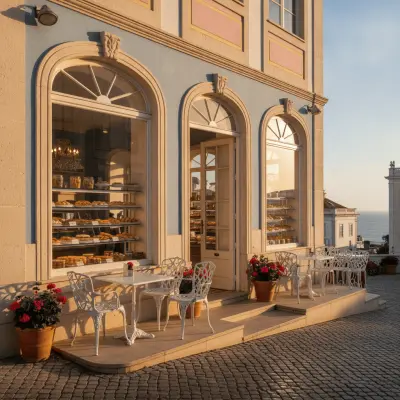
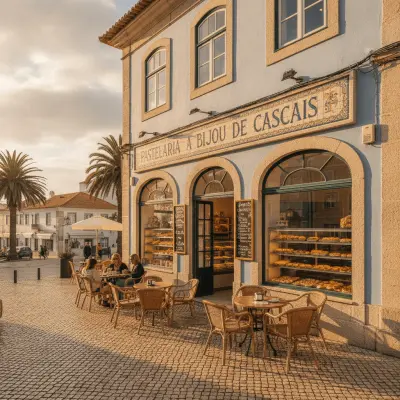
First stop should be Pastelaria A Bijou de Cascais. An old-school place with no pretensions and no Instagram styling, exactly the kind of counter where local men read the newspaper at 9am over a coffee and toast. Order a galão and a pastry, pay what you would pay in any Portuguese neighbourhood bakery, and get on with your day. That is lesson one: in Cascais, the closer you get to the bay and the marina, the more expensive things become; the further into the actual town you walk, the more normal the prices get.
Equally solid alternative: Pastelaria Garrett, a Cascais institution with decades behind the counter. Busier, more of a classic town pastry shop with a proper display case, and the kind of place where it pays to ask what came out of the oven recently rather than pointing at the first thing you see. Places like this always have one item they do better than everything else. Ask. The staff will tell you, and they are usually right.
If you are in extreme austerity mode: buy a packet of biscuits at Pingo Doce and eat it on a park bench. It works, but you are losing the best part of the day to save two euros. Don't.
Morning: the coast, free, on foot
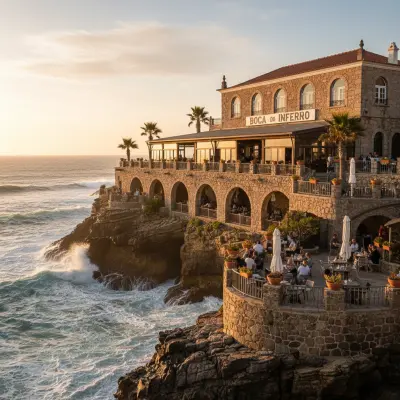
Here is the heart of the argument. The walk from Cascais bay out to Boca do Inferno costs exactly nothing and is the single best thing you can do in town. It is about 20 to 25 minutes along the seafront promenade, Atlantic on your left the whole way, past the Cidadela and the lighthouse.
Boca do Inferno is a sea cave whose roof collapsed, leaving a rock arch where the ocean pushes in hard. Everyone goes. So it helps to know two things most people don't:
- Go when the sea is rough. On a flat day, Boca do Inferno is a hole in a rock and you can watch the disappointment travel across people's faces in real time. On a big swell with a westerly wind, the water slams into the walls with a boom you hear before you see it. Autumn and winter beat summer for this.
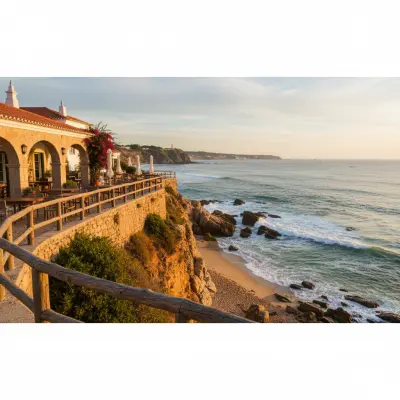
- Don't stop at the main viewing platform. Left and right of where everyone gathers there are clifftop paths with better views and no crowd. Five minutes of walking solves the problem entirely.
There are craft stalls and vendors in the car park beside Boca do Inferno. Some sell genuinely interesting things, many sell the same items you find at every tourist stop in the country. Feel no obligation.
The museum that costs almost nothing
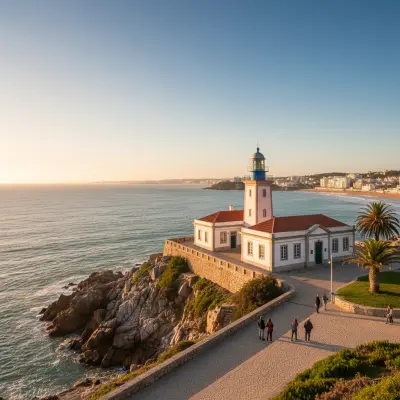
On the way back, or just before Boca do Inferno if you do the route in reverse, sits the Farol Museu de Santa Marta. A working lighthouse in blue and white tile, converted into a museum about maritime signalling. The ticket is nominal and there are days with free entry (check locally before going, because the terms change).
The museum itself is small and honest: lighthouse lenses, the history of navigation into the Tagus, the sort of content that turns out more interesting than you expect. But the real reason to go in is the view from the top and the blue-and-white courtyard, one of the most photogenic corners of Cascais, which plenty of people skip because they assume it must be expensive. It is not.
Practical note: the municipal museums in Cascais have a very accessible ticket policy and some are free on certain days. If you are counting every euro, it is worth checking on the day what is open and under what conditions.
Lunch: the 500-metre rule
This is the tip that saves the most money in Cascais, and it is pure geometry. Draw a 500-metre radius from the bay and the marina. Inside that circle, lunch for two with drinks rarely comes in under 40 or 50 euros and the food is, at best, fine. Outside it, on the streets where people actually live, you get a daily special with soup, a drink and coffee for a fraction of that.
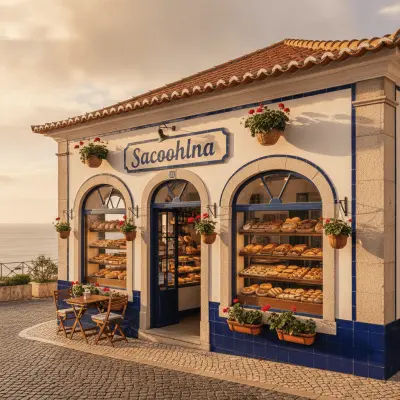
A good illustration of the logic is Sacolinha, a bakery and meals operation with a strong local presence, the kind that feeds working people at lunchtime rather than passing tourists. Daily special, busy counter, people eating fast and paying little. That is exactly what you are hunting for.
General rules for not wasting money in Cascais:
- Look for the handwritten daily menu, not the laminated one with photographs and translations in five languages. The first costs half and tastes twice as good.
- Refuse the couvert you didn't order. Bread, butter, cheese, olives, tuna paste: it is all charged. Say thank you and hand it back. This is not rude, it is standard national practice.
- Order the house wine. In Portugal, house wine by the glass or jug is almost always drinkable and costs a fraction of a bottle.
- Eat early or late. Either 12pm to 12.30pm or after 2pm. At peak, the good places fill with local workers and there is no table.
For the zero-euro version: grocery shop, bread, Serra cheese, some presunto, a piece of fruit, and lunch in Parque Marechal Carmona. The park is free, it has shade, it has peacocks wandering about, and it is one of the pleasantest green spaces in the Lisbon region. A picnic there costs five euros and beats 90% of the terraces in town.
Afternoon: beaches, viewpoints, and the art of paying nothing
There are two schools of thought for the afternoon. The first is staying put and using the town beaches: Conceição, Duquesa, Rainha. They are small, they are central, and in summer they fill early. The sand is free; what costs money is the umbrella and lounger, so bring a towel and rent nothing.
The second school, and the one I recommend, is hopping the train back one or two stops to São Pedro do Estoril and heading to the Miradouro da Azarujinha. It sits above Azarujinha beach, a small cove wedged between cliffs, and it is the sort of spot where locals outnumber visitors. The view opens onto the Atlantic and runs down the coast towards the mouth of the Tagus. Cost: nothing. Train time from Cascais: a few minutes.
If you would rather walk, the seafront path between Cascais and São João do Estoril is continuous, flat and right on the water, with waves hitting rock on your right the whole way. It is probably the best free urban walk in the Lisbon region. An hour and a bit at a normal pace, with stops.
When it is worth breaking the budget
Being disciplined with money doesn't mean never spending any. It means choosing where. In Cascais there are two things worth opening your wallet for, and neither of them is a terrace on the bay.
The first is seeing the coast from the water. A sunset sail with dolphin watching completely changes your relationship with this stretch of shoreline. Looking back at the Sintra hills and the Cascais cliff line from offshore, with the sun dropping behind Cabo Raso, is a different proposition entirely. Split it across the group, skip a dinner out, and it works.
The second is learning to cook what you have been eating. A traditional Portuguese cooking class solves lunch or dinner and the souvenir problem in one move, since you go home with a recipe instead of a fridge magnet. For budget travellers, an experience that includes the meal is favourable maths.
Evening and the dinner decision
The best sunset in Cascais is not on the bay, it is out by Boca do Inferno and the lighthouse, facing west with open ocean in front of you. Bring a supermarket beer, sit on a rock, spend nothing.
For dinner, the honest advice is this: if money is tight, eat in Lisbon. The train back is cheap, Lisbon's options are vastly bigger and more competitive, and by 9pm in Cascais the affordable choices thin out considerably. If you stay, head inland again, away from the marina, and apply the handwritten-menu rule.
The always-works fallback: a prego or a bifana in a neighbourhood café with a small beer. Five euros, ten minutes, and still one of the better things you can eat in this country.
The whole day, in numbers
- Return train from Lisbon: two suburban journeys on zapping. Very little.
- Neighbourhood bakery breakfast: galão and a pastry, normal bakery prices.
- Walk to Boca do Inferno and the cliffs: free.
- Farol Museu de Santa Marta: nominal ticket, sometimes free. Check locally.
- Lunch outside the tourist radius, or a picnic in Parque Marechal Carmona: the price of a daily special or a grocery run.
- Beaches, viewpoints, seafront walk: free.
- Sunset by the lighthouse: free.
Add it up and you get a full day on the prettiest coastline near Lisbon for less than a decent lunch in Chiado. And here is the part that matters: you miss nothing. The cliffs are not better if you pay for them. Six o'clock light on the Atlantic does not check your budget.
Stretching the trip further
Cascais combines well. Sintra is under an hour by bus and has a geography of distinct quarters that is worth understanding before you go, which we break down in our Sintra neighbourhood guide. Lisbon is 35 minutes by train and deserves more than the standard monument checklist, especially if you prefer the city read through its neighbourhoods and living traditions. And if you happen to be travelling at Easter, Mafra sits to the north with a very specific baking tradition that justifies the detour, mapped out in our guide to its Easter sweets.
One last thing. Doing Cascais cheaply is not about deprivation, it is about refusing to pay for the scenery. The scenery here is public: the cliffs, the sea, the gardens, the light that makes everyone look better in photographs. What costs money is the chair pointed at it. Bring your own.