Cascais After Six: Wine, Petiscos and a Plan
Everyone arrives in Cascais at one in the afternoon and leaves before dinner. That's a mistake: the town's best hours start at six, when the light drops and the coach parties vanish. A wine and petiscos itinerary that starts at Boca do Inferno and ends with chilled moscatel.
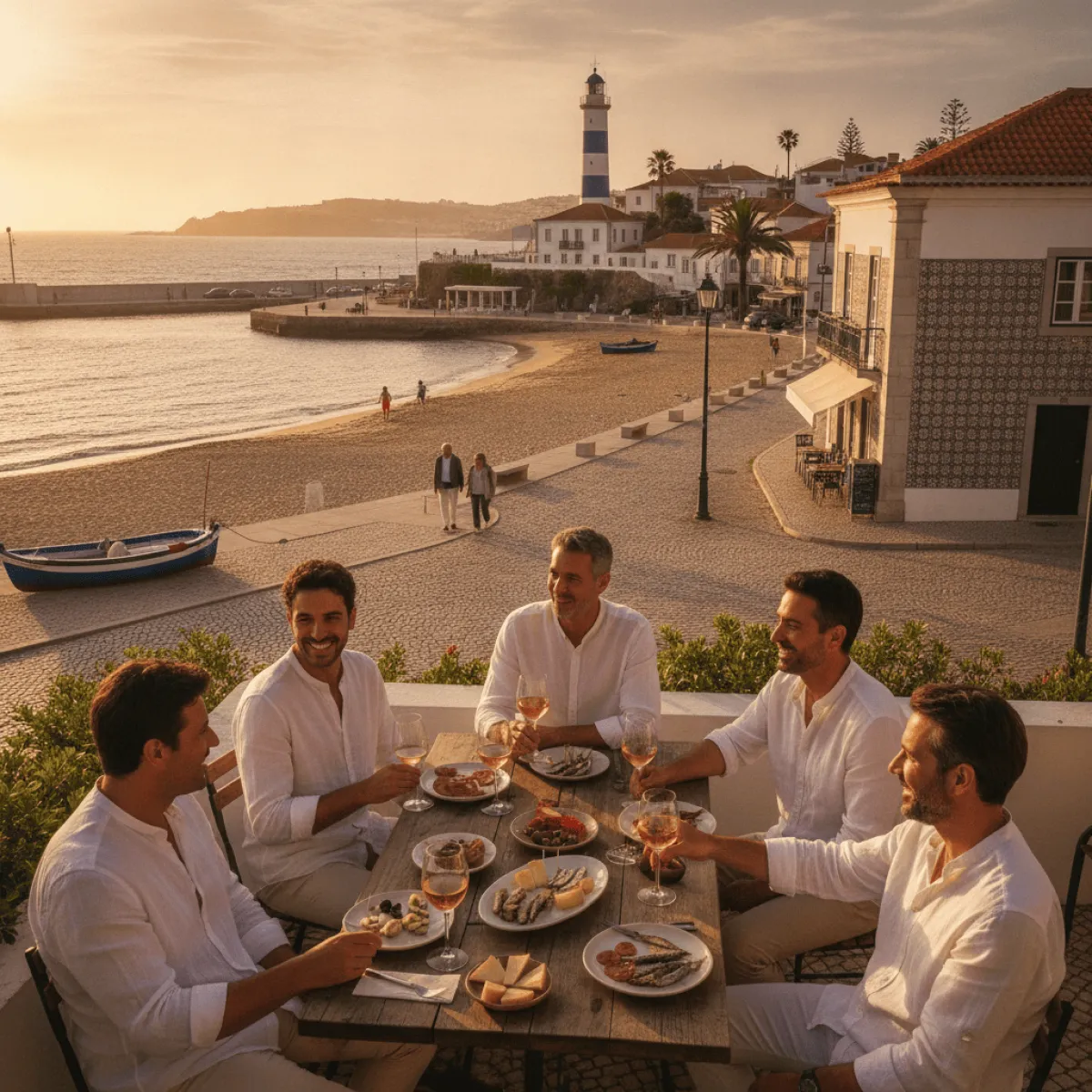
Cascais has a reputation problem. Everyone arrives on the one o'clock train, eats a mediocre sandwich by the marina, photographs the bay and heads back to Lisbon before dinner. This is a logistical error with serious culinary consequences, because the best hours in Cascais start around six in the evening, when the light drops, the coach parties evaporate and the town returns to the people who live in it.
This itinerary is for people who stay. It starts on foot, ends with a glass in your hand, and assumes one thing: that petiscar in Portugal is not a meal, it is a method. You eat a little at a time, you drink slowly, you move between places. Anyone who sits down at eight and doesn't get up from the same table until eleven is having dinner, not petiscos. These are different activities.
Rule one: do not eat dinner before nine
This isn't affectation, it's arithmetic. If you start drinking at six, you need three hours with proper food distributed through them. And in Cascais the summer sunset lands around half past eight, meaning the most beautiful moment of the day coincides exactly with the hour most visitors are already asking for the bill.
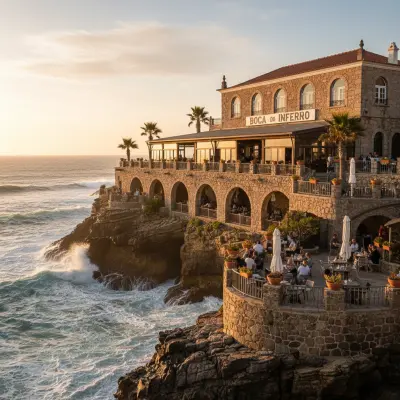
So start your evening away from the town centre, walking west toward Boca do Inferno. From the marina it's about twenty minutes along Avenida Rei Humberto II de Itália, sea always on your left. Boca do Inferno is, let's be honest, a place that works far better in bad weather than in sunshine. On a calm August afternoon it's a pleasant sea cave with a lot of people around it. On a windy November day with a southerly swell driving into the cleft, the name makes total sense. If you're here in high summer, go anyway, but go around half six: the craft stalls are packing up and the light on the cliff turns brick coloured.
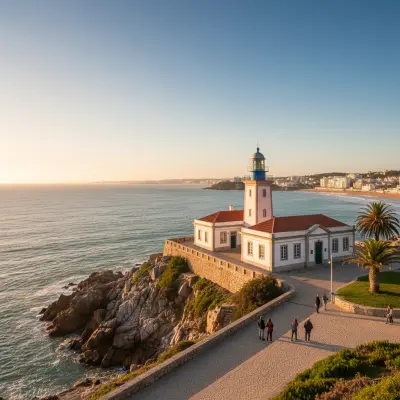
Walking back toward town, take a five minute detour to the Santa Marta Lighthouse Museum. The blue and white striped lighthouse is one of the most photographed images of Cascais and, unlike most heavily photographed things, it holds up in person. The museum itself is small, dedicated to the history of maritime signalling, and operates on a municipal ticket (check current prices and hours locally, as they shift seasonally). Go for the terrace and the view across the bay. Twenty minutes is enough.
The aperitif before the aperitif
Before any wine, there is the sugar question to settle. Yes, sugar before wine. It's unorthodox and it's exactly what people do here, because the pastelarias in Cascais close early and there's no point postponing.
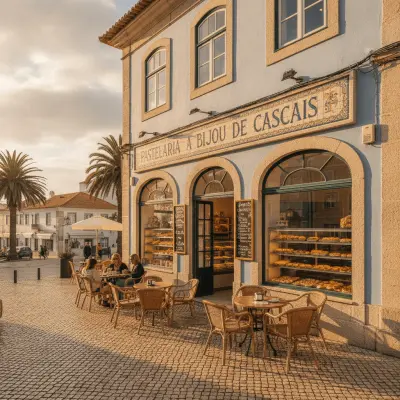
Pastelaria A Bijou de Cascais is the place I most enjoy sending newcomers. Not for the room, which is modest, but because it's where you understand the gap between a neighbourhood pastelaria and a terrace built for tourists. Order a coffee and a pastel de nata, eat standing at the counter, listen to the conversation. Consider it your entrance exam.
If you'd rather sit down, Pastelaria Garrett is the institution of the town centre, decades old, with a clientele that includes people who have been coming since childhood. It's pricier than average and in August the service can crawl. Go off peak: five in the afternoon on a weekday and you'll get a table and the place at its best. The areias de Cascais, the almond cakes and the display case in general justify the detour.
One honest caveat: if pastry is your only objective in Portugal, you're in the wrong town. Cascais is good at it but is not the capital of the subject. For a genuine immersion in the region's baking tradition, the Easter sweets itinerary in Mafra takes you into an entirely different universe, with convent recipes you won't find on the coast.
Seven o'clock: pick the right viewpoint
Everyone watches the sunset from the marina or from Guincho. The marina is comfortable and far too crowded. Guincho is spectacular but requires a car or taxi and pulls you off the petiscos route entirely.
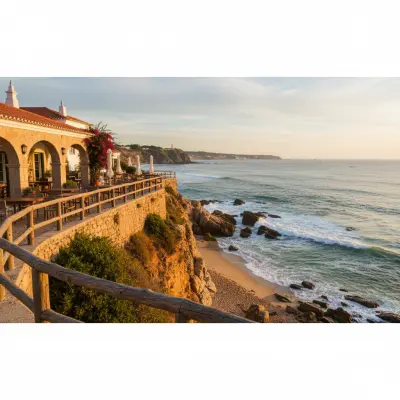
The alternative is to head down to Miradouro da Azarujinha, over on the São João do Estoril side, above a small beach wedged between rocks. You get there by train (one stop on the Cascais line) or on foot along the Paredão, the seafront promenade linking Cascais to Estoril and beyond. The Paredão is, in my view, the best piece of public infrastructure on this coast: flat, right on the water, full of runners, dog walkers and couples. Walking from Cascais to Azarujinha, allow forty unhurried minutes.
Bring water. Don't bring a bottle of wine, the rest of the plan handles that.
If you have a full day: the coast from the water
For anyone with time to spare who wants to stretch this into a full day programme, there's one option that changes your perspective on everything that follows: leaving Cascais by boat in the late afternoon. The sunset sail with dolphin watching departs from the marina and puts you back on land precisely in time for the first glass. Dolphins are never guaranteed, they never are, but the coastline seen from offshore, with the Sintra hills behind and the cliffs changing colour, covers the ticket price on its own.
Half past eight: the wine begins
Petiscos in Cascais come with an obvious trap. The pedestrian streets of the old centre, particularly around Rua Frederico Arouca and its neighbours, are wall to wall with terraces offering menus in five languages and photographs of the food. Photographs of the food are always a bad sign. It isn't that the cooking is inedible, it's that it's indifferent, and you're paying for the postcode.
My rule is simple: get two streets away from the main drag. Climb toward Rua da Bela Vista or head over toward the market. Prices drop by around thirty per cent and the odds of hearing Portuguese at the next table rise by roughly the same margin.
On what to drink, some personal convictions:
- White Vinho Verde: the obvious opener. Fresh, low in alcohol, holds up in heat. Ask for a Loureiro or an Alvarinho if the list lets you choose the grape. A glass typically runs 3 to 5 euros in a decent place.
- Whites from Lisboa and Colares: we're in the region, it makes sense. Colares is next door, rare, expensive and an experience in its own right. If you see one by the glass, try it without hesitating. If it's bottle only, think twice: these are wines with strong personality and they don't please everyone.
- Alentejo red with dinner: predictable but effective with meat and cheese. If you want something more interesting, look for a red from the Dão. Fresher, more acidic, and a better match for fatty petiscos.
- Moscatel de Setúbal to finish: two fingers in a small glass, chilled. Costs little and closes the night better than any dessert.
What to order
Petiscos are an exercise in restraint. The temptation is to order everything at once and end up with a table full of cold plates. Work in rounds of two or three dishes.
First round, always the same: olives, a cheese, some presunto. Ask for a cured sheep's cheese or, if it's the season and the house has one, a soft Serra da Estrela that you eat with a spoon. Black pig presunto if available, and don't flinch at the price per portion: it's expensive because it's good.
Second round, the sea. We're in Cascais, it would be absurd not to. Ameijoas à Bulhão Pato, clams with garlic, coriander and lemon, and enough bread to deal with the sauce, which is where half the pleasure lives. Boiled prawns, plainly, with coarse salt. Peixinhos da horta, which despite the name contain no fish at all: green beans in batter, the direct ancestor of Japanese tempura, and the most underrated thing in Portuguese cooking.
Third round, if there's still room: proper fish or meat. Fried cuttlefish Setúbal style, an açorda with prawns, or pork with clams in the Alentejo manner.
For anyone who'd rather cook than simply eat, and it genuinely pays off if you're in the area for several days, the traditional cooking workshop in Cascais teaches the base techniques that change how you read any Portuguese menu afterwards. Do it on your first day, not your last. The difference in every subsequent meal is obvious.
Midnight: the last glass and tomorrow's bread
Cascais is not a late night town. There are bars, there are people out until the small hours in summer, but this is not Bairro Alto and shouldn't be judged as if it were. Around midnight most kitchens are shutting and the most civilised thing available is a final glass near the water, preferably sitting on a wall.
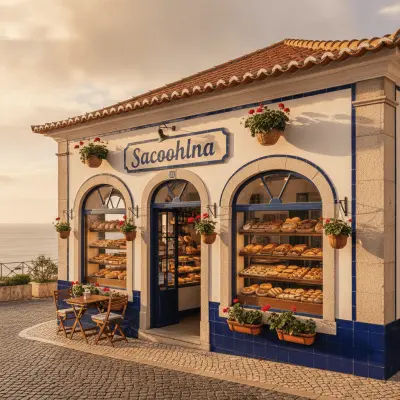
Sort out breakfast before you go to bed. Sacolinha is the bakery and pastelaria people actually return to in Cascais, with a production that goes well beyond the pastel de nata and a local crowd that turns up before nine. Fresh bread, savoury pastries, cakes. Go early and eat there rather than taking it away.
Getting there and what it costs
The Cascais line train leaves from Cais do Sodré in Lisbon with frequent departures through the day and a journey of around forty minutes to the Cascais terminus. It's the obvious transport, it removes the parking problem (in August a genuinely expensive nightmare) and it lets you drink wine without guilt. Check the times of the last returning trains before you sit down for that final glass, because the night ends earlier than most people assume.
On budget, a full evening of petiscos and wine for two, in honest places off the main drag, lands somewhere between 50 and 80 euros. On the central summer terraces the same consumption can easily push past 120. The difference is a two minute walk.
If you have spare time in the region
Cascais works well as a base for full days elsewhere. Half an hour away by train and bus is Sintra, a universe of its own that rewards a methodical approach rather than a sprint between palaces: the Sintra neighbourhood guide helps you decide where it's actually worth stopping. And if you want the broader cultural context of the region, the neighbourhoods, the traditions and what still resists mass tourism, the guide to local culture in Lisbon is the right companion read.
But come back to Cascais for dinner. At nine in the evening, glass of vinho verde in hand and a plate of clams arriving, you start to understand why so many people who came for the day ended up staying for good.