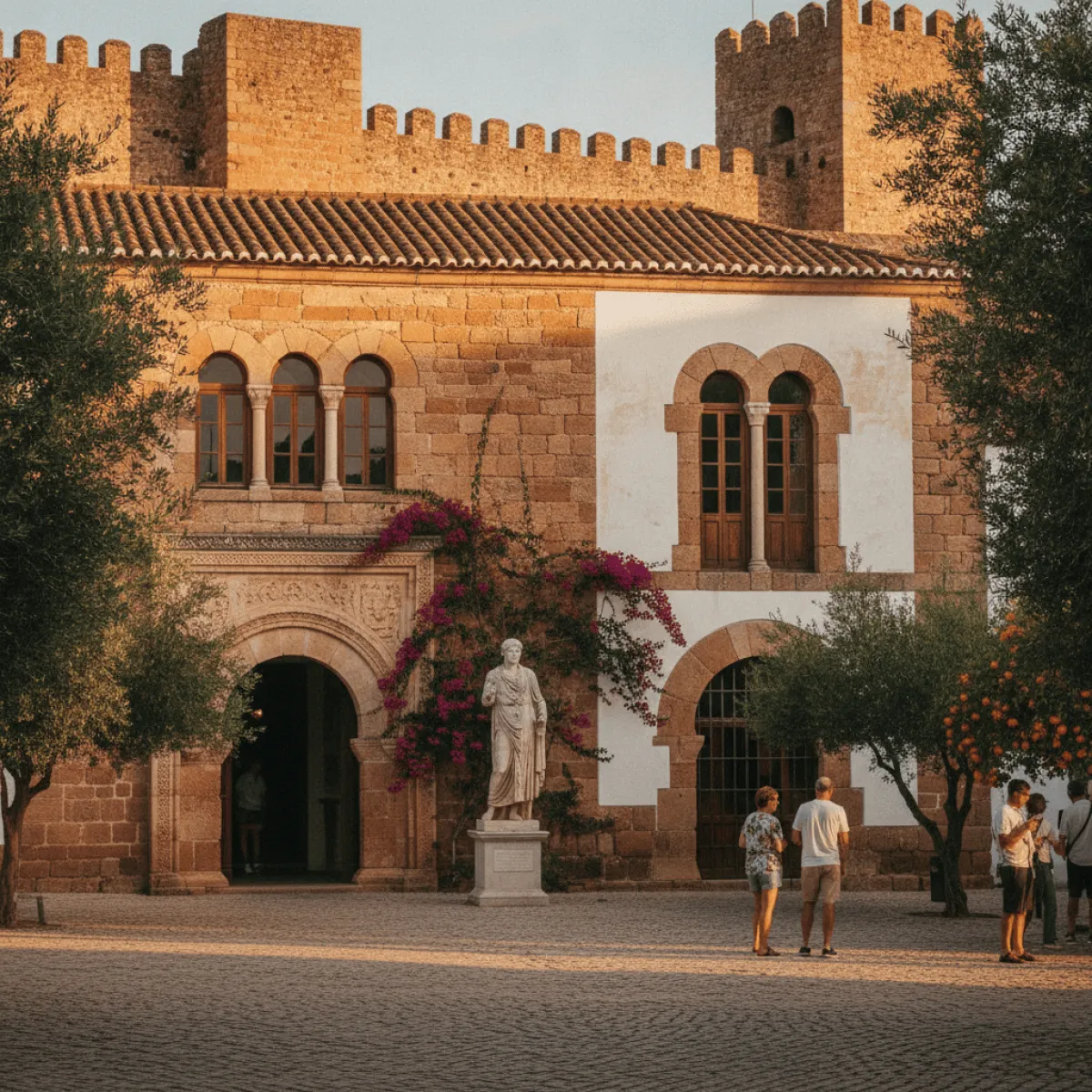
The well that became a museum
The Silves Municipal Archaeology Museum was not built first and filled with objects later. It happened the other way round: they found the objects while digging for something else, and built the museum around the hole. That hole is an Almohad cistern-well from the 12th-13th century, over 18 metres deep, and it dominates the ground floor the moment you walk in. There is no ignoring it. A spiral staircase was built specifically so visitors can walk around the original structure as they descend, and at some point you realise you are standing inside Islamic-era Silves, not looking at it through glass.
It sits on Rua das Portas de Loulé, 14, right in the historic centre, a few minutes' walk from the castle and the cathedral. If you are staying at one of the old town hostels, like Horta Grande Hostel or Hostel Supremo, it is an easy walk, all narrow lanes and slopes typical of the town. By car, resign yourself to parking outside the centre and walking in, as with most of old Silves.
What is inside
The collection is, without exaggeration, one of the largest in the country dedicated to the Islamic period, and that is not marketing talk: Silves was Xelb, capital of a taifa kingdom, and the Islamic-era city here rivalled Lisbon in importance. The museum organises the collection by theme, utilitarian and decorated ceramics, architectural elements, everyday objects, and there are rooms dedicated to the town's urban evolution from prehistory to the modern era. It is not a huge museum, you can see it comfortably in an hour to ninety minutes, which makes it easy to pair with the castle without eating up the whole day.
The ticket price is low (€), which for the quality on display is generous. There is no opening hours information available here, so the safest move is to confirm before going, either by phone (+351 282 444 838) or on the official municipal website. Municipal museums in Portugal often close on Mondays and pause for lunch, but that is an assumption, not a confirmed fact, so check directly.
Is it worth the visit
Yes, and I would go further and say it is more interesting than the castle for anyone trying to understand Silves beyond the red fortress in the photos. The castle gives you the scale and the view, the museum gives you the context: who lived there, what they ate, how they built, how they managed water in a region where water was always serious business. If you have read, or plan to read, our guide to the Islamic legacy of Xelb in Silves, this museum is practically the natural continuation of that visit, where the stories in the guide turn into physical objects in front of you.
This is not a place built for a quick photo. It is small, yes, but dense, and the centrepiece, the well itself, deserves a few minutes of just standing and looking down to grasp the scale of 12th century engineering. There is no proper gift shop or café inside, so do not plan to eat there. After the visit, the logical move is to head down into the centre for something simple and good, and here the recommendation is direct: go to Bifanas do Marinho, which is nearby and settles the hunger without ceremony.
Practical tips
- No reservation is needed for small groups or individual visitors, but if travelling with a large group, it is worth calling ahead on +351 282 444 838.
- There is no indication they only accept cash, but carrying some coins is a sensible habit at smaller municipal museums in the inland Algarve.
- No special dress code, it is an ordinary museum, but the spiral staircase around the well has some narrow steps, so comfortable shoes help.
- Pair the visit with the local market: our guide to where to shop the best of Silves' markets has good pointers for after the museum.
- Travelling with kids? The museum tends to go down well with curious children thanks to the well and the staircase, but to plan the rest of the day it is worth checking our honest family guide to Silves.
In short: it is not big, it is not expensive, and it does not try to be more than it is. It is a 12th century well with a well-designed museum built around it, on the right street in the historic centre of Silves, and for anyone who likes to understand towns below their tourist surface, it is worth more than plenty of museums three times its size.