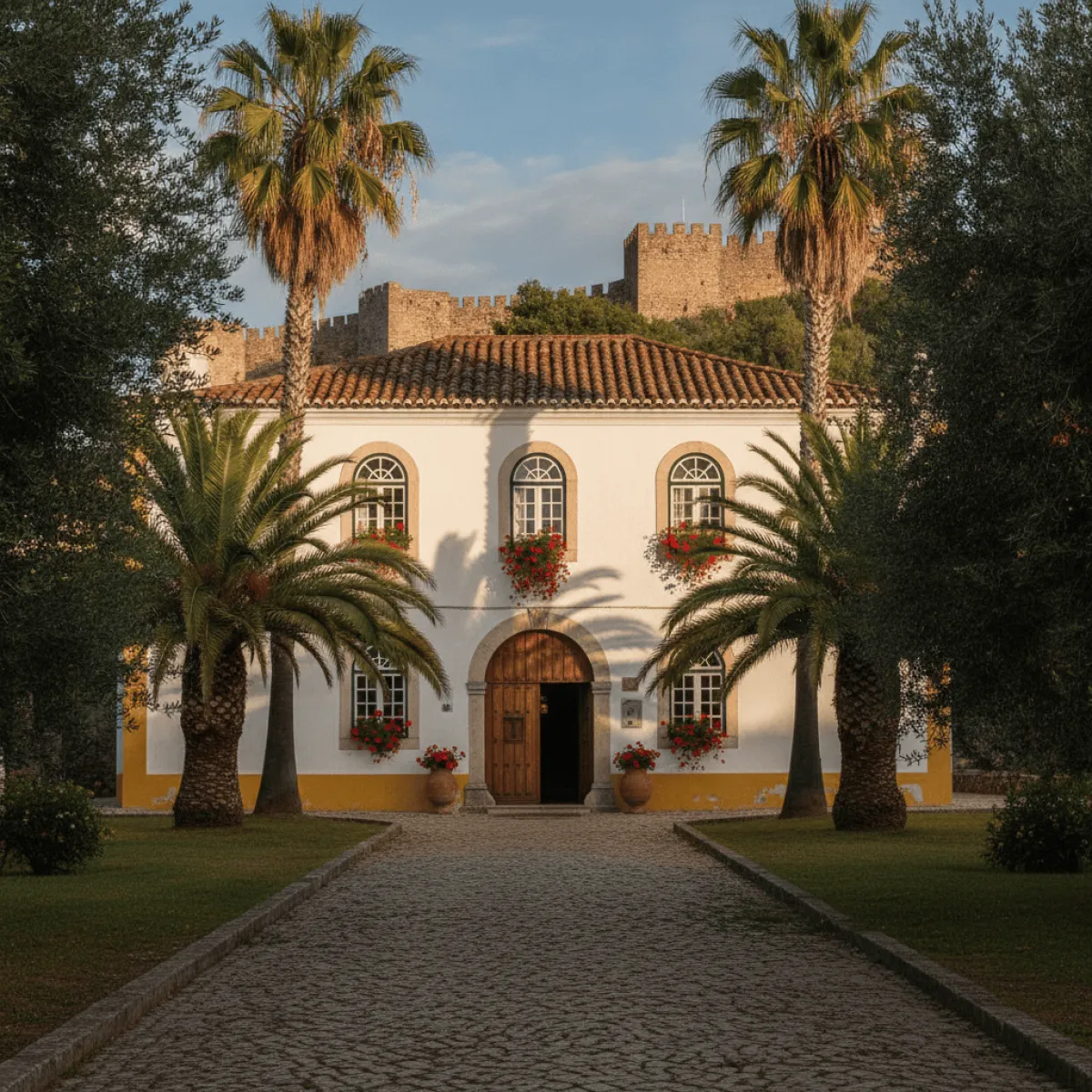
Casa Museu João de Deus: the house where the man who taught Portugal to read was born
Most people come to Silves for the red sandstone castle and the river below it, but the municipality stretches well beyond the walled town. About 20 minutes inland by car, in the small town of São Bartolomeu de Messines, sits a modest house that shaped Portuguese education more than any monument in the region. This is where João de Deus Ramos was born in 1830, poet, member of parliament for Silves, and author of the Cartilha Maternal, the reading primer that taught generations of Portuguese children and adults to read over nearly half a century.
Who João de Deus was, and why it matters
João de Deus was not just another street name. He studied law at Coimbra, where fellow poet Antero de Quental rated him the most original poet of his generation, but what made him a national figure was a slim book published in 1876: the Cartilha Maternal. Before it, learning to read in Portugal was slow and mechanical. João de Deus tested his method first on his own children and nephews, then simplified the process into something schools across the country used well into the 20th century. He died in 1896 and was buried in the Panteão Nacional, which tells you how seriously the Portuguese state took his legacy.
The house and the neighborhood
The Casa Museu occupies the house where the poet was born, in the old part of São Bartolomeu de Messines, at Rua Dr. Francisco Neto Cabrita, 18. It sits in a neighborhood of narrow streets and whitewashed, single-storey houses, the kind of inland Algarve that existed long before beach tourism reshaped the region to the south. Opened in 1997 by the Silves municipal council, the house was recreated to look like a 19th-century inland Algarve home: a living room, bedroom and kitchen arranged with period furniture, photographs, personal objects and first editions of the Cartilha Maternal and Campo de Flores. It is not a large or dramatic museum. It is an actual house, at the scale of an actual house, and that is exactly what makes it worth the detour: there is no distance between the poet and the space he grew up in.
Getting there
São Bartolomeu de Messines lies north of Silves town, connected by the national road, and also has its own stop on the Algarve railway line. Driving from Silves castle takes roughly 20 to 25 minutes. It pairs well with a morning spent on the town's other heritage sites, such as the Museu Municipal de Arqueologia de Silves, before heading inland, or you can do it the other way round and come back to town for lunch.
What to expect from the visit
This is not a museum with audio guides or interactive screens. The visit runs short, somewhere between 30 minutes and an hour, usually led by a council staff member who knows the house and the poet's story well, which more than makes up for the lack of elaborate wall text. If you're genuinely interested, ask questions and let the guide talk. That's usually where the visit comes alive, far more than the objects in the display cases. It's not built for a quick photo stop, but it rewards anyone who cares about literature, education, or simply wants to understand how a small inland Algarve town produced one of the most quoted figures in Portuguese school textbooks.
Practical information
- Address: Rua Dr. Francisco Neto Cabrita, 18, 8375-124 São Bartolomeu de Messines, Silves
- Phone: +351 282 440 892
- Official website: cm-silves.pt
- Price: falls in the lowest price bracket, which for municipally-run museums in Silves usually means free or a symbolic fee. Confirm the exact amount by phone before you go.
- Hours: not consistently published online. Since this is a small municipal museum, your safest bet is to call ahead or check the official site directly, especially outside peak season.
- Reservations: doesn't appear mandatory for individual visitors, but for groups or a more in-depth guided visit, calling ahead is the smart move.
- Dress code: none. It's a house museum, not a church.
If you're hungry after the visit, the drive back toward Silves passes close to spots worth a stop, like Bifanas do Marinho, a solid local pick for an unfussy meal. If you want to spend more time exploring the wider municipality, including this less obvious inland side of it, the guide Silves Beyond the Castle: The Islamic Legacy of Xelb is useful for placing this kind of minor heritage site within the town's larger history. Travelling with children, the Silves with Kids: The Honest Family Guide can help you decide whether this particular stop is worth it, given how literary and low-interaction the exhibit is.
The Casa Museu João de Deus won't justify a trip to the Algarve on its own. But for anyone already based in Silves who wants proof that the municipality produced more than oranges, cork and a red castle, it's an honest, small, unpretentious stop dedicated to a man who taught half a country how to read.