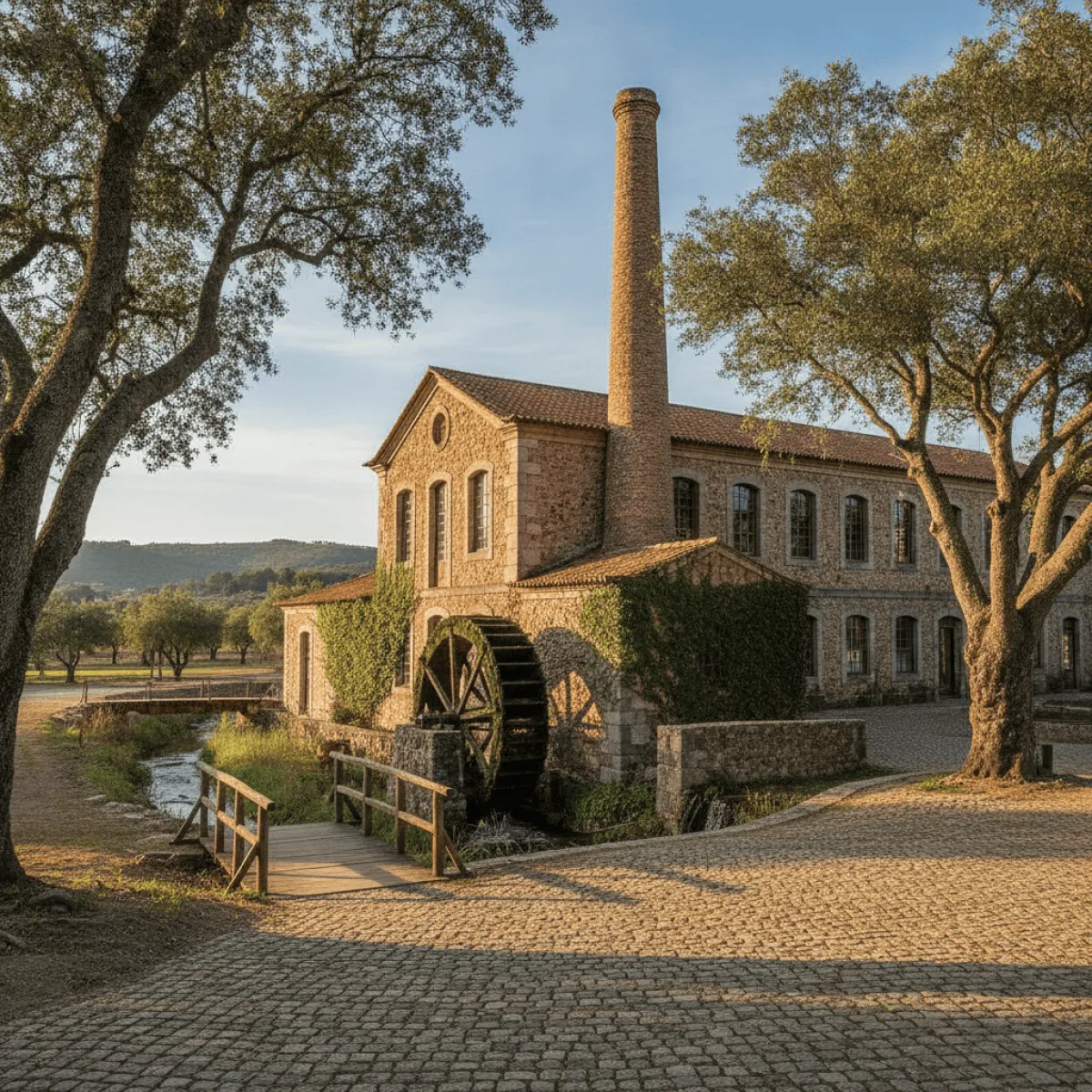
Sixteen years later, the doors open again
Everyone knows the obvious things about Silves: the red sandstone castle on the hill, the cathedral where kings are buried, the Arade river curling below the walls. What fewer people know about is Fábrica do Inglês, at the foot of that same hill, which for over a century was the economic engine of the town and which, since 2010, sat closed to the public, a ghost site with machinery frozen behind locked gates. On July 11, 2026, the Museu da Cortiça finally reopened, sixteen years after it shut its doors due to insolvency.
This is not a new museum pretending to be old. It is the same building, the same industrial production line, largely intact since the factory was founded in 1894 by the British firm Avern, Sons & Barris in partnership with Portuguese industrialist Nunes Mascarenhas. It was Victor Sadler, the British manager locals nicknamed the "Senhor Inglês" (the English gentleman), who gave the complex its name and who spent decades turning it into one of the country's largest cork-processing operations, exporting stoppers around the world until production stopped in the mid 1990s.
What you'll actually see inside
The museum occupies the original factory pavilions and walks visitors through the cork cycle: from the cork oak forest to the finished product, with 19th and 20th century machinery still standing where it always stood. This is not a museum of glass cases and distant captions, it's a museum of gears, belts and presses that generated decades of work for generations of Silves families. That authenticity isn't marketing talk: in 2001, before the closure, the museum won the Luigi Micheletti Award for Best Industrial Museum in Europe and drew over 100,000 visitors in that single year, a figure any Portuguese museum today would envy.
The buildings are arranged around a central courtyard with gardens and a small cross-shaped chalet at its heart, an architectural detail worth seeking out before you leave. Anyone who has already visited the Museu Municipal de Arqueologia de Silves will recognize the same instinct here, telling the town's story through concrete objects rather than generic wall text. The two museums actually make sense as a pair: one tells the Islamic and Roman story of Silves, the other tells its 20th century industrial one.
Practical information
- Address: Rua Gregório Mascarenhas, Fábrica do Inglês, 8300-159 Silves
- Hours: Wednesday to Saturday, 9:30am to 1pm
- Admission: free during the reopening phase, through September 30, 2026
- Groups and schools: advance booking required by phone or email
- Phone: +351 925 646 650
- Official site: museudacorticasilves.pt
Go early. The hours are short, just four days a week and only until lunchtime, and after sixteen years shut, local curiosity alone is likely to bring crowds through in the first weeks. If you're planning a visit with a large group or a school class, advance booking isn't a suggestion, it's a condition of entry. And don't expect a café or restaurant inside the museum itself at this early stage, bring water, especially if you're visiting in August.
Getting there and what to do next
Fábrica do Inglês sits on the left bank of the Arade, a few minutes' walk from the historic center and the climb up to the castle, enough of a walk that you'll want proper shoes rather than beach sandals. Anyone staying at Horta Grande Hostel or Hostel Supremo can get there on foot without much effort, which makes the museum an easy morning addition before the heat sets in.
After the visit, hunger tends to hit. You don't need to go far: Bifanas do Marinho is on the way back toward the center and is exactly the kind of no-fuss stop that suits a morning spent among gears and industrial history. If you have time to spare, it's worth reading our guide Silves Beyond the Castle: The Islamic Legacy of Xelb, which pairs the cork museum with other corners of town most tourists skip because they sit off the direct route to the castle.
For families, the museum's short morning hours actually work in your favor: enough time to see the factory floor, stretch legs in the gardens, and still have the rest of the day free. Check our honest family guide to Silves to fit the visit into a route that doesn't wear anyone out before lunch.
One last note, because the details are still settling: the museum reopened recently, finishing works on the structure and the repositioning of exhibition sections are still ongoing, and hours or entry conditions may well change over the coming months as the space beds in. Check directly before planning your trip, especially if you're coming from far away just for the museum.