Santana: Real Crafts Beyond the Miniature Thatched Houses
In Santana, a three-euro plastic miniature thatched house sells a few metres from the real wood-and-thatch originals still standing. Worth knowing the difference before you buy.
The wall of plastic houses
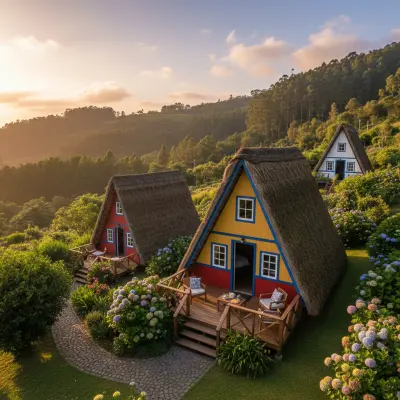
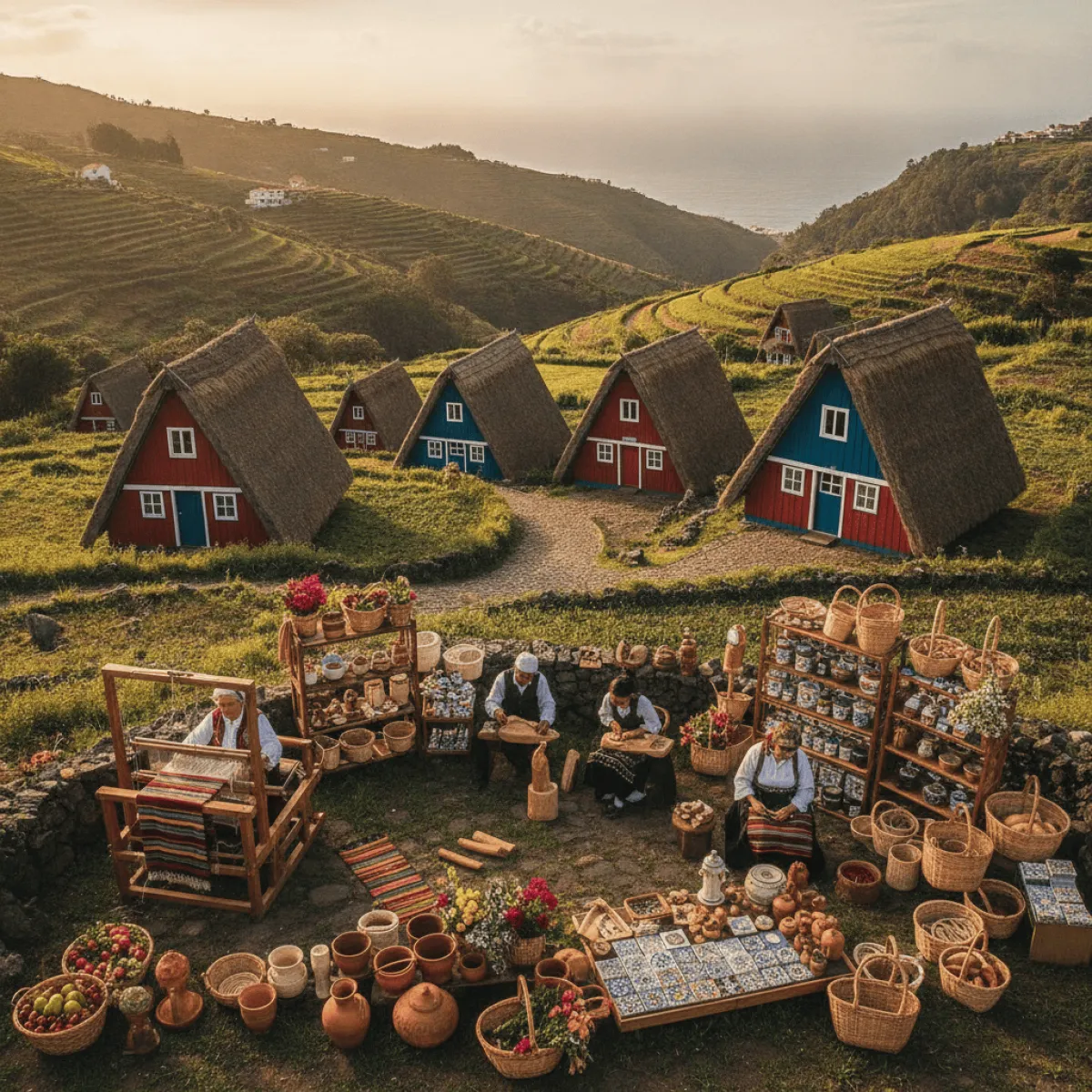
Next door to the Parque Temático da Madeira in Santana, there is a souvenir shop with an entire wall of miniature houses: triangular thatched roof, whitewashed walls, red or blue trim. They cost two or three euros, weigh nothing, and nine times out of ten were molded in plastic somewhere off the island. The irony is that the object being copied, the Santana thatched house, is one of the few traditional Portuguese buildings you can still see standing, for real, a five-minute walk from the shop. Buying the miniature without ever having looked at the original is like bringing home a photo of a dish you never actually tasted.
These A-frame houses started life as hay stores and cattle shelters, the thatch reaching almost to the ground to shed the wind and rain coming off the Atlantic. Over time some grew windows, a painted door, and became actual homes. Few originals remain today, and most survive precisely because they became a symbol of the island, stamped on tiles, magnets, and yes, those plastic miniatures. The trick to leaving Santana with a souvenir that means something is simple: look at the real thing before you buy the replica.
Sleeping inside the craft itself
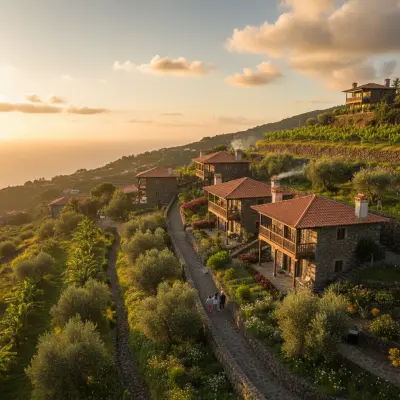
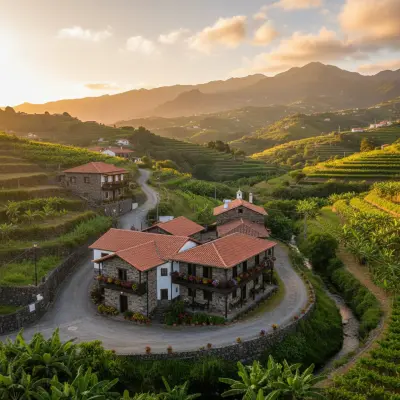
The most direct way to understand why this architecture matters is to spend a night in it. The Aldeamento Turístico Casas de Campo do Pomar offers stone and timber cottages built in the traditional Madeiran style, surrounded by vegetable plots and meadows. It is the kind of place where you understand, without a brochure, why these buildings were designed the way they were: steep roofs, thick walls, everything built to handle the rain that rolls up from the Atlantic and settles into the Laurisilva forest.
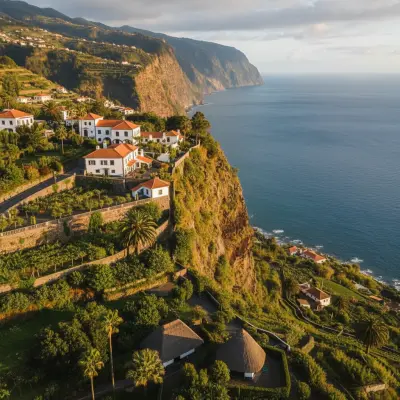
If you would rather have a sea view than a meadow view, Quinta do Furão sits above the north coast with terraced vineyards and a restaurant that takes regional cooking seriously, from bolo do caco to espetada, poured with wine grown on the property. It leans more hotel than farmhouse, but it plays the same game: showing you how people live in this landscape, not just how it photographs.
For fewer people and more quiet (the good kind, distant chickens and wind through eucalyptus, not the abstract kind), two smaller, well-run options stand out: Santana in Nature Bed & Breakfast and Ilha & Montanha - Turismo Rural. Both run out of small houses with owners who know their neighbours and can point you toward whoever still works with willow, or who bakes the best bolo de mel in the area, information no tourist office will hand you.
What the forest teaches you about the craft
Before you can understand the objects, it helps to understand the raw material. Much of what gets sold as craft in Santana, baskets, spoons, walking sticks, comes from wood and willow that grew right next door, on the edge of the Laurisilva, the UNESCO-listed laurel forest that covers the island's northern slopes. The herb walk through Santana's forest medicine is the most direct way into that relationship: a local guide points out which plant goes into tea, which one shows up in homemade liqueurs, which one used to serve as dye or remedy. You leave the walk looking at a jar of honey in the grocery store differently, because now you know where the flowers came from.
That same forest is the backdrop for the Levada do Caldeirão Verde walk in Santana, one of the island's best routes: it starts at Queimadas, cuts through several hand-dug tunnels, and ends at a waterfall dropping straight into an emerald pool. It runs roughly 6.5 km to the falls, so budget for the return leg too, about three hours of walking with stops, wet ground year-round, and your phone's flashlight useful in the longer tunnels. Bring a rain layer even on a clear day in Santana, because the forest makes its own weather.
What separates a good souvenir from a bad one
A practical rule, tested across too many roadside shops: if the price is a round number and identical in three different stores, it probably came off the same production line somewhere off the island. If the seller can tell you who actually made the object, it is usually worth the money.
- Genuine Madeira embroidery carries an authentication label, the IBTAM seal, from the institute that certifies handmade embroidery on the island. No label usually means machine-made elsewhere.
- Wicker and basketware: look for chestnut wood or local willow, heavier and less uniform than imported pieces, with knots and small imperfections that show a hand was involved.
- Sugarcane honey and bolo de mel are edible souvenirs, hard to mass-produce off the island, and they travel well in a suitcase. A better keepsake than any fridge magnet.
- Bottled poncha with a local producer's seal is another safe bet, just do not expect to recreate the tavern version at home. It never tastes the same.
- Wooden miniatures of the thatched houses, carved by local carpenters rather than molded in plastic, still turn up in smaller shops off the main strip. Asking "was this made here?" never offends anyone and saves you from a wasted purchase.
Why it is worth stopping in Santana before moving on
Plenty of travelers treat Santana as a quick photo stop on the way to Porto Moniz or Ponta Delgada, snap the obligatory picture of the thatched houses, and drive off. That is a shame, because staying a night shows you the difference between a tourist symbol and a way of life that still functions: people growing sweet potatoes on the terraces, people who still know how to weave a basket, people who can name every plant in the forest. If your trip continues south afterward, the levada walks around Funchal show a different, more urban side of the same island, and anyone who likes grilled fish should set aside an afternoon to eat grilled sardines properly in Câmara de Lobos. But that is a different story. In Santana, the goal is to leave with your hands empty of plastic and full of whatever was actually made right there.