Funchal in September: Warm Sea, Thinner Crowds
In September the sea off Funchal peaks at its warmest, tour buses vanish from the viewpoints, and the levadas go back to fitting one hiker at a time. It's the window locals quietly keep to themselves.
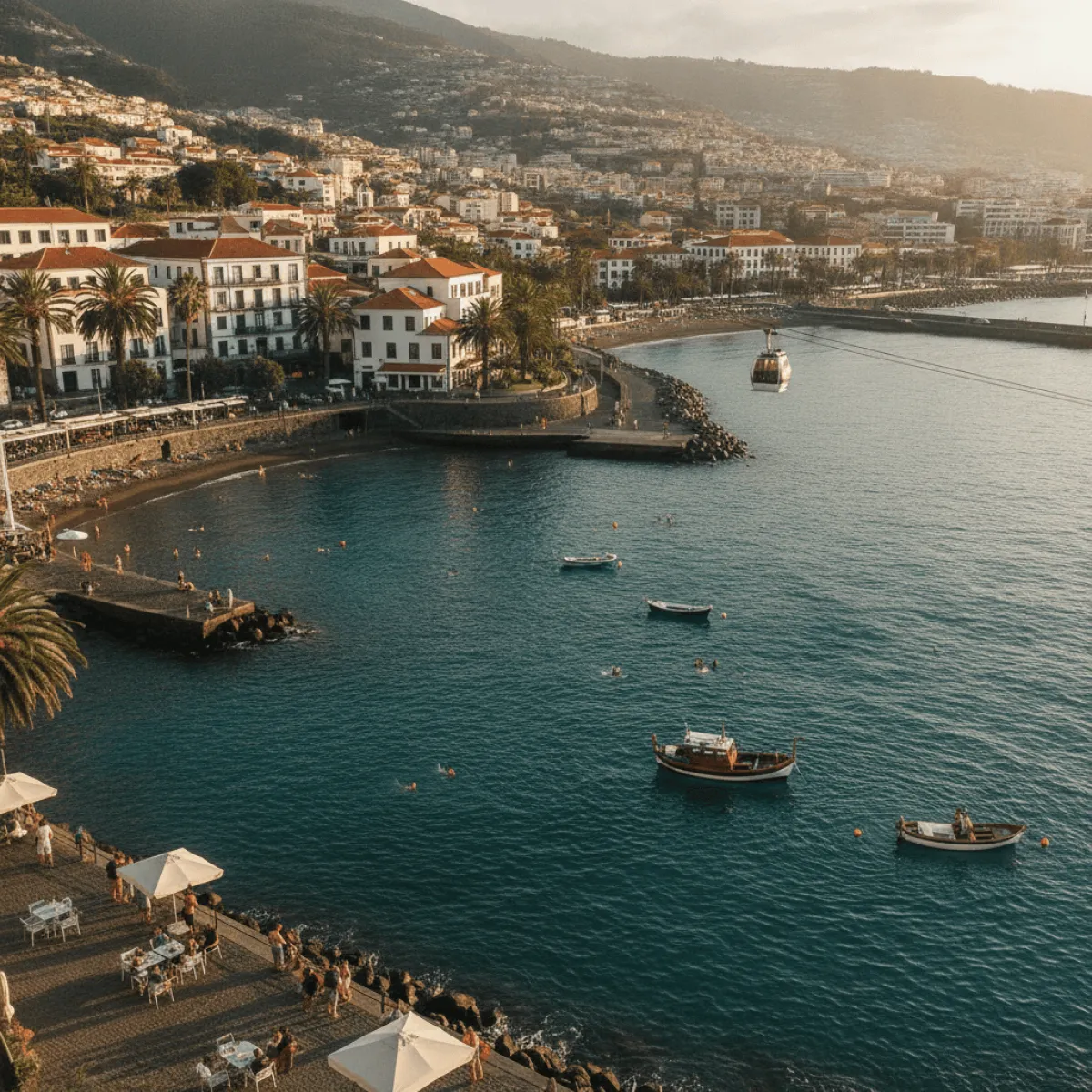
August leaves Funchal the way a tourist leaves who's missed a flight: slowly, grumbling, leaving good tables empty behind. September arrives and quietly changes everything. The sea holds at 23 to 24 degrees, because Madeira warms up slowly and cools down even slower. The terraces in the Old Town stop having queues at 8pm. And the hiking guides, who spend July and August wrangling groups of twelve down single-file levadas, get their breathing room back. If there's one month to understand why so many people get obsessive about this island, it's this one.
Why September, not August
The logic is simple: the North Atlantic is slow to react to summer. In June the water is still genuinely cold, something I covered when writing about Funchal in June, full of tuna and festivals but a sea that still demands nerve. September is the opposite: sea temperature peaks, the air loses that 32 degree, humid punch that kills afternoon hiking plans, and accommodation prices start dropping because most European families are back in school. It's not a secret to anyone working in tourism on the island. It's just a secret to anyone who books holidays without asking around first.
What actually changes
- Restaurant bookings stop being an anxiety exercise two weeks out
- Viewpoints clear of tour buses by 9am, which is when the light is best anyway
- The busiest levadas go back to feeling like trails, not open-air shopping malls
Eating without throwing elbows
September is when you can finally walk into Casal da Penha without having booked two weeks ahead. It's Madeiran cooking that doesn't pretend to be anything else: espetada, fresh fish, the kind of relaxed room that serves as many locals as tourists, which is usually the best sign you can get. This isn't the place for a quick bite between sightseeing stops. It's the place to sit down, order regional wine and take your time, something you can only really do outside the August crush.
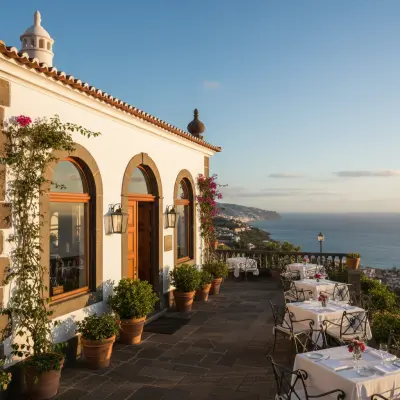
For something different, Il Gallo d'Oro remains Funchal's fine dining reference, Michelin starred, with an Atlantic view that alone justifies dressing up a little. It isn't cheap and doesn't pretend to be: this is a dinner you plan, not one that happens by accident. Book ahead even out of peak season, because the window table doesn't wait for anyone.
If you want to step out of the center for an afternoon, head down to Câmara de Lobos, the fishing village where Churchill used to sit and paint the boats. I've covered this in detail: where to eat grilled sardines right in Câmara de Lobos. In September the village still moves at a summer pace, minus the cruise ship crowds that flood it in July. Order the sardines, some crusty bread, a glass of dry red. Nothing else is required.
Gardens that finally get room to breathe
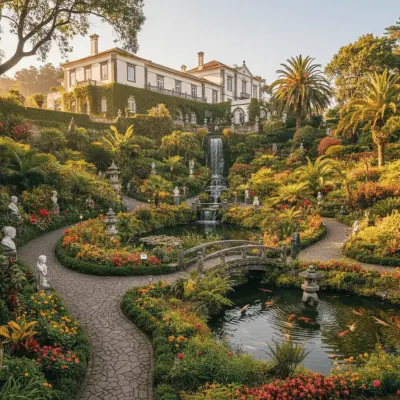
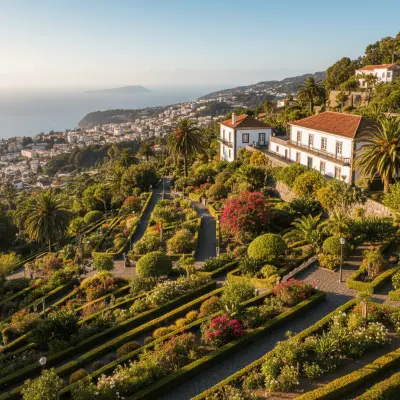
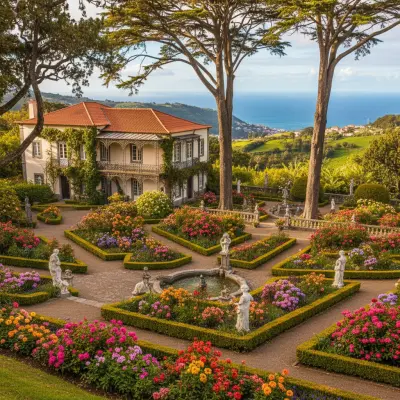
Funchal has a healthy obsession with gardens, and September is when you understand why: without tour buses stacked at the entrance, you can actually walk slowly. Monte Palace Tropical Garden is the most theatrical of the three, with tile panels tucked into the vegetation and bay views that look edited but aren't. You go up by cable car from the Old Town, which is an experience in itself, and it's worth setting aside a full morning because the garden is bigger than the photos suggest.
Closer to the center, the Jardim Botânico da Madeira – Eng.º Rui Vieira is less photogenic and more instructive: cacti, endemic Macaronesian plants, a bird garden next door. This is where you bring someone who wants to understand the island's botany, not just photograph it. Entry is cheap, parking is limited, so take the cable car or a taxi if you can.
For the opposite of tropical, the Palheiro Gardens at Quinta do Palheiro Ferreiro are a 19th century English garden planted on a subtropical island, which is a fun contradiction on its own. Hydrangeas, camellias, a small chapel, and a quiet you won't find in central Funchal. This is the unhurried September morning outing, ideally followed by coffee at one of the viewpoints nearby.
The levadas go back to being trails, not highways
If there's one practical reason to trade August for September, it's the levadas. In August, the best known trails feel like rush hour, with lines of hikers photographing the same waterfall. In September the midday heat backs off and foot traffic drops sharply after the first week of the month.
The Caldeirão Verde levada walk among waterfalls proves the point: dark tunnels, laurissilva forest shading the entire route, and a final waterfall you can still appreciate in September without sharing the viewing platform with thirty other people. Bring a headlamp for the tunnels and a light jacket, because the laurissilva has its own microclimate.
If you'd rather combine hiking with a swim, the levada walks and coastal pools experience from Funchal still works very well in September, because the natural pools warm up over summer and hit their best around now. It's also the last good window before the nights turn properly cold.
For more rigorous planning, the guide to Funchal's essential levada trails, written with April in mind, holds up for most of the year: the difficulty and access notes mostly don't change with the season, only the light and the number of people on the path.
September ground rules
- Start early, between 8 and 9am, because the sun can still bite past noon
- Always pack an extra layer, even with heat in Funchal, because altitude and laurissilva shift temperature fast
- Wear proper grip shoes, not sandals: levadas have wet stretches year round
Getting there, staying, and what it costs
Cristiano Ronaldo Madeira Airport sits about twenty minutes from central Funchal, with direct flights from Lisbon, Porto and several European cities. In September, flights still carry summer pricing in the first couple of weeks, but drop noticeably from mid-month, which is one more argument to wait it out.
A three-star hotel in central Funchal runs roughly 80 to 120 euros a night in September, well below August rates. A full dinner with wine at Casal da Penha typically lands between 25 and 35 euros per person; a meal at Il Gallo d'Oro is a different price bracket entirely, expect three figures per person, and it's worth booking weeks ahead even outside peak season.
You don't need a rental car for the best known hikes, since organized transfers run to most levadas from Funchal, but for the gardens and for Câmara de Lobos a rental for two or three days pays off, especially if you're planning more than one stop a day. That's what September is: the month Madeira stops being crowded with people rushing from one place to the next, and goes back, for a few weeks, to just being Madeira.