Ericeira on Foot: An Architectural Walk Through Its Old Town
Before it became a World Surfing Reserve, Ericeira was a fishing town with its own charter and a king fleeing into exile. A walking route through the old town, from the Pelourinho to Forte de Nossa Senhora da Natividade, with a mandatory stop for tinned fish and wine.
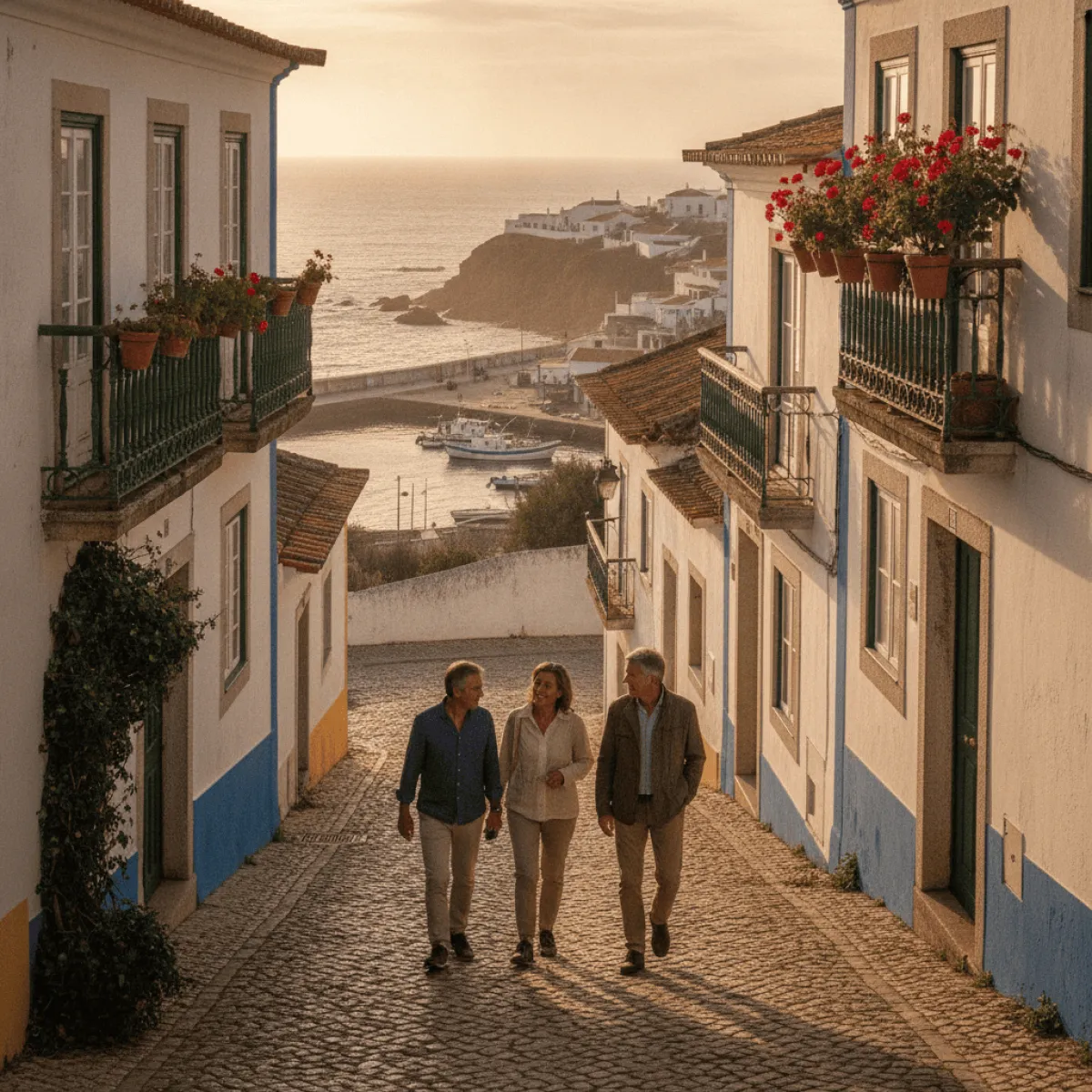
Everyone knows Ericeira for its waves. A World Surfing Reserve since 2011, the second one on the planet after Malibu, it is easy for the town's whole image to collapse into boards and wetsuits drying on balconies. But behind the coastline sits a fishing village that has kept its original layout largely intact: narrow cobbled streets, whitewashed houses trimmed in blue, a central square that once watched a king flee into exile. This walk takes no more than two or three hours, coffee stops not included, and fits neatly into a morning before you hit the water or a lazy afternoon off the sand.
Starting point: the Pelourinho and the square that anchors the town
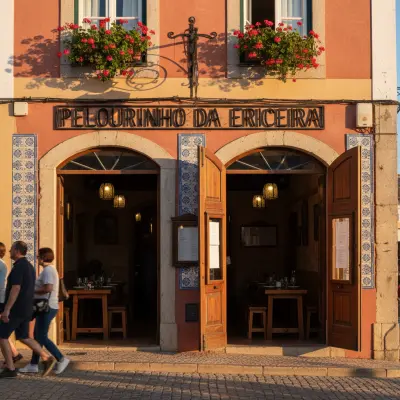
Start at Pelourinho da Ericeira, right in the historic centre. A pillory isn't decoration, it's the physical proof that a settlement had its own charter, its own court, real municipal autonomy. Ericeira's pillory, slim column, simple lines, is the zero point for understanding that this town carried administrative weight long before any tourist ever set foot on Praia de São Sebastião. It's also the best place to get your bearings: the main streets of the old town radiate out from here, and this is exactly where you should start deliberately getting lost down the side alleys, where fishermen's houses keep a low scale, two storeys at most, doors painted cobalt blue or bottle green, sharp against the whitewash.
Look down at the traditional Portuguese pavement underfoot: it's uneven in stretches, proof it hasn't been smoothed over for a postcard. Walk slowly. It's exactly that unevenness, the worn steps, the chipped stone door frames, that tells the story of a town that lived for centuries off fishing, not off architectural tourism.
Street by street to Igreja de São Pedro
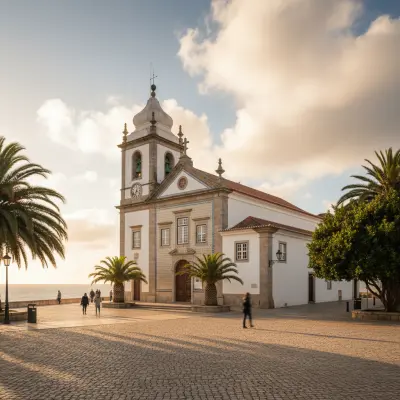
From the pillory square, head toward the small square where Igreja de São Pedro stands, dedicated to the patron saint of fishermen, which tells you everything about this community's spiritual priorities over the centuries. The facade is restrained, none of the decorative excess you find in other churches around the Lisbon region: here the stone speaks quietly, and that's a deliberate choice, not a limitation. If you can peek inside outside of mass hours, it's worth the detour, though check locally for opening times since they shift with the season and the parish's own schedule.
This is where the town shows its fishing-village DNA best: the streets around the church still follow the organic layout of people who built close to their work, close to the sea, without much regard for urban planning schemes. It's this loose, workaday geometry, more than any single monument, that gives Ericeira's charm a reason beyond the view.
A detour to the viewpoints
Before heading down to the harbour, it's worth a small detour along the cliffside viewpoints that punctuate this stretch of coast. They're not official lookouts with explanatory plaques and a designed selfie spot, they're simply where the street ends and the Atlantic begins. Morning light, roughly between 8am and 10am, is the best time to catch the white houses against the blue without a crowd ruining the frame.
Forte de Nossa Senhora da Natividade and the history the town doesn't advertise
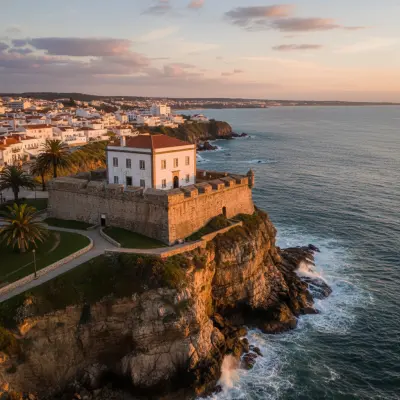
Heading down toward the fishing harbour, you reach Forte de Nossa Senhora da Natividade, a defensive structure built to watch the ocean at a time when pirates and privateers weren't folklore, they were a real threat to any Portuguese coastal town. The structure is modest next to the great fortresses of the Algarve or Peniche, but that domestic scale is exactly what makes it interesting: it was built to protect a fishing community, not to project imperial power.
And this is where Ericeira holds its biggest moment in the national story. It was from this town, in the early hours of 5 October 1910, that King Manuel II boarded a ship into exile after the Republic was proclaimed in Lisbon. There's no grand monument shouting about it, which, in its own way, fits the town's understated character: history happened right here, next to this harbour, and Ericeira carried on with its life without turning the episode into a spectacle. It's worth pausing a minute by the fort and picturing the scene: a king, a boat, a fishing town that watched, probably without much ceremony, the end of a monarchy.
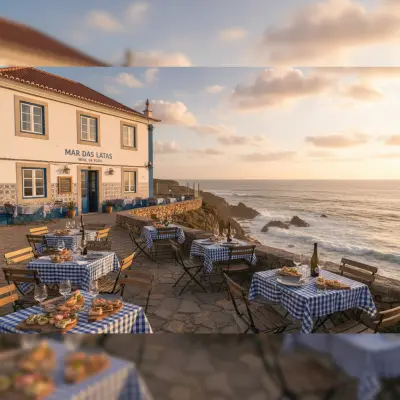
Where to eat: Mar das Latas Wine & Food
After two or three hours climbing and descending the old town's slopes, you'll have earned a real appetite. The obvious, justified stop is Mar das Latas Wine & Food. The name gives it away: canned goods, in the best Portuguese sense of the word, quality tinned fish treated seriously and paired with a wine list that goes well beyond the house basics. It's the kind of place you don't just eat at, you settle into for a while, glass in hand, no rush to get back on the road. For anyone who's spent the morning walking the old town, it's the right way to close it out: unfussy, no generic tourist-menu padding, and real Portuguese product instead of dishes designed to please everyone equally.
After the walk: water, waves and neighbours
Ericeira doesn't live on architecture alone, and it would be dishonest to pretend otherwise. After the old town walk, most visitors end up in the water, and rightly so. For first timers, surf lessons in Ericeira are a solid entry point, especially in summer, when the sea tends to be more forgiving for beginners. If you'd rather start on a more sheltered, beginner-friendly beach, surfing São Sebastião as a beginner is built exactly for that.
And if you have a spare day, Ericeira works well as a base for exploring the wider region. Mafra is less than twenty minutes away by car and, beyond the baroque monastery that needs no introduction, it has a sweets tradition worth knowing, covered in detail in the Easter sweets in Mafra guide. Sintra, further south, is another classic day trip: the Sintra neighborhood guide helps you skip the unnecessary queues. And for anyone curious how this stretch of coast relates to the capital in terms of identity and habits, the piece on local culture in Lisbon gives useful context, even if Ericeira, obviously, runs at a much slower pace.
Practical information
- Getting there: from Lisbon, Ericeira is roughly 45 minutes to an hour by car via the A21. Regular buses also run from the Mafrense terminal at Campo Grande, a decent option if you'd rather skip summer parking stress.
- Best time for the walk: early morning, before 10am, for good light and empty streets, or late afternoon, after 6pm in summer, once the heat stops turning the climbs into a workout.
- Duration: two to three hours of unhurried walking, meals not included.
- Footwear: the uneven traditional pavement in the old town shows no mercy for heels or thin flip flops.
- Parking: in July and August the centre gets congested; leave the car in one of the lots on the edge of town and cover the rest on foot.
This isn't a monumental architecture tour, and Ericeira isn't trying to be Óbidos or Sintra. It's a town that built exactly what it needed to fish and hold its own against the Atlantic, and it's precisely that construction honesty, no decorative excess, that makes a walk through its old town more interesting than it first looks.