Vila Real de Santo António: Crossing to Spain by Ferry, A Practical Guide
Everyone comes to Vila Real de Santo António to catch the ferry to Spain, and almost nobody notices the ruler-straight Pombaline town waiting on the other side of the queue. Here's the practical guide: schedules, where to eat before crossing, and why it's worth staying longer than two hours.
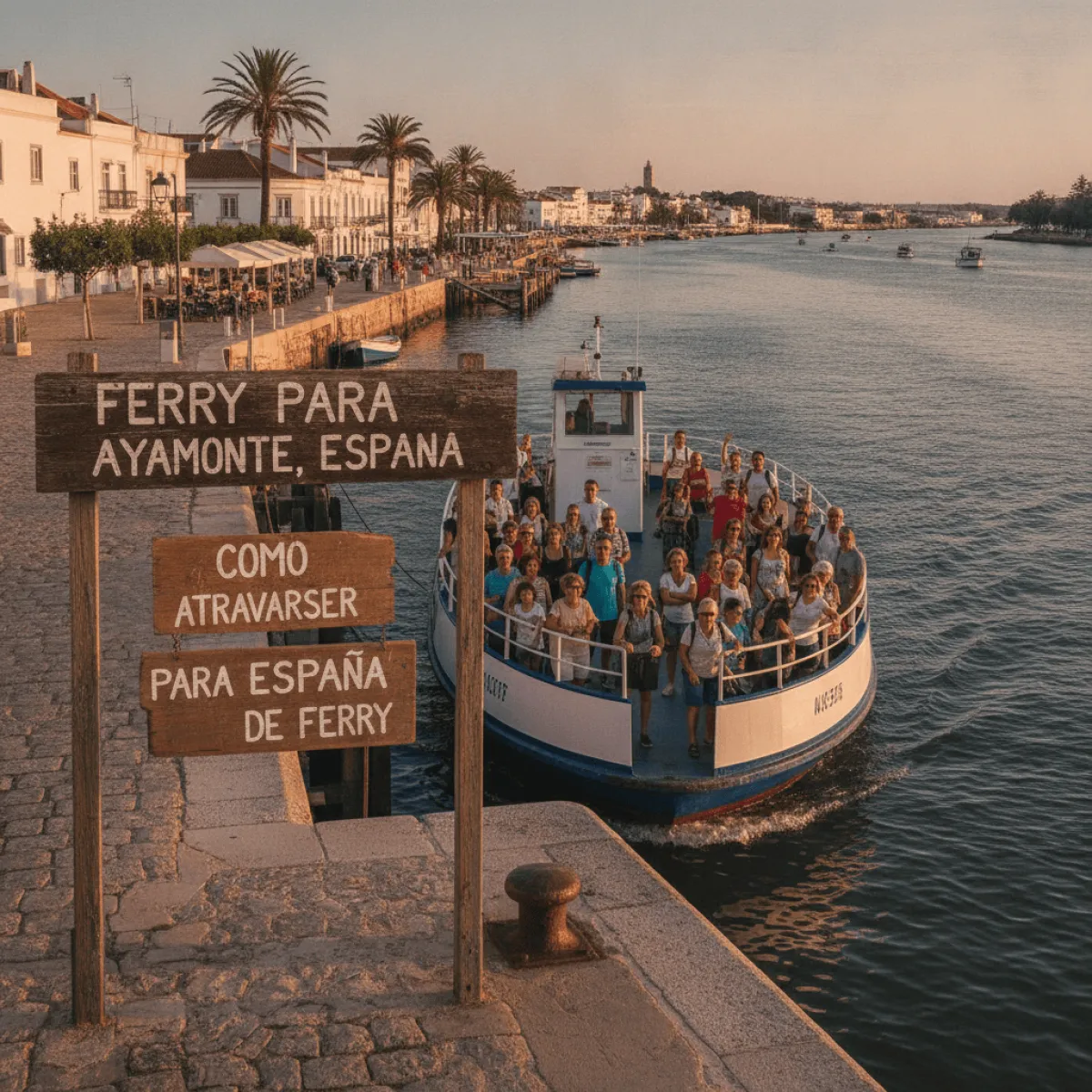
Nobody comes to Vila Real de Santo António by accident. People arrive here with a plan, usually one that already includes Ayamonte on the Spanish side of the Guadiana river, and a vague intention to "pop over for lunch." That's a mistake worth making, because the city on this side of the river deserves at least a full day before you even think about buying a ferry ticket.
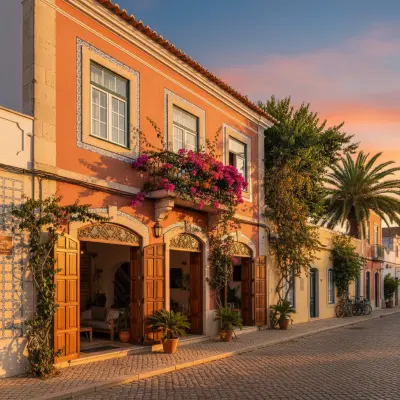
Vila Real de Santo António is the only town in the Algarve built entirely from scratch, on a strict grid, after the 1755 earthquake flattened whatever stood there before. It was the Marquis of Pombal who ordered the street plan that still organizes the center today: square blocks, right angles, a central square anchored by a marble obelisk. If Lisbon has its Baixa Pombalina, Vila Real has a miniature version, quieter, without the mass tourism that swallowed Chiado whole. The best way to understand this isn't to read about it, it's to walk the grid on a guided route walking the Pombaline grid of the city, which explains why the streets are the width they are and why the buildings all look like distant cousins of each other.
The ferry: what you need to know before queuing
Let's get to the practical part, which is presumably why you're reading this. The ferry to Ayamonte departs from the dock at the end of Avenida da República, right on the riverfront, and the crossing takes about 15 to 20 minutes. It's not a cruise, it's public river transport with plastic benches and a view of the Guadiana, and that's exactly what makes it worth doing: you're literally changing countries without leaving your seat, watching Vila Real's shipyards shrink behind you while Ayamonte grows ahead.
- Schedule: the ferry runs daily, with higher frequency in summer. Check locally for exact times, as they shift with the season, and there are annual maintenance periods when service can be reduced or suspended.
- Tickets: bought at the booth by the dock, no need to book far ahead. There's no online reservation for regular passengers, it's strictly a walk-up-and-buy system.
- Taking a car: possible, but the vehicle queue tends to move slower and space is limited. Most people cross on foot and rent a bike or grab a taxi on the Spanish side.
- Land alternative: there's an international bridge over the Guadiana a few kilometers north, for anyone who'd rather drive without relying on the ferry. But you lose the fun of the river crossing, which is half the point.
Why it pays to slow down
The most common mistake is treating Vila Real as a waiting room. People arrive, park, buy their ticket, and spend the next two hours killing time until the boat leaves. Don't do that. The town has enough to fill a whole morning, and the river isn't going anywhere.
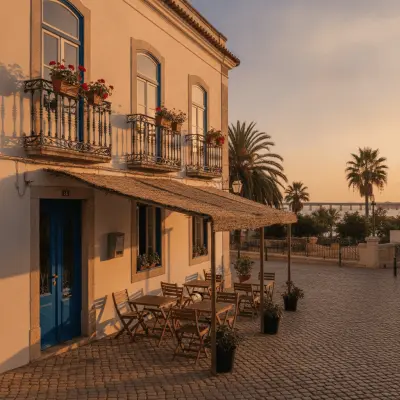
Start at Praça Marquês de Pombal, the geometric heart of the city, paved in the original 1776 radial-pattern cobblestone. Around it, cafés spill onto the square with views of the symmetrical facades that define the Pombaline style: aligned windows, stone trim, everything deliberately predictable, because after the chaos of the earthquake, predictability was exactly the point.
Where to eat before, or after, the crossing
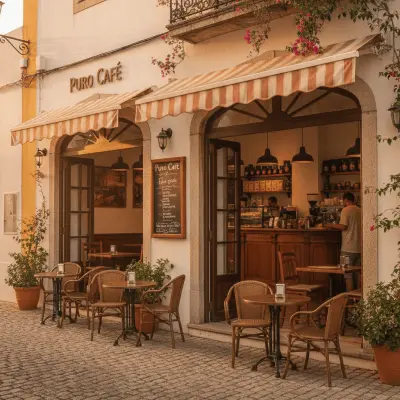
For breakfast or a mid-morning coffee before the ferry, Puro Café does the job well, with a solid balance of decent coffee and relaxed atmosphere, without the inflated prices you find in more touristy corners of the Algarve. No reservation needed, just walk in and sit down, which fits the general logic of this town: little pomp, good execution.
If you come back from Spain genuinely hungry, and you probably will, since crossing borders somehow always builds an appetite, O Coração da Cidade is the right call for a full meal. The name isn't modesty: it sits right in the center, near the square, and serves the kind of no-nonsense Portuguese food that makes sense after a day spent shuttling between two countries. Order the fish of the day if it's on offer, this is fishing territory and the Guadiana still delivers good seafood.
Cacela Velha: the detour nobody regrets
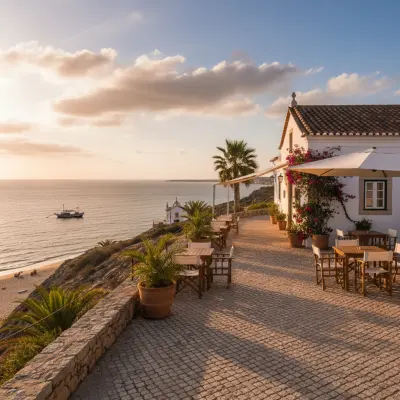
If you have more than a day, or decide the ferry can wait until tomorrow, don't leave the region without heading to Cacela Velha, about a 15-minute drive west. It's a tiny village, practically car-free, with an 18th-century fort and a view over the Ria Formosa that stops conversation cold. The Miradouro de Cacela Velha is the exact spot where the landscape resolves itself: dunes, salt marsh, and the sea peeking out behind the barrier islands. Go late afternoon, when the light turns low and golden and makes the whitewashed houses look almost incandescent.
Sleeping on the Portuguese side before the border
For anyone turning this into a one or two night stop, and honestly it should be, since a two-hour visit doesn't do the place justice, The Sun Hostel makes a solid base: affordable, central, a short walk from both the ferry dock and the main square. It's the kind of place that doesn't try to be more than it is, which here counts as a compliment.
The sunset nobody expects
Here's something most guides skip: the sunset over Vila Real de Santo António, seen from the water, ranks among the best in the Algarve, and almost nobody talks about it because everyone's too busy watching the beaches on the south coast. The Guadiana turns orange, the shipyards go to silhouette, and Ayamonte flicks on its first lights across the water. To catch this hour without improvising, there's a sunset boat tour timed precisely for this window, when the river is calmer and the light more generous than in any midday photo.
Ayamonte: what to do on the other side
Since you've come this far, a few notes on the destination are worth having. Ayamonte has its own old town, more Spanish in scale and rhythm, with tapas priced better than most people expect and a municipal market worth a look just for the bustle, even if you buy nothing. The one-hour time difference between Portugal and Spain catches people off guard every time: leave Vila Real at 3pm Portuguese time, and you land in Ayamonte at 4pm Spanish time. Plan your return ferry with that hour in mind, or you might end up stuck on foreign soil longer than you meant to.
Anyone wanting to understand Algarve culture better, before or after this side trip to Spain, should read up on local culture and traditions in Faro, which helps place Vila Real within an Algarve that exists well beyond beaches and resorts.
When to come, and when to skip it
August is the worst time to cross by ferry if you're short on patience: long queues, real heat, and packed boats. If your trip lands during peak summer, it's worth going early, around 8 or 9am, before the heat and crowds settle in. Anyone looking for better ways to manage that stretch of the year will find useful principles in this guide to dodging August crowds on the Algarve, ideas that apply just as well to Vila Real as to Aljezur.
Outside high season, from October to May, Vila Real de Santo António is a different town: the streets of the Pombaline grid are practically yours alone, the cafés on the square fill with retirees playing cards instead of camera-strapped tourists, and the ferry runs nearly empty, which honestly makes the crossing even more pleasant.
Fitting it into a wider Algarve trip
If you're planning a longer route through the Algarve, and most visitors are, Vila Real de Santo António works well as a final stop before heading into Spain, or as a starting point for a trip that runs up through Faro and west from there. Traveling with kids? The honest family guide to Silves has tips that apply just as well to this eastern stretch of the Algarve: less towel-on-sand beach time, more history for kids to soak up without realizing they're learning anything.
The essentials, in short
- Ferry to Ayamonte: departs from the dock near Avenida da República, 15 to 20 minute crossing, tickets bought on site.
- Arrive early in August, midday queues can run long.
- Set aside at least half a morning to explore the Pombaline grid before crossing.
- Don't skip the sunset over the Guadiana, whether by boat or just sitting on the dock.
- If you have time, the detour to Cacela Velha beats almost anything you'll find in Ayamonte.
In the end, Vila Real de Santo António isn't just the gateway to Spain. It's the last Portuguese town before the border, built with a ruler and set square to prove a point: that after a disaster, you can build something orderly, calm, and quietly beautiful. It's worth sticking around here a while before you cross the river.