Amarante on a Budget: How Not to Miss Out
In Amarante, a coffee and a convent pastry cost less than a coffee alone in Lisbon, and the town's prettiest bridge doesn't charge admission. This guide shows how to eat well, drink without overspending, and still get out on the river for far less than you'd expect.

Amarante fools people who pass through fast. From the road it looks like just another northern town with a river and a pretty bridge. Spend a full day there, spend almost nothing, and you leave feeling like you got away with something: coffee that costs less than a euro and a half, convent pastries priced like an afterthought, and a river you can row across without paying to look at it. The town doesn't need your money to make sense. It just needs you to know where to stop.
Start with the bridge, because it's free
The Ponte de São Gonçalo is the center of everything in Amarante and it costs nothing to cross it ten times in a row, which is exactly what locals do without thinking and tourists do with a phone in hand. Yes, it's 18th century granite, but what actually matters is the angle: early in the morning, before the tour groups arrive, the Tâmega river sits flat as glass and reflects the convent and the church perfectly. There's no ticket for this. There's only the decision to leave your accommodation early.
The Igreja de São Gonçalo, right next to the bridge, also charges no entry fee. It's worth stepping in for five minutes just to understand why half of northern Portugal comes here in June to ask the saint for a husband or wife. Visit outside festival season and you'll basically have the church to yourself.
Sweet and cheap: Confeitaria da Ponte
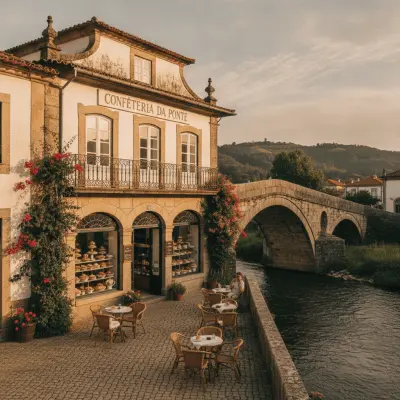
You don't leave Amarante without trying the convent pastries, and doing so doesn't require overspending. Confeitaria da Ponte sits exactly where the name suggests, steps from the bridge, and it's where you buy papos de anjo and foguetes, the two sweets most tied to the town. Order one of each, not a dozen: they're rich, heavy on egg yolk and sugar, and two are enough to understand the difference between an old-school convent sweet and the generic imitation sold elsewhere in the country. A coffee and a pastry here cost a fraction of any brunch you'd pay for in Lisbon, and the experience is better anyway.
Lunch that won't wreck the budget: Pobre Tolo
For lunch, the name already tells you what to expect: Pobre Tolo serves Portuguese tasca cooking without dressing itself up as fine dining, which in practical terms means generous portions at neighborhood prices. It's the kind of place where you just ask what the dish of the day is, because traditional northern Portuguese cooking rarely disappoints when it comes out of a big pot cooked slowly at home pace. If codfish or roast veal shows up on the daily menu, take it. Save the elaborate tasting menus for the tourist restaurants in Lisbon and Porto: here what matters is eating well and walking out with a full stomach and an intact wallet.
At night, without blowing the budget on drinks
Amarante isn't Porto, and that's a good thing, because it means a night out doesn't cost the same. Two stops cover the whole evening without financial drama.
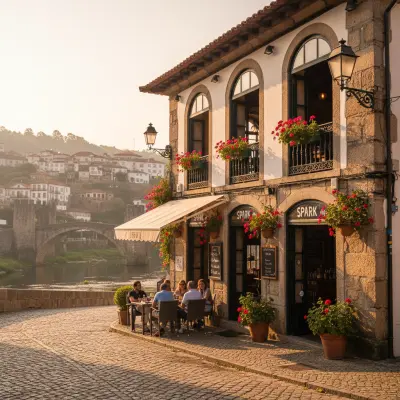
Spark Bar is the more central option, good for starting the night with a beer or a simple cocktail before deciding what comes next. It has the relaxed feel you'd expect from a small town: nobody's there to be seen, they're there to talk. Spark Bar keeps the mood easy and the prices reasonable.
Afterward, if there's still energy left and a taste for a good view, head up to Torre Jardim Bar. The name doesn't lie: it really is a garden with a bar attached, and the elevated position gives a view over the town and the river that beats any overpriced rooftop cocktail in Lisbon. Order something simple, sit outside as long as the weather allows, and skip the second round of fancy cocktails: what you're paying for here is the setting, not the garnish.
The one experience worth spending on
There are two things in Amarante worth spending a bit more on, because there's no cheap substitute that captures what they actually offer.
The first is cycling the Tâmega Ecopista, the old railway line converted into a bike path that hugs the river. The tour called Cycling Through History with Amarante Trilhos handles the logistics, the bike, and the route, which saves you the headache of renting a bike solo and discovering halfway through that the brakes don't work. It's a modest cost compared to similar activities in bigger cities, and the scenery, river on one side, vineyards on the other, makes it worth every euro.
The second is getting onto the water instead of just looking at it from the bridge. The traditional boat experience on the Tâmega shows Amarante from an angle most visitors never see, the water rising and the town shrinking behind you. It isn't expensive, and for anyone who'd only planned a walk along the riverbank, it's the difference between seeing the town and actually feeling it.
If the budget is really tight, pick just one of the two. There's no shame in that: one experience done properly beats two rushed through with a calculator running in your head.
Getting there without spending on taxis
Amarante is about an hour by car from Porto, and for anyone without a car there are trains and buses leaving Porto most days, at fares that cost a fraction of an Uber covering the same distance. It's worth checking schedules locally before setting out, since frequency changes depending on the day of the week. Anyone planning a run of destinations out of Porto should take a look at the guide to the best day trips from Porto, since Amarante fits easily into a list of towns that don't require a rental car or a big travel budget.
Once you're there, everything is walkable. The historic center is small enough to cross in twenty minutes, and most of what matters, the bridge, the church, the pastry shop, the bars, sits within walking distance of each other. Save the taxi money for a second pastry instead.
Pair it with Braga and stretch the budget further
Anyone building a low-cost route through the north does well to combine Amarante with Braga on the same trip, splitting transport costs across two destinations instead of one. The guide to Braga helps map out that second leg, and if the timing lines up, the guide to Holy Week in Braga 2026 covers one of the busiest stretches on the regional calendar, including what's worth booking early so you don't end up paying inflated last-minute prices for a room.
What's not worth paying for in Amarante
Skip the generic souvenirs sold near the bridge, the fridge magnets and postcards are identical to what every tourist town in the country sells and say nothing specific about Amarante. If you want to bring something home, bring pastries from the confeitaria, well packaged, or bring nothing at all, because the memory of crossing that bridge at sunrise doesn't fit in a suitcase anyway.
It's also not worth paying for a generic guided walk through the historic center when the town is small enough to cover alone with a map on your phone. Save the guided-tour budget for the experiences that actually add something, like the bike ride or the boat trip.
The final tally
A full day in Amarante, coffee and pastry at Confeitaria da Ponte, lunch at Pobre Tolo, an evening drink at Spark Bar or Torre Jardim Bar, and one of the two river or ecopista experiences, comes in well below what an equivalent day would cost in Lisbon or Porto. The town doesn't ask for much. It just asks that you stop long enough to see the river sitting still under the bridge, before the day starts moving again.