Amarante's One Real Museum, and Why That's Enough
Amarante has exactly one museum worth your time, tucked inside a sixteenth-century Dominican convent by the bridge. Everything else here is better spent at a riverside table or on a bike along the water.
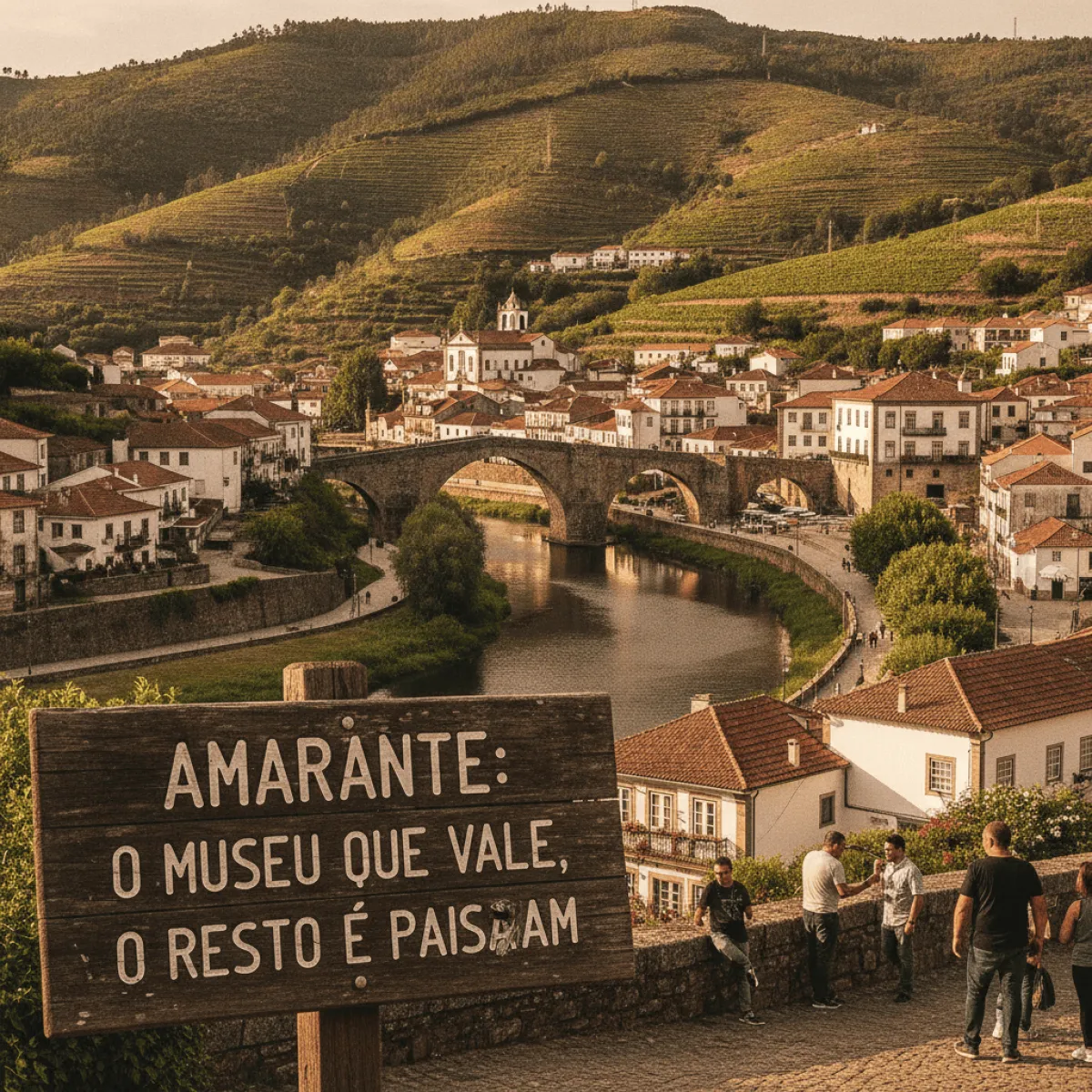
Amarante Doesn't Have a Museum Problem
You arrive in Amarante over the São Gonçalo bridge, take the obligatory photo of the Tâmega river with its row of colourful facades leaning over the water, and the first question you ask yourself is: right, what do I actually visit here? The short answer is one museum. The longer answer is that one museum is genuinely enough, and the rest of your time is better spent on a terrace, in a boat, or on a bike along the river. This isn't a town you need to work through with a checklist of cultural institutions under your arm. It's a town you visit slowly, with one serious stop in the right place and everything else left to chance.
The One Worth Your Time: The Amadeo de Souza-Cardoso Museum, Inside the Convento de São Gonçalo
Founded in 1947 by Albano Sardoeira, the Museu Municipal Amadeo de Souza-Cardoso occupies part of the old Convento de São Gonçalo, right next to the church and the bridge that gave the saint's name to the town. It isn't a large museum and it doesn't pretend to be. It's built mostly around one man: Amadeo de Souza-Cardoso, born in Amarante, dead at 30 in 1918 from the Spanish flu, after time in Paris crossing paths with figures like Modigliani and Brancusi in the early twentieth century avant-garde. The collection covers modern and contemporary Portuguese painting and sculpture, with a core dedicated to Amadeo's own life and work, including pieces connected to the Casa do Ribeiro, where he lived with his wife.
You won't spend the whole afternoon there, and that's fine. Budget an hour, maybe an hour and a half if you actually read the wall texts. That's the right size for a town this size. The museum opens Tuesday to Sunday, closed Mondays and public holidays, with reduced winter hours (9:30am to 12:30pm and 2pm to 5:30pm, until 31 May) and longer summer ones (10am to 12:30pm and 2pm to 6pm, June through September). Always confirm the hours and entry price before you go, these details shift between seasons without much warning.
The reason not to skip this museum isn't the collection itself, which is modest by international standards, it's the setting: you're inside a sixteenth-century Dominican convent, a few metres from the tomb of a saint the whole town still treats like a neighbour. That, more than any painting on the wall, is what makes the visit worth the detour.
The Church Next Door Isn't Officially a Museum. Treat It Like One Anyway.
The Igreja de São Gonçalo, attached to the same convent, has been a National Monument since 1910 and took eighty years to build after the first stone was laid in 1543. It's full of styles arguing with each other, Renaissance, Mannerist, Baroque, nineteenth century patchwork, and you can feel it in every corner: the pipe organ, the sacristy with its painted wooden ceiling, and above all the tomb of the blessed Gonçalo de Amarante, to the right of the main altar. Local tradition says you pull the cord around the saint's statue three times and make three wishes. You'll see perfectly serious adults, coats and all, doing exactly this without a hint of embarrassment. Do it too. It's free, needs no booking, and it's the kind of detail any honest guide should count as part of the cultural visit, even if it technically isn't a museum.
The One You Can Skip (Or Save for Later): The Atelier at Casa do Ribeiro
There's a second space connected to Amadeo de Souza-Cardoso that almost nobody visits, for good practical reasons: the atelier built specifically for the painter at Casa do Ribeiro, a property that belonged to his uncle Francisco de Souza Cardoso, about ten minutes from the historic centre. This is where Amadeo settled with his wife from 1915 onwards, looking for more independence to work away from the more formal centre of town. Visiting requires booking ahead through the municipal museum, there are no drop-in hours, and honestly it only pays off if you've already left the Convento de São Gonçalo wanting to know more about the man behind the paintings. If you're passing through with one afternoon in Amarante, skip this one without guilt, the main museum already gave you the essentials. If you're genuinely into Amadeo's work, or building a trip around early twentieth century Portuguese painting, call ahead and book it, it's worth the extra effort.
After the Museum: Where the Town Actually Delivers
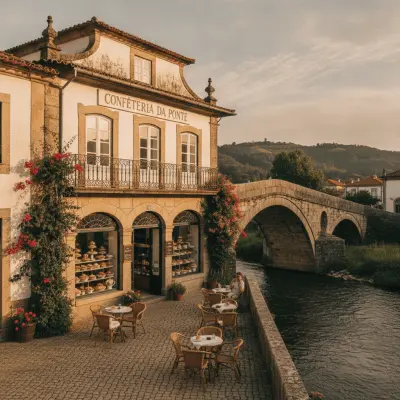
You leave the convent, cross the square in front of the bridge, and from here Amarante stops being about museums and starts being about the table. The obvious, correct stop is Confeitaria da Ponte, right on the river. Amarante has a tradition of convent sweets with names and shapes that locals themselves admit, laughing, are a little provocative, the Dominican convent apparently had a peculiar sense of humour when it came to pastry. Order a coffee and try the local sweets, you don't need more theory than that.
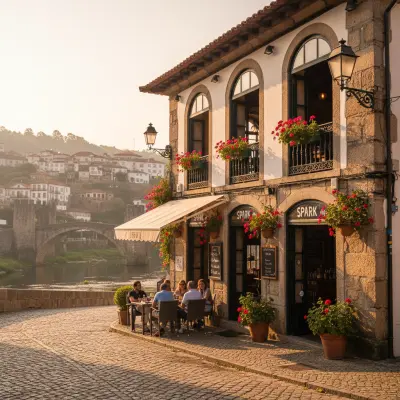
For late afternoon, with the river still visible and the light dropping over the bridge, Spark Bar is the right call for a drink with a view, no ceremony required. For dinner, the recommendation we make without hesitation is Pobre Tolo: uncomplicated Portuguese cooking, the kind that doesn't need a museum next door to justify the trip.
Fitting It Into a Day
Amarante is about an hour from Porto, and it's one of the classic stops for anyone leaving the city in search of river and granite. If you're building a wider itinerary around the north, it's worth checking our guide to the best day trips from Porto to see where Amarante fits alongside the region's other towns.
A morning in Amarante organises itself: the museum first thing, while it's still cool and empty, then the church next door, then coffee by the bridge. In the afternoon, swap heritage for water. The cycling tour along the Tâmega ecopista with Amarante Trilhos follows the old railway line along the river and is, honestly, the most straightforward way to understand the geography that made the town settle exactly where it did, between the water and the granite.
The Short Version
Amarante isn't trying to be Lisbon or Porto when it comes to museums, and it's better for it. You get one good museum, inside a convent with real history behind it, a church next door where everyone pulls a cord and makes a wish, and an atelier that only matters if you're already a convert. Spend the rest of your time on the bridge, at a table, or on a bike by the river. That's the right proportion for a town Amarante's size, which is why the list of museums worth visiting here fits in one sentence, not a three day itinerary.