Guimarães Pass: The Museum Marathon Worth Doing
We tested the Guimarães Pass, which for 15 euros gives access to eleven museums and monuments across four days. We managed seven in a single day, and learned that attention runs out before your legs do.
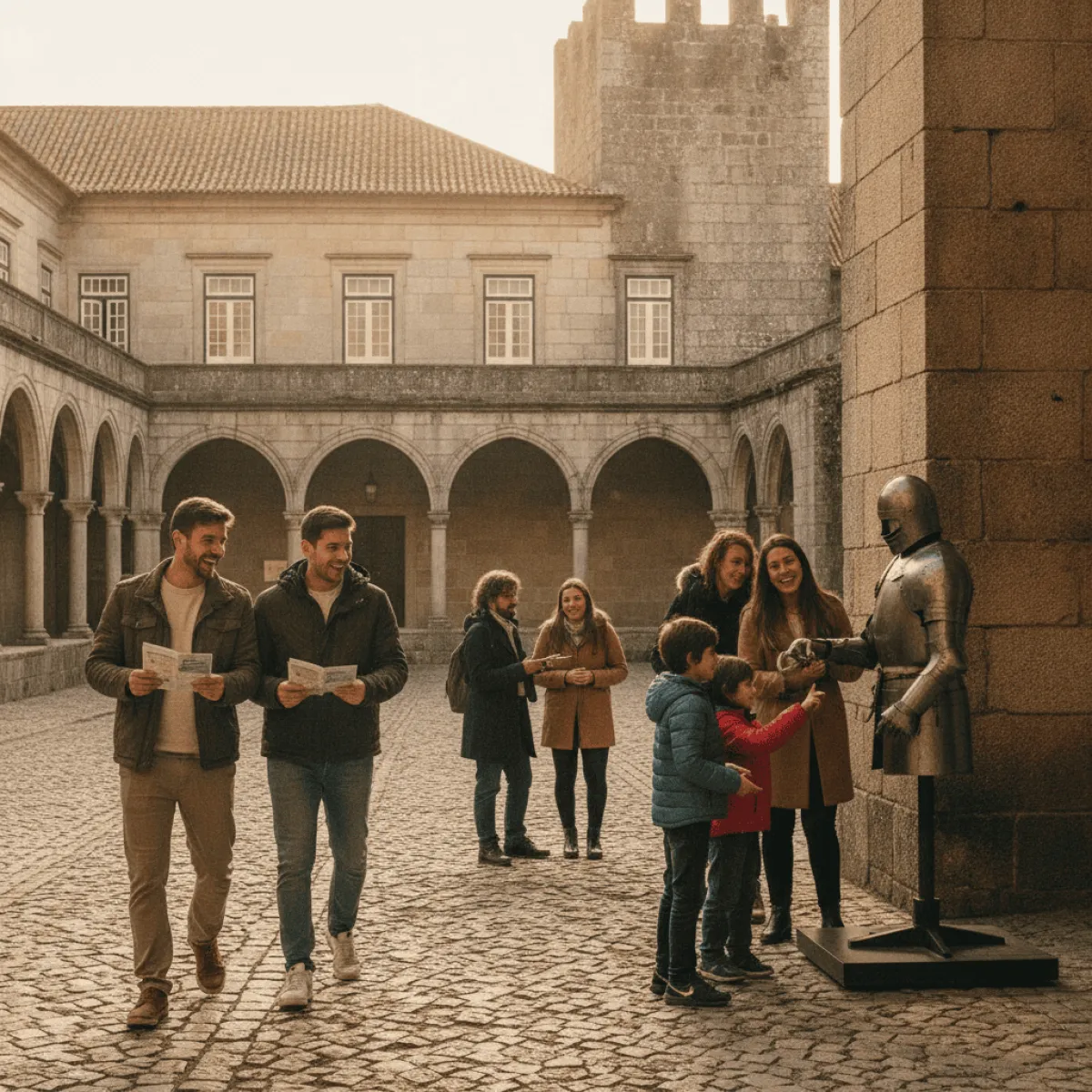
I bought the Guimarães Pass at nine in the morning at the tourism office on Praça de São Tiago, with one goal: see as many museums as physically possible in a single day. I walked out with a card, a map folded into eighths, and a friendly warning from the woman behind the counter: "bring water, you'll be walking a lot." She was right. It's not the laziest way to get to know the city where Portugal learned to be itself, but it's by far the most thorough one, and the only way to understand, in eight or nine hours, why a town this size has this many museums.
What the Guimarães Pass actually is
The Guimarães Pass is sold directly by Turismo de Guimarães, the official municipal tourism body, not by a private tour company. That matters: the price and conditions don't shift depending on where you buy it. There are two versions: the standard one at 15 euros, which gives reduced-price access to eleven cultural sites in and around the city, and a version with the Guimarães cable car included at 18 euros, which adds the round trip up to Penha. There are discounted rates for young people and for people over 65 (roughly 10 euros, or 11.50 euros with the cable car), and free entry for children under 12.
The card works like a stamp passport: at every site, you show it, they stamp or validate it, and you move on to the next one. It's valid for four consecutive days from first use, so you don't have to cram everything into one day. I wanted to see if it was possible anyway.
What's included
The list can shift slightly depending on renovations or temporary closures (Turismo de Guimarães actually warns you to check before buying, for that exact reason), but it typically covers:
- Palace of the Dukes of Braganza
- Guimarães Castle
- Alberto Sampaio Museum
- Casa da Memória de Guimarães
- José de Guimarães International Arts Centre
- Centro de Ciência Viva (Curtir Ciência science centre)
- Vila Flor Palace
- Martins Sarmento Society Archaeological Museum
- Museum of Castro Culture and Citânia de Briteiros
- The museum route inside the Convent of Santo António dos Capuchos
Eleven stops in total, spread between the city centre and the Briteiros area, roughly 10 km out. Doing all of it on foot in a single day is ambitious, and honestly, a bit much. Citânia de Briteiros deserves a whole morning to itself and is better saved for a second day, or for anyone with a car.
How I actually ran the marathon
I started in the historic centre, where everything sits five to ten minutes apart on foot: the Palace of the Dukes, then the Castle right next door (climbing the battlements is the part every kid on the tour loves, and rightly so), then the Alberto Sampaio Museum, tucked beside the Collegiate Church of Nossa Senhora da Oliveira. Those three, done in sequence, fill a relaxed morning without any rushing.
In the afternoon I switched gears: Casa da Memória, which is more interactive and tells the city's recent history, then the José de Guimarães International Arts Centre, housed in the former municipal market, with its collection of José de Guimarães' work. Those two are about 15 minutes apart on foot, already outside the densest part of the centre.
I left Curtir Ciência and Vila Flor Palace for the end of the day, mostly out of convenience, and by the sixth or seventh stop I'll admit I was walking slower and reading fewer captions. That's the real limit of a museum marathon: attention runs out around stop five, well before your legs do.
The order I'd actually recommend
If you only have one day, do the historic centre in the morning (Palace, Castle, Alberto Sampaio), take a proper lunch break, and in the afternoon pick two or three more sites instead of chasing all of them. Save Citânia de Briteiros for another day. It's an open-air archaeological site outside the city and doesn't pair well with rushing.
What to bring
- Comfortable shoes, you'll cover several kilometres between sites
- Water, especially between May and September
- The pass card within easy reach, it's checked at every entrance
- A light jacket for the Castle and for Citânia de Briteiros, both catch more wind
Where to buy it
You can buy the Guimarães Pass online through the official ticketing platform, or in person at any of the participating venues and at the tourism office on Praça de São Tiago. I'd recommend buying it in person, first thing in the morning: you get the paper map and someone on hand to tell you, in real time, which sites are actually open that day, since one or two are usually closed for works or running reduced hours outside peak season.
After the marathon
By the end of the day, with your legs asking for a break, staying close to the centre is the smart move. Both Hotel de Guimarães and Pousada Mosteiro de Guimarães sit a short walk from the historic centre, which saves you from more walking after a full day on your feet. And if you've still got energy for a drink before dinner, the Rooftop Bar at Eurostars Santa Luzia has views over the city and is a good spot to scroll back through the day's photos.
If you want to stretch your budget further and pair the museum marathon with other free things to do, our Guimarães on a budget guide lists what you can see without paying for a single ticket.
Is it worth it?
Yes, with one caveat: the Guimarães Pass pays off if you're planning to visit at least four or five of the included sites, since that's where the savings against individual tickets land around 50%. If you only want to see the Palace of the Dukes and the Castle, the standard combined ticket at 6 euros works out cheaper than the pass. But if, like me, you enjoy wringing a city dry in a single day and coming home with tired legs and a full head, the full marathon is the best way to understand why Guimarães keeps telling its own story, museum after museum.