Viseu: Skip Rossio, the Manueline Hides on Rua Direita
There isn't a single armillary sphere on Praça do Rossio in Viseu, and that's exactly where most visitors go wrong. The real Manueline work, carved rope and all, is waiting ten minutes uphill, set into the windows of private houses on Rua Direita.
The Square That Isn't What It Looks Like
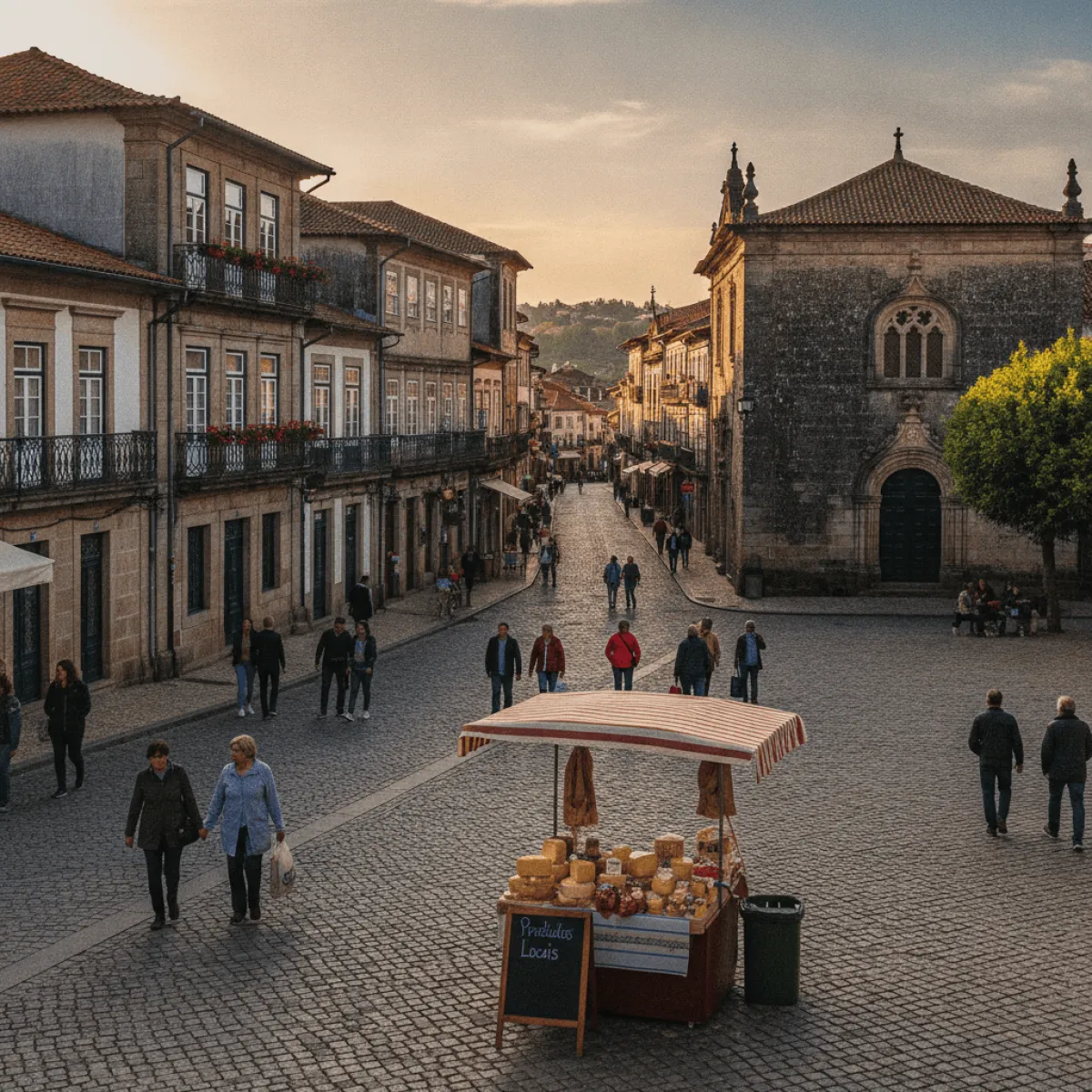
Come to Praça do Rossio in Viseu looking for weathered coats of arms and knotted stone, and you'll lose the morning. Rossio is a nineteenth-century civic garden: clipped hedges, a bandstand, retired men on benches arguing about football. On a Tuesday at ten in the morning there are more prams than tourists, and nobody there seems especially preoccupied with King Manuel I. This is Viseu's living room, not its museum piece, and that mix-up is exactly why people wander this square hunting for Manueline detail that was never here to begin with.
What Rossio does give you is orientation. It sits at the bottom of the hill the old town climbs, and from here there's a right direction: up. Head the wrong way and you land in modern Viseu, roundabouts and apartment blocks. Head up Rua Direita instead, the old commercial spine of the city with its granite doorframes and iron balconies, and within ten unhurried minutes you're somewhere considerably older.
The Real Hiding Place: Rua Direita
This is where the title of this piece actually pays off, not on Rossio. Rua Direita holds a cluster of Manueline windows classified as a national monument, set into the facades of houses that are still lived in and still doing business, with no oversized plaque demanding your attention. You have to slow down and look up, because these windows are competing with shop awnings, power lines, and window displays, and most days they lose.
What you find, once you actually stop in front of one, are the usual signatures of the Manueline repertoire: rope carved in stone as if coiled and knotted, armillary spheres, the maritime vocabulary that Manuel I's stonemasons spread across the country once the voyages to India started paying the crown's bills. This isn't Belém, it isn't Tomar. It's a private house window on a street where people are doing their shopping and heading up to work, which makes the find more interesting, not less.
What to Actually Look For
- Window frames with carved rope twisting around the edges, the easiest Manueline motif to spot at a glance.
- Armillary spheres, the emblem of the Age of Discovery, tucked into the jambs.
- The domestic scale of it all. These are sixteenth-century shop and house windows, not church portals, which changes the entire experience of looking at them.
- Morning light. By mid-afternoon the street falls into shadow on the wrong side and the carving goes flat.
The Cathedral: the Manueline Work Nobody Sees First
At the top of Rua Direita you reach the Adro da Sé, and this is where Viseu's real Manueline showpiece sits, hidden behind closed doors rather than displayed on a facade. The cathedral's front is mostly later work, heavy and Baroque-leaning, the result of centuries of rebuilding that happened to most Portuguese cathedrals. The Manueline interest is inside, in the nave vaulting, the work of architect João de Castilho, the same name behind part of the Jerónimos Monastery in Lisbon, commissioned by Bishop Diogo Ortiz de Vilhegas in a building campaign that ran roughly a decade in the early sixteenth century. The ribs cross into carved bosses that echo the same rope-and-knot language you just saw on Rua Direita, except worked in stone at the scale of a church ceiling rather than a window frame.
There's a common trap worth avoiding here: the cathedral's cloister, which most guidebooks lump in as Manueline by proximity of dates, is actually Renaissance, built later under Bishop Miguel da Silva, patron of the painter Grão Vasco. Walking from the Manueline nave straight into the Renaissance cloister on the same visit is the fastest art history lesson you'll get in Viseu without cracking a book. One speaks the language of caravels, the other already speaks the classical language arriving from Italy.
The Museum Next Door
Right beside the cathedral, in the old bishop's palace on the same square, sits the Museu Grão Vasco, and it would be a mistake to walk straight from the Sé to coffee without going in. This is where Viseu's other sixteenth-century story lives: the paintings of Vasco Fernandes, the local master everyone here just calls Grão Vasco, and the school of painting he led. His São Pedro, painted for this same cathedral, is one of the more startling pieces of Portuguese Renaissance painting you'll find outside Lisbon, precisely because nobody expects to find it in a mid-sized city in the interior. Give it thirty minutes. The building alone, with its own granite courtyard, earns the entry fee.
Where to Refuel
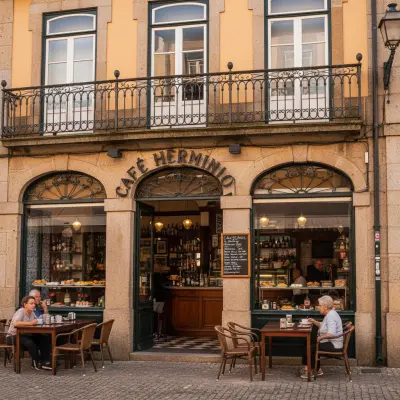
After the cloister and the museum, your body wants coffee, and Viseu doesn't complicate that. Near Rossio, Café Hermínio is the old-school counter where the coffee comes fast, cheap, and correctly pulled, no oat milk theatrics, just a bica and maybe a torrada if you're hungry. It's a stand-and-drink kind of place at peak hours, and that's part of the charm.
For something sweeter, Confeitaria Amaral is the pastry shop locals actually use, not a set piece for coach groups. Get whatever came out of the oven in the last hour, ask the counter staff if you're unsure, and don't overthink it.
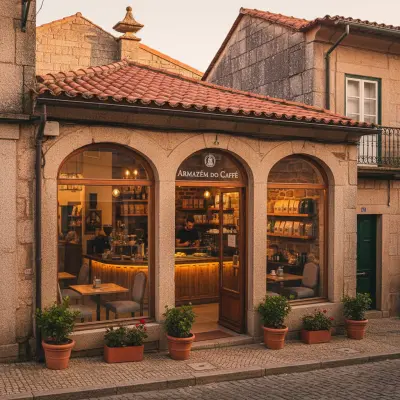
If the cathedral visit runs into lunch, Armazém do Caffè is a solid, unpretentious option close enough to the old town that you won't need to trek back down to Rossio and up again. It's the kind of place that does simple things properly, which after a morning spent squinting at carved stone is exactly what you want.
Learning the Craft Instead of Just Looking at It
If the carved rope and armillary spheres leave you wanting to understand how any of it was actually made, rather than just photograph it, Viseu offers a way in. The Art of Azulejo in Viseu, a tile painting workshop with Mestre António Cruz, puts a brush and a blank tile in front of you instead of a museum case. Azulejos arrived after the Manueline stonework, but the two crafts share the same instinct: cover a surface in pattern until it says something about who paid for it and why. Doing even one panel badly gives you new respect for whoever did hundreds of them well.
The region's craft tradition isn't only visual. An hour from Viseu, at Casa da Ínsua in Penalva do Castelo, Mastering Serra da Estrela Cheese, a hands-on workshop at Casa da Ínsua, teaches a different kind of local mastery, the slow, hands-in-the-curd process behind the cheese that ends up wrapped in wax paper on half the counters in this part of the country, quite possibly including a fridge somewhere near Confeitaria Amaral. It's a different pace of learning than staring up at a church ceiling, and a good way to spend an afternoon if you're staying in the region longer than a day trip.
Getting There and Making It Work
Viseu doesn't have a train station with regular passenger service, which keeps it slightly off the well-worn Porto-Lisbon rail corridor and, frankly, keeps it a little less crowded than it would otherwise be. Most people arrive by car via the A25 or IP3, or by intercity bus from Porto, Coimbra, or Lisbon, all reasonably direct. Once in town, the historic center is entirely walkable. Rossio to the Sé is a ten-minute uphill stroll, no car needed and honestly no car wanted, since parking near the Adro da Sé is limited and the streets are narrow enough to make driving there more stressful than useful.
Entry to the cathedral usually involves a small fee that covers the treasury as well, and the Museu Grão Vasco next door charges separately, though it's free on some Sunday mornings, worth checking locally before you go. Set aside a morning for the cathedral and museum together, then let lunch and coffee happen wherever your feet end up, which in this part of town is rarely a mistake.
Go on a weekday morning if you can. Viseu gets a modest but real trickle of coach tourism on weekends, and Rua Direita, narrow as it is, feels completely different with six people walking it than with sixty. Rossio, meanwhile, works at any hour, because Rossio was never trying to be a monument in the first place. It's just where the city sits down for coffee before it goes to look at itself.