Tavira by Night: A Wine and Petiscos Itinerary
Once the coach groups leave, Tavira changes pace: the Gilão river turns copper, the tascas fill with locals, and wine pulled back from near-extinction arrives in your glass. This is a route for an unhurried night, from the Al-Lagar tasting to a plate of conquilhas à algarvia.
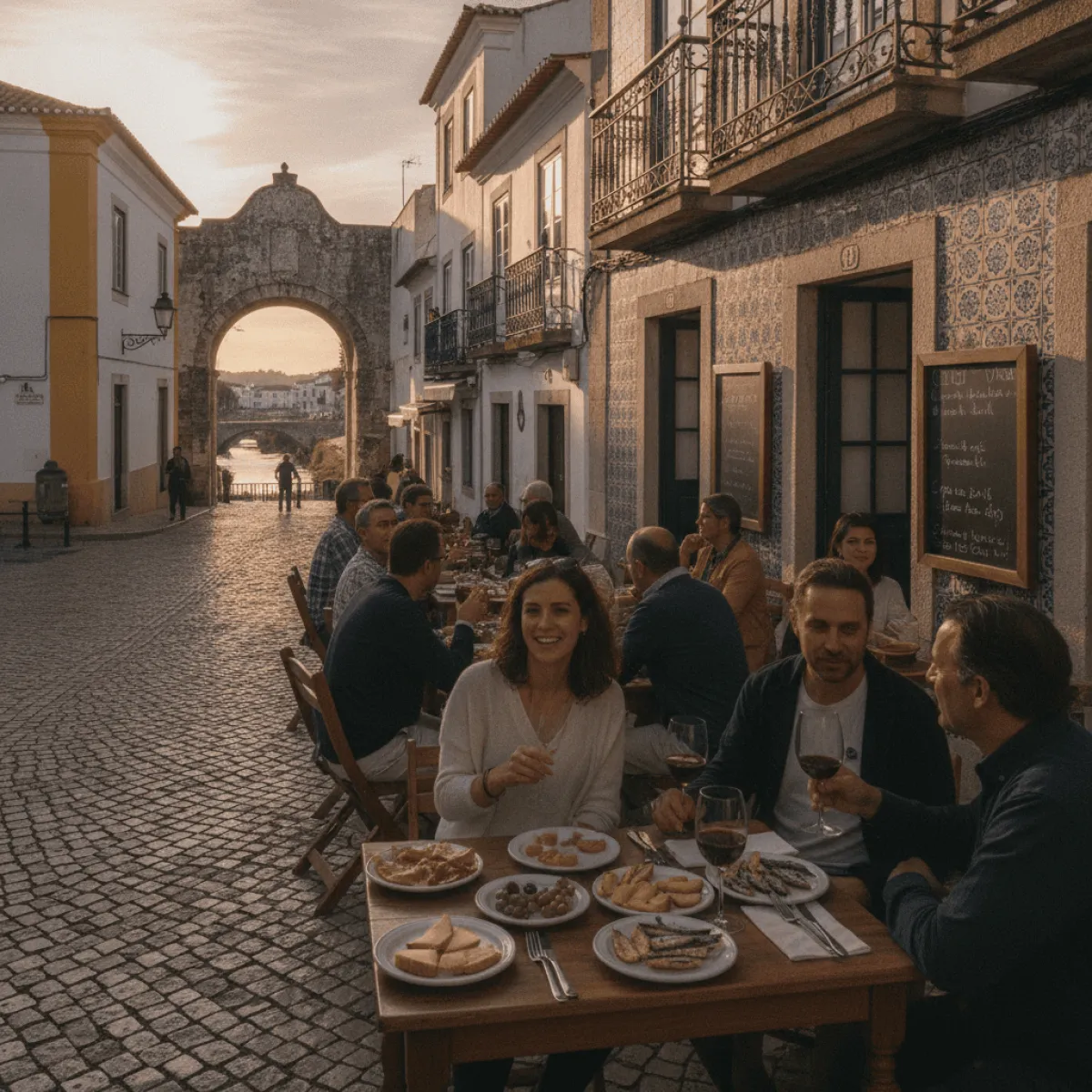
Tavira by day gives itself over to tourists: the Roman bridge gets photographed from every angle, boats queue for the island, ice cream melts faster than anyone can eat it in Praça da República. Tavira in the evening is a different town. That's when the coach groups have left, the awnings dim, and the Gilão river turns that copper colour it only gets after six. That's the Tavira worth showing up for if you want a proper evening of wine and petiscos, no rushing involved.
This isn't a checklist of restaurants to tick off. It's a sequence: sun, wine, shared plates, more wine, an early or late bed depending on how the night goes. It works best between April and October, but skip July and August if you have the choice, because the town triples its population and every terrace fills with people in a hurry to eat and move on. If August is your only option, go early and accept you'll be sharing the experience with a crowd, or borrow a page from our guide on dodging August crowds on the Algarve. The same common sense applies here, adjusted for a river town instead of a coastal one.
The afternoon before the night
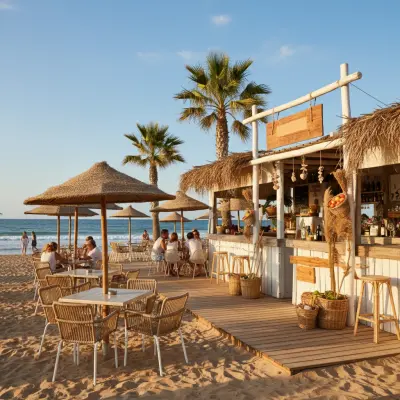
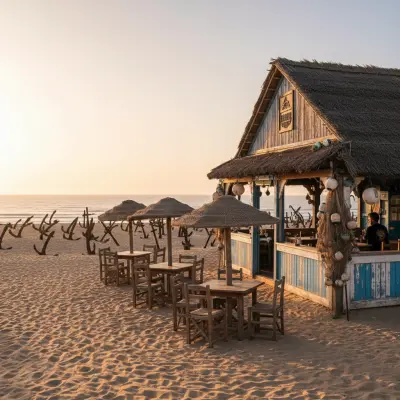
If you're staying nearby and have the day free, don't arrive in Tavira already worn out from driving. Spend the afternoon in the water. Praia do Barril, reached by the little train that crosses the old salt pans past a field of rusted anchors, is one of the few beaches on the Algarve that still feels like arriving somewhere, not just parking near water. For something quieter, Praia de Cabanas de Tavira sits east of town, with fewer umbrellas packed together and an easy drive back into the centre. If you want the classic barrier-island version, take the boat to Praia da Ilha de Tavira, still the most photographed and the busiest, for good reason: the sand runs long and the Ria Formosa keeps the swell down.
The trick is leaving the beach by around 5:30pm, giving yourself time for a shower and a short nap, and arriving in central Tavira genuinely hungry by 7:30pm. Don't snack too late in the afternoon. Petiscos work best against real appetite, not beach biscuits still sitting heavy.
First glass: Al-Lagar
Before any tasca, start with the wine, properly. Tavira isn't the first region that comes to mind when people talk about Portuguese wine, and that's exactly why it's worth the detour. The town had a winemaking tradition that all but disappeared through the twentieth century, swallowed by beach tourism and citrus farming, and it's only recently being pulled back by people stubborn enough to replant vines where nobody thought it was worth the trouble anymore. That story, told by the people living it, is what shapes the tasting experience at Al-Lagar: a guided session through local grape varieties, many of them Negra Mole, the light-bodied red grape that defines much of the traditional Algarve, low on tannin, meant to be drunk cool and without ceremony.
Don't go expecting to compare this to the Douro or Alentejo. Go curious about how an entire region nearly lost its vineyards, and what it means to bring them back one bottle at a time. Book ahead, especially between June and September, and set aside ninety minutes to two hours for the session. That's enough to loosen up your palate and the conversation before the rest of the night.
Questions worth asking your host
- Which grape varieties are genuinely native to the region, and which were introduced later
- How the sea's proximity and soil salinity shape the wine
- Whether there are bottles to take home, since most of these small producers never reach supermarket shelves
The petiscos route
Palate warmed up, it's time to eat on foot. Tavira suits this well because the historic centre is small, mostly flat, and clustered around the river and Praça da República. The point isn't to sit at one table for three hours, but to make three or four short stops, each with a petisco or two and a glass of wine, ideally white or a light red, served cool the way the Algarve tradition demands.
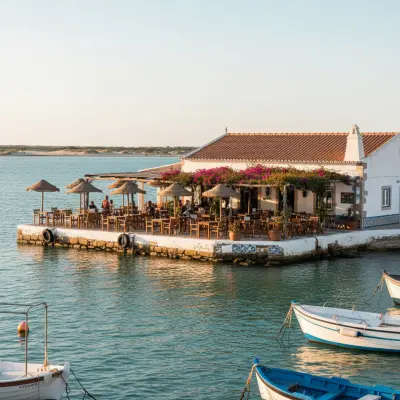
Start near Mercado da Ribeira, the old municipal market by the river, now converted into a space with several food stalls under one roof. It's a good first stop because it lets you sample in small portions without committing your whole appetite too early. Order conquilhas à algarvia if they're on the board, one of the most honest petiscos in the region: small clams, garlic, coriander, a drizzle of olive oil, nothing else. If there's grilled tuna, take it. Tavira has a long relationship with tuna, tied to the fishing traps that once operated near the Ilha de Tavira before the canning industry declined through the last century. It's not menu decoration, it's local memory coming out of the kitchen.
After the market, head into the narrower lanes behind Praça da República, where the smaller tascas usually have two or three tables set out on the cobbles. Look for xarém, a dish of slow-cooked cornmeal with shellfish or pork, typical of the Algarve and rarely found outside the region. And don't skip a small cataplana to share if a place serves it in a reduced portion, since a full cataplana easily feeds four and this itinerary is about variety, not filling up on the second stop.
The unwritten rules of a petiscos night
- Always order less than you think you need. Petiscos multiply fast once they start arriving
- Choose the house wine over anything with a fancy name on the menu. In Tavira, house wine is usually regional and cheap, somewhere between 3 and 5 euros a glass
- Avoid the terraces directly on the riverfront during the peak dinner rush, between 8pm and 9:30pm. The price climbs and the food doesn't improve to match it
- Walk everywhere. Central Tavira has little patience for anyone trying to park close to it all
After dinner, before bed
End the night slowly, with no urge to rush back to where you're staying. The Roman bridge, lit after dark, sits over a river gone almost still, and it's the one moment in the day when Tavira feels like it belongs only to the people who live there. If you've still got the energy and curiosity to understand more of what's behind these food traditions, our guide to local culture in the authentic Algarve helps connect what you've just eaten in Tavira to how life is lived twenty minutes away in Faro, since the two towns share more tradition than that short drive suggests.
Anyone who prefers nature to a lie-in the next morning might also consider bird watching across the Ria Formosa. It's the perfect antidote to a night of wine: early, quiet, no alcohol involved, and a different way of looking at the same landscape of water and salt that defines Tavira.
Where to stay
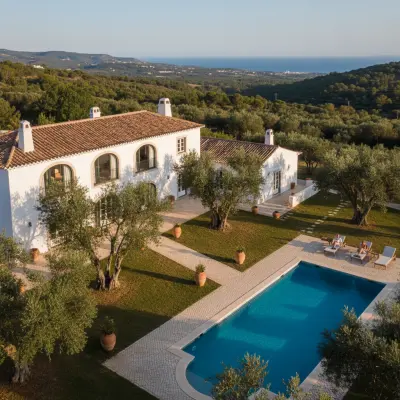
For anyone who doesn't want to drive after a night of wine, it's worth choosing somewhere just outside the busiest part of town but still close enough to reach on foot or with a short taxi ride. Fazenda Nova Country House gets that distance right: quiet countryside setting, with Tavira only a few minutes' drive away, making it a sensible base for anyone planning a night like this without worrying about driving back after the third glass.
The practical bit
A full night out, wine tasting included and three to four petiscos stops for two people, runs somewhere between 60 and 90 euros, depending on what you order and how many extra glasses find their way onto the table. The Al-Lagar tasting is a separate cost, so book ahead and confirm the current price directly with the producer, since these small experiences adjust their rates fairly often.
Tavira sits about 30 minutes by car from Faro Airport, and there's a direct train link between Faro and Tavira, running frequently through the day but thinning out after 9pm, so don't count on the train for a late return if you don't have a car. Taxis exist, but in high season it's worth having a local contact number confirmed in advance rather than waiting on the street after midnight.
In the end, what makes this particular night in Tavira different from any other wine and petiscos route on the Algarve isn't a secret dish or a hidden terrace. It's the rhythm: a town small enough to cover entirely on foot, a river running through the middle of it, a wine tradition that nearly died and is being brought back glass by glass, and petiscos that still taste like they always did, with no adjustment made for tourists in a hurry.