Setúbal on Foot: The Neighborhoods Worth the Walk
Everyone passes through Setúbal on the way to Tróia and skips the city sitting between the Sado and the Arrábida hills. From the fish market to a hilltop castle, and a no-frills bar by the docks, this is the Setúbal you walk, not the one you drive through.
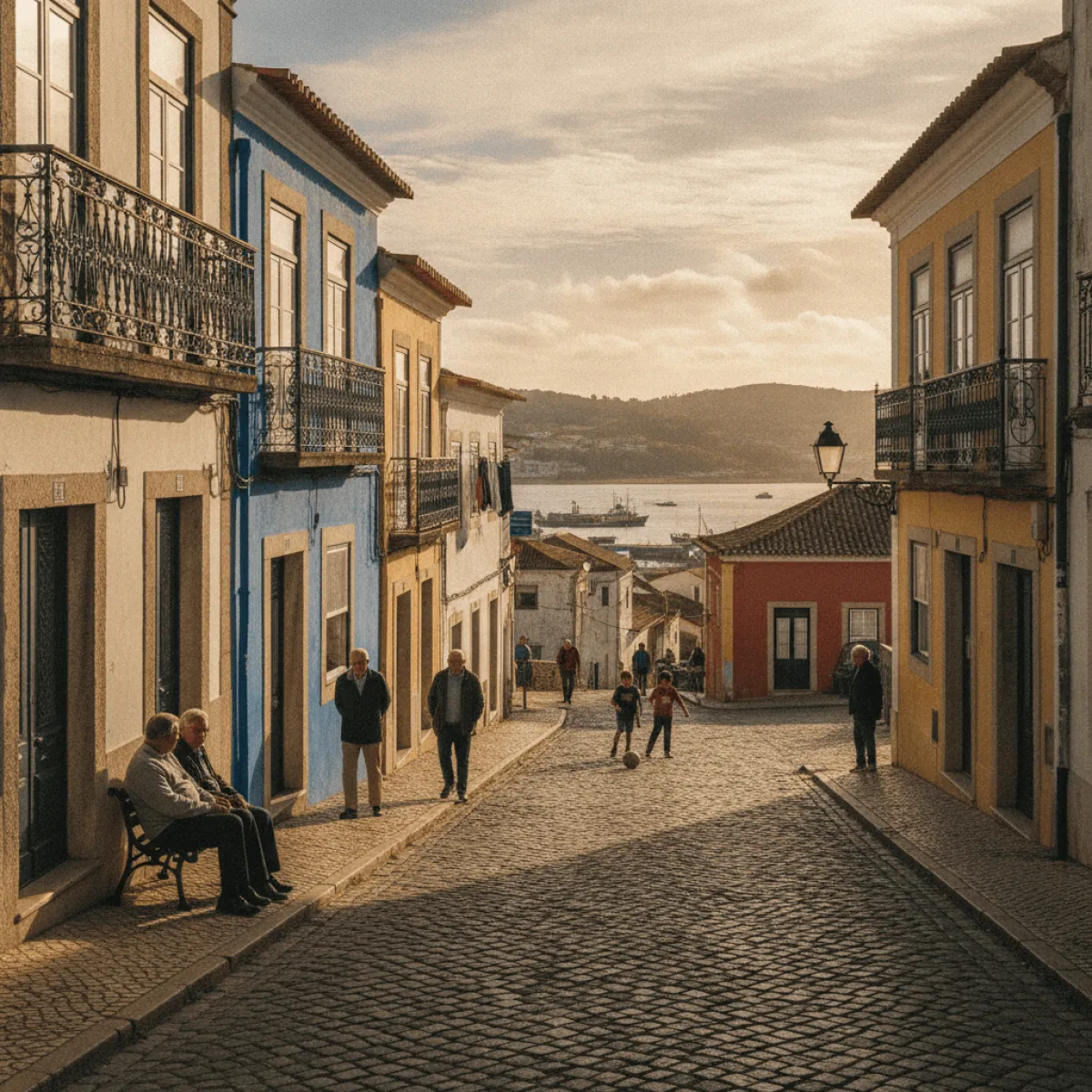
Everyone passing through Setúbal is technically just passing through, on their way to catch the ferry to Tróia. They arrive, park, board, and the city gets reduced to a car park with a river view. That's a mistake. Setúbal is a city built for walking, with the Sado on one side and the Arrábida hills on the other, constantly reminding you this place grew up between water and rock. You don't need a car to feel that, you just need to leave the main avenue and turn into the side streets.
From the market to the square: the old town on foot
Start at Praça de Bocage in the late morning, when the cafés already have people sitting and nobody's in a hurry. It's the nerve center of the old town, with the Igreja de São Julião on one side and terraces serving espresso at a pace that hasn't changed in decades. Five minutes from here is the Mercado do Livramento, and this is the stop you don't skip: it's one of the most beautiful fish markets in the country, walls decorated with Bordalo Pinheiro tiles, fresh fish stalls stacked with catch landed at the dock next door hours earlier. Go before 10am, before the heat starts weighing on the fish and on the people.
Setúbal has a dish that defines it, and that's choco frito, strips of cuttlefish fried and served with tomato rice or just a wedge of lemon. It's not sophisticated, it's the exact opposite, and that's precisely why it works. Any tasca ten minutes' walk from the market serves it, and the difference between a good version and a mediocre one always comes down to whether the oil was actually hot and the cuttlefish wasn't fried an hour before it hit your plate.
From the square, climb up one of the narrow streets to the Igreja de Jesus, built by architect Boitac in the late 15th century, with those twisted rope-like columns that count among the earliest examples of Manueline style in Portugal. There's no queue here, it's a small, sober church that most visitors day-tripping from Lisbon never see, which tells you something about how much of Setúbal remains unexplored.
Avenida Luísa Todi and the docks at dusk
Avenida Luísa Todi runs parallel to the river and is where the city stretches out in the late afternoon: joggers, couples walking dogs, fishermen mending nets at the dock. Walk to the Doca do Comércio and watch the fishing boats come in, still trailed by gulls. This is also where boat trips into the Sado estuary depart, and if you've never seen dolphins in a river, this is one of the few places in Europe where it still happens with any regularity. The dolphin watching trip on the Sado in Setúbal leaves right from here and is worth the whole morning, even under a grey sky.
For those who prefer birds to dolphins, the estuary holds one of the country's largest populations of waterbirds, flamingos included at certain times of year, and there are trips built specifically around that. Birdwatching in the Sado Estuary is slower, quieter, and arguably more interesting for exactly those reasons.
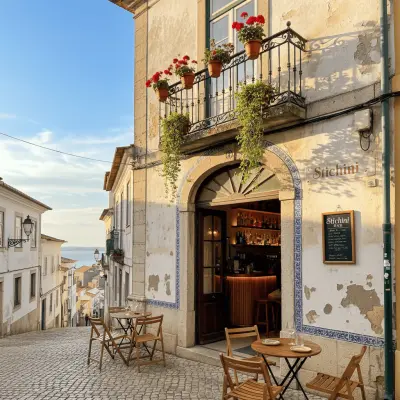
When it gets dark, the street shifts gear. Stichini Bar is the right call for a night with no fixed plan: regular live music, no pretension, the kind of bar where you end up talking to whoever's next to you without ever being introduced. It's a short walk from the dock, which means the whole sequence, market, avenue, choco frito dinner, bar, can happen without getting in a car.
Climbing up to Castelo de São Filipe
If there's one walk in Setúbal that earns its effort, it's the climb up to Castelo de São Filipe. It's steep, especially in the final stretch, and in August it's worth doing early morning or close to sunset, because there's no shade anywhere on the path. The payoff is a view that takes in the whole city, the estuary, the Tróia peninsula across the water, and on clear days, the Arrábida hills closing off the horizon to the west. The castle was built in the 16th century to defend the mouth of the Sado, has a chapel lined with tiles inside, and today functions partly as a pousada, but the outer terraces are free to walk and that's where most people end up staying, just looking.
Beyond the city: Arrábida on foot
Setúbal without the Arrábida hills feels incomplete, and while the range itself demands a car or a bus to reach, once inside it the whole programme is entirely on foot. The N379-1 road cutting through the hills has viewpoints at every bend, but you have to get out of the car and walk to actually feel the scale of the place.
Praia dos Galapinhos has been voted one of the best beaches in Europe, and the fame brought crowds, but it also brought a detail that filters most of them out on its own: you reach it on foot, down a staircase of several hundred steps cut into the cliff, and what goes down has to come back up, with the sun already high. Go early, bring more water than you think you need, and accept that the effort is part of the experience, not an obstacle to avoid.
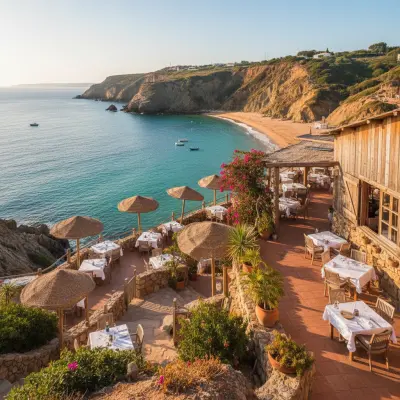
Quieter, with fewer people, is Praia do Creiro, reached from Portinho da Arrábida along a cliffside path, with the turquoise water typical of this coastline appearing gradually through the scrub. It's the kind of walk you take slowly, stopping to look at the sea below, not because it's long but because there's no reason to rush it.
Praia da Figueirinha, on the other hand, is the option for anyone who wants sand without the climb, a wide, accessible stretch that also works as a starting point for walking further along the coast toward the hills' more hidden beaches. Because it's easier to reach, it's also the busiest in August, which doesn't make it any less beautiful, just less suited to anyone chasing quiet.
Practical notes
- Setúbal's old town can be walked in full in two to three unhurried hours, from Mercado do Livramento to Castelo de São Filipe.
- The climb to the castle's outer terraces is free; bring water, especially in summer.
- Public transport to the Arrábida beaches is limited outside high season, and even by car, parking near Figueirinha and Galapinhos fills up early on sunny days.
- Boat trips for dolphin or bird watching leave from the dock near Avenida Luísa Todi, usually in the morning when the river is calmer.
- Save a night for dinner near the market followed by drinks at Stichini Bar, it sums up Setúbal better than any viewpoint could.
Setúbal doesn't ask you to rush. It's a city of stairs to climb, a dock to cross, and a river that brings dolphins right up to its doorstep. Stay one night longer than you planned, the rest of Portugal will still be there tomorrow.